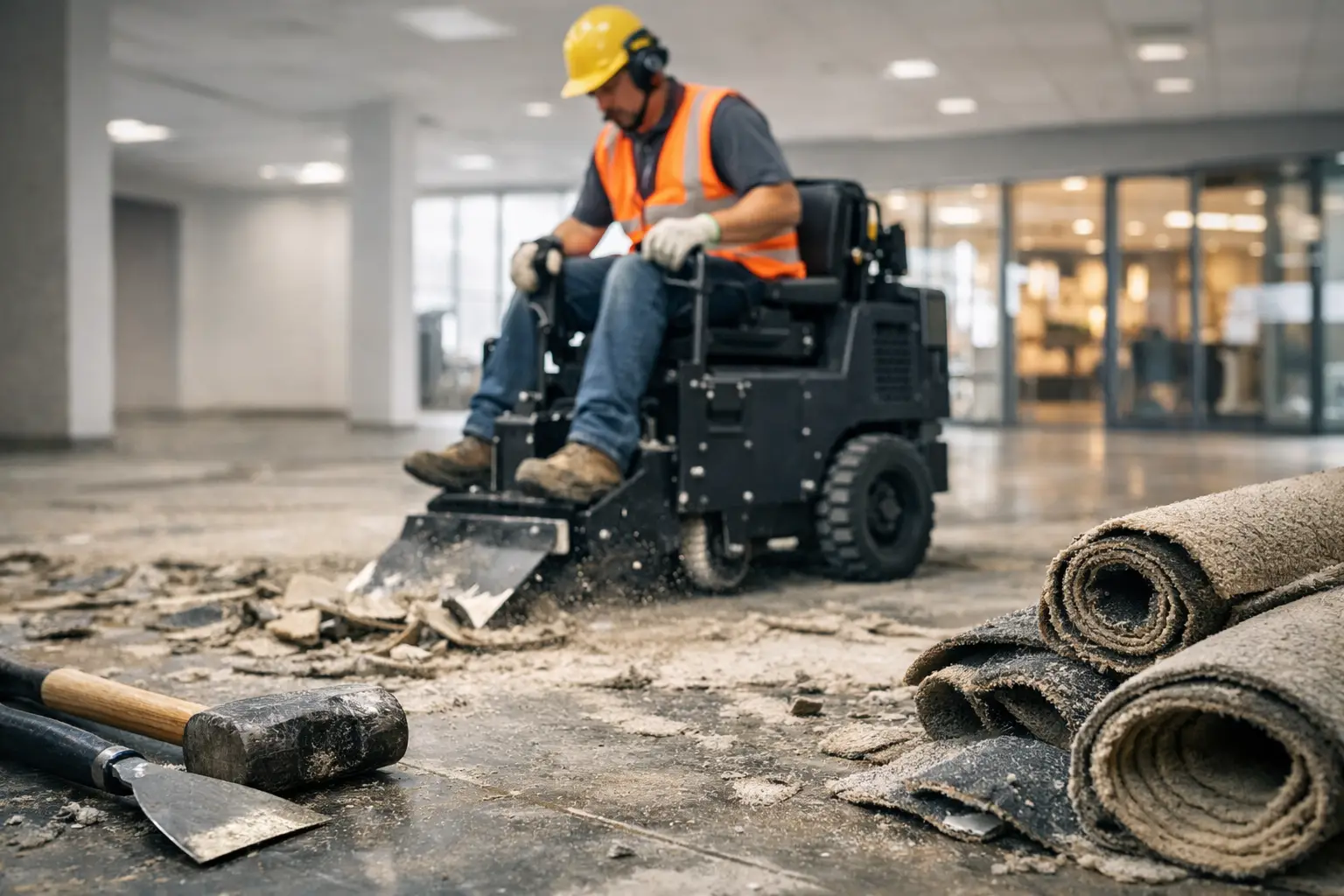
A failed floor removal job usually shows up after the crew leaves. You see gouged concrete, adhesive left behind, surprise dust in neighboring spaces, and an installation schedule that starts slipping by the hour. That is why hiring the right commercial floor removal contractor matters from day one, especially when your project depends on speed, surface quality, and clean coordination with the next trade.
In commercial work, floor removal is not just demolition. It is the first step in protecting your schedule, your budget, and the performance of the new flooring system. Whether you are updating a retail space, renovating an office, turning over a rental property, or preparing a medical or hospitality site for new finishes, the quality of the removal phase has a direct effect on everything that follows.
What a commercial floor removal contractor actually does
A professional contractor does far more than tear out old material. The job starts with evaluating the existing floor system, identifying the substrate, checking the condition below the finish layer, and planning the safest and most efficient removal method.
That can mean removing tile, vinyl, glue-down flooring, wood, carpet, mastic, thinset, or damaged underlayment. In many projects, the harder part is not lifting the visible floor. It is getting the surface properly cleaned and prepared for what comes next. If adhesive residue, uneven patches, cracks, or moisture-related issues are left behind, the new floor may fail early.
An experienced team also plans around the realities of commercial properties. That includes occupied spaces, noise restrictions, debris handling, dust control, access limitations, and tight handoffs between trades. When removal is handled by a qualified contractor instead of a general labor crew, the project tends to move faster and with fewer costly corrections.
Why floor removal quality affects the whole project
Flooring installation is only as good as the substrate underneath it. That is not a sales line. It is the practical truth behind long-lasting commercial finishes.
If tile is removed carelessly, the slab can be chipped or cracked. If vinyl adhesive is not fully addressed, a new installation may not bond correctly. If moisture damage is covered instead of exposed and repaired, the problem usually returns. These are the kinds of issues that turn a straightforward renovation into a chain of delays.
A strong commercial floor removal contractor helps prevent that by treating removal and surface prep as one connected process. That approach is especially valuable for owners, property managers, and contractors who want one accountable team instead of multiple vendors pointing fingers.
Common commercial floor removal scenarios
No two projects are exactly alike, and that affects planning. A retail store may need quick turnaround between tenants. An office build-out may require work after hours to limit disruption. A restaurant or kitchen renovation may involve damaged substrates, moisture exposure, or multiple layers of old flooring from previous remodels.
In multifamily and investment properties, speed often matters just as much as finish quality. Every extra day can mean lost revenue or delayed occupancy. In those cases, the right contractor brings a clear removal plan, realistic timeline, and the ability to transition directly into surface preparation or new installation.
That is where an integrated service model creates real value. When one team can remove the old floor, prepare the surface, and install tile, vinyl, or stone, communication improves and scheduling becomes much easier to control.
How to choose a commercial floor removal contractor
The lowest price is not always the lowest cost. In floor removal, cheap work often creates expensive problems later. A better way to evaluate a contractor is to look at operational discipline, technical understanding, and how well they manage the full scope.
Start with experience in the type of property you have. Commercial spaces have different demands than small residential jobs. Access, protection, debris removal, crew size, and turnaround expectations all change. You want a contractor who understands active job sites and knows how to keep the next phase on track.
Then ask how they handle surface preparation after removal. This is one of the biggest dividing lines between basic demo crews and true flooring professionals. Removing material is one task. Delivering a clean, ready-for-installation substrate is another.
It also helps to ask direct questions about dust control, equipment, disposal, and scheduling flexibility. If your space is occupied or time-sensitive, those details matter. A confident contractor should be able to explain the process clearly and set expectations without vague promises.
What affects pricing and timeline
Commercial floor removal pricing depends on more than square footage. The type of flooring, the strength of the adhesive, the condition of the substrate, accessibility, and debris disposal all affect labor and equipment needs.
Tile removal is usually more labor-intensive than carpet removal. Thinset and glued materials can require extensive grinding or scraping. Multiple flooring layers increase time. Tight spaces, upper-floor access, and limited working hours can also raise the project cost.
Timelines work the same way. A clean open area with easy access may move quickly. A site with occupied units, furniture coordination, restricted work windows, or damaged concrete may require a more phased approach. Good contractors do not guess at this. They inspect the site, define the scope, and build the schedule around real conditions.
That honesty matters. Fast scheduling is valuable, but rushed promises that ignore site conditions usually create frustration later.
The advantage of one team for removal and installation
There is a practical reason many clients prefer one contractor to handle both removal and the new floor. The same team that exposes the substrate is also responsible for making it right before installation begins.
That creates accountability. It also reduces downtime between phases and helps avoid scope gaps. If leveling, patching, or repair is needed, it can be addressed immediately instead of waiting for another vendor to visit the site, quote the issue, and fit it into their calendar.
For property owners and commercial clients, that means fewer calls, fewer delays, and better control of the final result. It is one of the strongest ways to protect both schedule and finish quality on a renovation.
When local responsiveness makes a difference
In Central Florida, projects often move fast, especially in retail, hospitality, rental turnover, and light commercial renovations. A contractor who is responsive, organized, and ready to mobilize quickly can make a major difference when timing is tight.
That does not mean every project should be rushed. It means the contractor should know how to schedule efficiently, communicate clearly, and adapt when conditions change. When a team combines floor removal, surface prep, and installation under one roof, it becomes much easier to keep momentum without sacrificing quality.
This is where experienced service providers stand out. Companies like Rox Floor are built around that kind of practical execution, with removal, preparation, and installation managed as connected parts of the same result.
Red flags to avoid
If a contractor cannot explain how they will leave the substrate, that is a warning sign. If the proposal is vague about debris disposal, prep work, or job conditions, that is another. Commercial projects need clarity because unclear scope almost always leads to change orders, delays, or disputes.
You should also be cautious of crews that treat every floor the same. Tile over concrete, glued vinyl over a damaged slab, and flooring in moisture-prone areas all require different approaches. A one-size-fits-all method may be fast upfront, but it can compromise the next phase of the project.
The best contractors are direct. They identify risks early, explain trade-offs, and recommend the most efficient path based on your schedule and end goal.
What a strong result looks like
A successful floor removal project is not just an empty room with the old material gone. It is a site that is cleaner, more predictable, and genuinely ready for the next step. The substrate has been evaluated, problem areas have been addressed, and the installation team can move forward without losing time fixing avoidable issues.
That is the standard commercial clients should expect. Not basic demolition. Not partial prep. A complete, professional start to the renovation process.
If you are planning a commercial update, tenant improvement, or full interior renovation, choose a contractor who understands that removal is not the messy part before the real work starts. It is real work, and when it is done right, everything after it gets easier.