
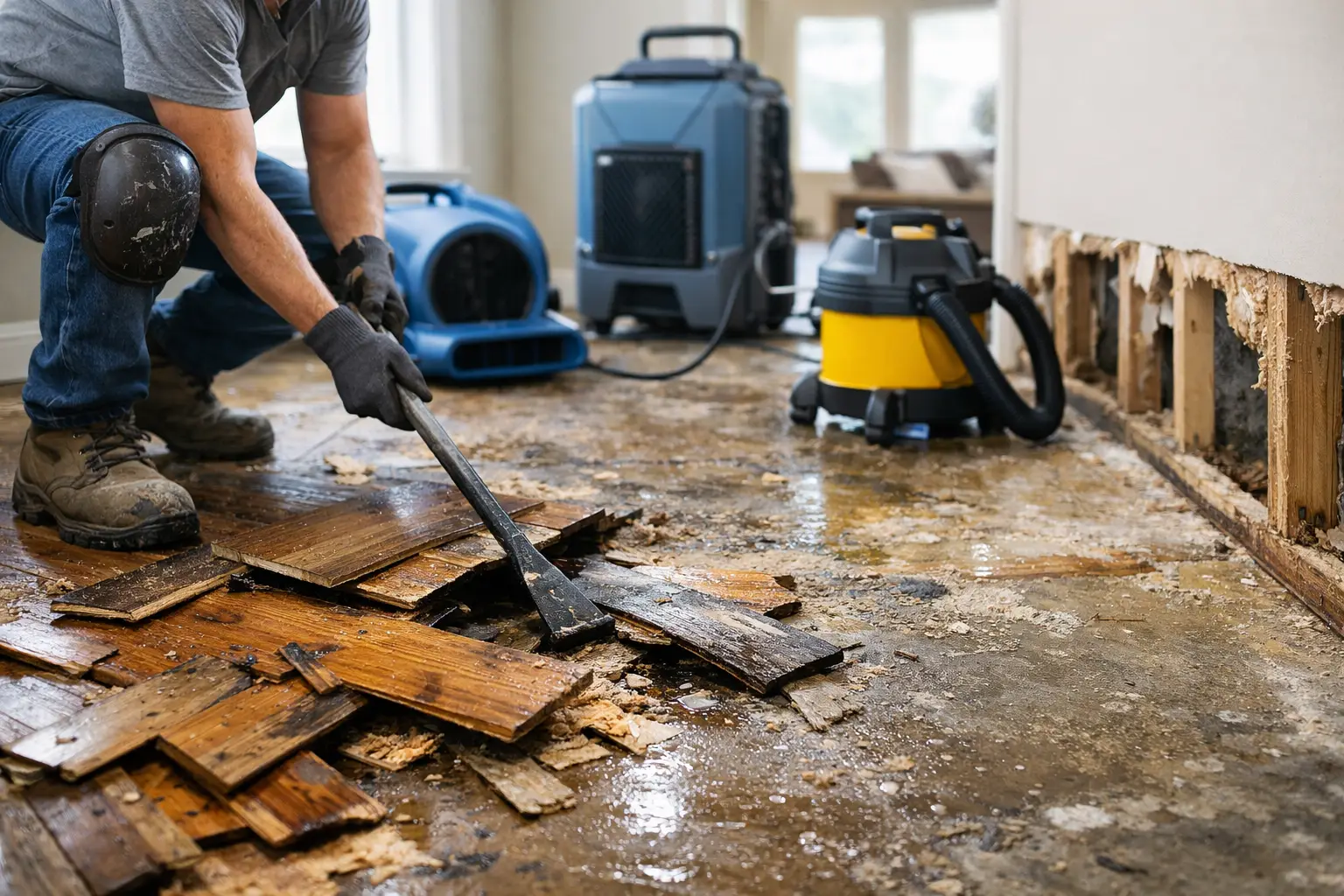
Floor Removal for Water Damage Done Right
A floor can look dry on the surface and still be a problem underneath. That is why floor removal for water damage has to be handled with speed, accuracy, and a clear plan. If moisture has reached the subfloor, padding, underlayment, or adhesive, waiting too long usually turns a manageable repair into a bigger demolition and restoration job.
For homeowners, property managers, and investors, the real question is not just whether the flooring looks bad. The question is whether the material can still perform the way it should. Water changes that fast. It weakens adhesives, warps planks, stains grout lines, softens underlayment, and creates the perfect conditions for hidden deterioration. When that happens, removal is often the smartest and most cost-effective move.
When floor removal for water damage is necessary
Not every wet floor has to come out, but many do. The type of flooring, the amount of water, how long it sat, and what is happening underneath all matter. A small spill cleaned up quickly is one thing. A leaking appliance, plumbing failure, roof intrusion, or flooding event is different.
Hardwood is especially vulnerable because moisture absorption can cause cupping, buckling, staining, and long-term structural movement. Laminate often swells quickly and rarely returns to its original shape once the core takes on water. Vinyl is more water-resistant, but that does not mean the subfloor below it is safe. Tile may survive the water itself, yet moisture can still migrate through grout lines, affect the setting materials, or damage the substrate underneath.
This is where experienced evaluation matters. Removing too little can leave trapped moisture behind. Removing too much can increase cost and downtime unnecessarily. The right approach is targeted, informed, and based on the actual condition of the floor system, not guesswork.
What water damage does below the surface
The visible floor is only one layer. Under it, there may be thinset, glue, underlayment, backer board, plywood, concrete, or other materials that react differently to moisture. A floor that still looks mostly intact can already be failing where you cannot see it.
Adhesives lose bond strength. Wood-based subfloors can swell and separate. Mold risk increases when moisture stays trapped in dark, enclosed spaces. In commercial spaces and rental properties, delayed action can also mean longer vacancy periods, more disruption, and higher overall repair costs.
That is why professional floor removal is about more than demolition. It is about exposing the affected area properly, protecting salvageable surfaces where possible, and preparing the space for the next phase. If the goal is a durable new installation, the removal stage has to be done correctly from the start.
The floor removal process after water damage
A professional crew starts by identifying what materials are affected and how far the damage extends. This step is critical because water rarely stays in one neat square. It can spread under flooring, baseboards, cabinets, and transitions.
Once the scope is clear, the damaged floor is removed in a controlled way. The method depends on the material. Tile requires different tools and dust control than glued-down vinyl or water-damaged hardwood. The goal is efficient removal without causing avoidable damage to the surrounding areas.
After the flooring comes out, the next focus is the substrate. This is where many problems are either solved or missed. The subfloor or slab has to be inspected for softness, swelling, cracking, residue, and contamination. Adhesive removal, surface grinding, and prep work may be needed before drying, repairs, or replacement can move forward.
A strong contractor understands that removal and surface prep are connected. One without the other creates problems later. New flooring only performs as well as the surface below it.
Different flooring types require different removal methods
Ceramic or porcelain tile often means breaking sections, lifting thinset-bonded material, and then smoothing the surface for the next installation. Hardwood may need careful sectioning and disposal if boards have expanded or detached. Laminate and engineered products can sometimes come apart faster, but the underlayment beneath them may be saturated and need full removal too.
Luxury vinyl plank and sheet vinyl are often chosen for their water resistance, but once moisture gets below them, the challenge becomes adhesive residue, trapped dampness, and subfloor condition. In many jobs, the flooring is not the hardest part. Restoring the surface under it is what determines the quality of the final result.
Why fast action saves money
Water damage gets more expensive when it sits. Materials absorb more moisture, deterioration spreads, and scheduling becomes more urgent. In occupied homes, families have to work around unsafe or unstable areas. In rentals or commercial properties, every extra day can affect revenue.
Fast response does not mean rushed work. It means making informed decisions early enough to reduce the chain reaction. Remove compromised flooring before more layers are affected. Open the area so drying and repairs can happen. Get the surface ready for replacement without losing weeks to preventable setbacks.
That is the value of working with a team that handles both removal and preparation. Instead of coordinating multiple trades for demolition, cleanup, surface correction, and reinstallation readiness, you can move the project forward with less friction and a more predictable timeline.
What to expect from a professional floor removal team
A reliable crew should bring more than labor. They should bring process. That means clear communication, honest assessment, efficient scheduling, and a clean, organized jobsite. Water damage is already disruptive. The contractor should reduce that stress, not add to it.
You should also expect realistic guidance. Sometimes a floor can be partially removed and repaired. Sometimes full removal is the better investment because patching around hidden damage creates future failures. A trustworthy team will explain that difference plainly.
For many property owners, speed matters just as much as finish quality. But there is always a trade-off. If a contractor skips proper surface prep to save a day, the replacement floor may fail early. If they over-demolish without reason, your costs climb. The right balance is expert judgment backed by hands-on experience.
Floor removal for water damage and what happens next
Once demolition is complete, the project shifts to recovery and rebuild. Depending on the condition of the area, that may include drying, subfloor repair, leveling, crack treatment, moisture mitigation, or complete surface preparation for new flooring. This stage is where long-term performance is built.
A high-quality installation starts with a stable base. That is especially true if you plan to replace the damaged material with tile, vinyl, marble, or another premium finish. No matter how good the product looks, it will not perform well over a compromised substrate.
This is why many clients prefer a company that can manage the removal phase and the next installation steps together. It saves time, limits miscommunication, and helps maintain accountability from start to finish. For projects in Central Florida, where moisture-related issues are common, that kind of practical coordination matters.
Choosing the right contractor for the job
Not every demolition crew is equipped for water-damaged flooring. You want a company that understands both removal and what the next trade will need. That means precision, not just force. It means protecting salvageable areas, preparing the substrate correctly, and keeping the project moving.
Look for experience across different floor types, responsive scheduling, and a strong track record with residential and commercial work. If the team also provides surface prep and new flooring installation, that is a major advantage. It simplifies the process and usually leads to better results.
Rox Floor is built around that full-service model. When a client needs damaged flooring removed, the surface corrected, and a new finish installed with quality and speed, having one expert team handle the job creates real value.
Water damage has a way of getting worse when people hope it will dry out on its own. The smarter move is to deal with the floor system as it actually is, not as it looks from the doorway. When removal is necessary, doing it right is what protects the next investment you make in the space.