
Can Marble Floors Be Refinished? What to Know
A marble floor can make an entryway, kitchen, bathroom, or commercial lobby feel premium – until scratches, dull traffic paths, etching, and cracked tiles take over. So, can marble floors be refinished? In many cases, yes. Professional restoration can remove surface damage, restore clarity, and bring back the polished or honed finish that made the floor valuable in the first place.
The right answer depends on the condition of the stone, the depth of the damage, the stability of the installation, and what is happening beneath the tile. A quality result is not just about making marble shine. It is about correcting the surface properly, addressing failures before they spread, and protecting the investment for the long term.
Can Marble Floors Be Refinished Without Replacing Them?
Marble is a natural stone, not a coating. That is good news for owners dealing with surface wear. Unlike many manufactured flooring products, marble can often be mechanically honed, polished, and sealed multiple times during its service life.
Refinishing is typically a strong option when the floor has light scratches, dullness, water spots, minor staining, etch marks from acidic products, uneven shine, or small chips around edges. These issues affect the visible finish but do not necessarily mean the tile itself has failed.
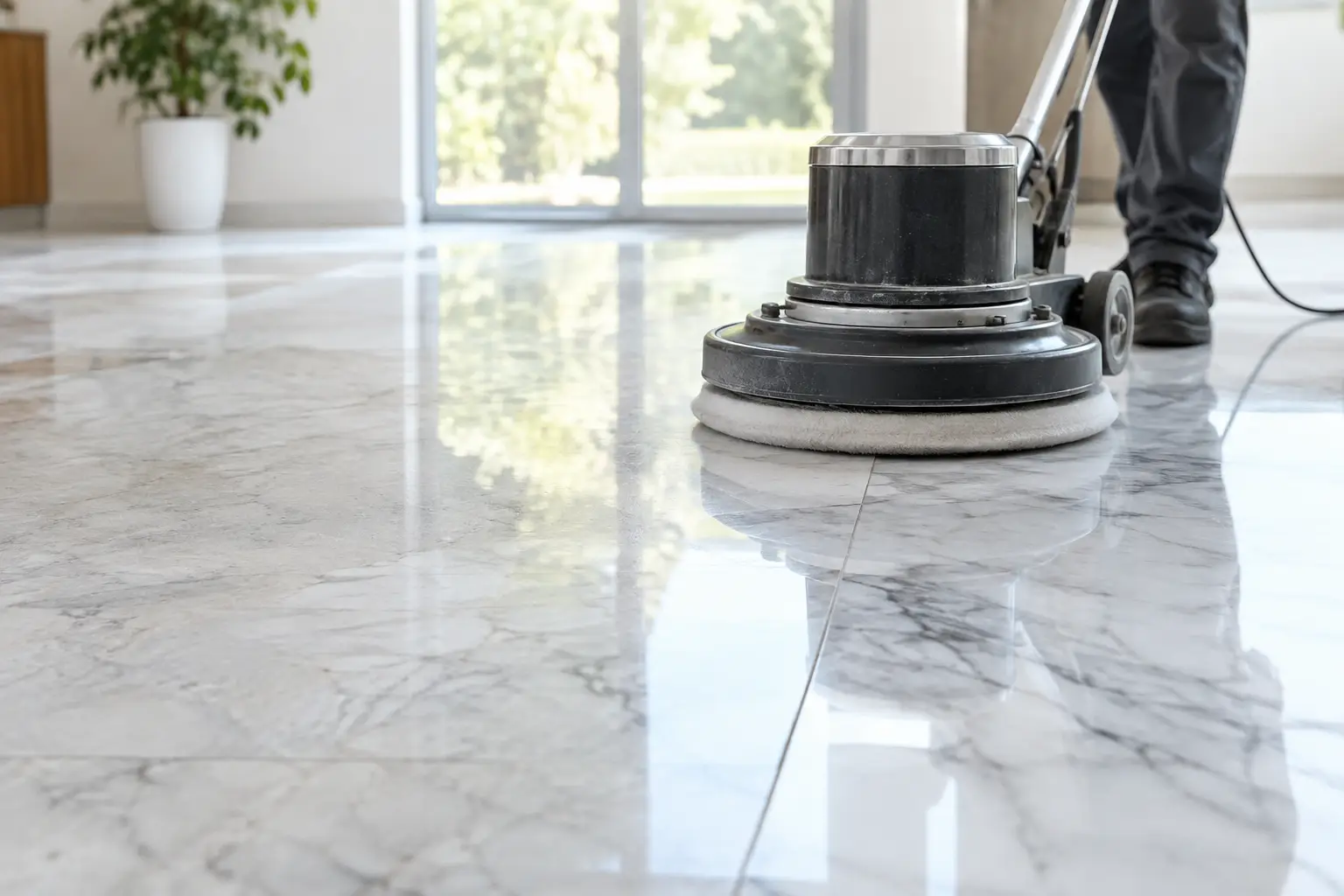
A trained stone restoration team uses diamond abrasives to remove a very thin layer from the marble surface. The process levels damage, refines the stone through progressively finer grits, and finishes it at the sheen the space calls for. A honed finish offers a soft, low-gloss appearance. A polished finish creates more reflection and visual impact, but it also shows scratches and etching more easily.
When Refinishing Is the Smart Investment
Refinishing makes the most sense when the marble is structurally sound and the problem is mostly cosmetic. It can give a dated floor a major visual upgrade without the demolition, disposal, substrate work, and material costs involved in a full replacement.
For property managers and investors, restoration may be especially valuable before a sale, lease-up, or commercial turnover. A clean, uniform marble surface can improve first impressions quickly. For homeowners, it can preserve a high-end material that would be expensive to match or replace.
The key is to inspect more than the top surface. Marble that looks worn may only need professional honing. Marble that sounds hollow, moves underfoot, has widespread cracking, or shows failing grout may require repair work before refinishing begins.
Common Problems That Refinishing Can Correct
Professional marble refinishing can address several surface-level concerns:
- Fine scratches from sand, pets, furniture, and daily traffic
- Etching caused by lemon, vinegar, acidic cleaners, or bathroom products
- Dull paths in hallways, entryways, and busy commercial areas
- Minor chips, small pits, and worn edges
- Uneven sheen between tiles or sections of the room
- Light staining that has not penetrated deeply into the stone
Some stains and discoloration need specialized treatment before honing or polishing. Rust, oil, dye, and moisture-related stains can be more complicated because the source may be below the surface. A professional assessment prevents wasted work and helps identify whether the issue is cosmetic or a sign of an underlying moisture problem.
When Marble Floor Replacement Is the Better Choice
Not every floor should be refinished. Deep cracks, loose tiles, failed bonding, major lippage, and extensive structural movement are not solved with polishing equipment. Refinishing a floor with installation problems may improve its appearance briefly, but the damage can return.
Replacement may be the better decision when a large number of tiles are broken, the existing marble has widespread staining from slab moisture, or the floor needs to be removed to correct an unstable substrate. It may also be the practical route if replacement tiles cannot be matched and the owner wants a completely new design.
This is where an integrated contractor adds real value. Instead of hiring one team to remove damaged flooring, another to prepare the surface, and another to install the replacement, owners can keep the project under one coordinated scope. Proper removal, clean demolition, substrate preparation, tile installation, grouting, and finishing all affect the final result.
What Professional Marble Refinishing Involves
High-quality marble restoration is a controlled process. It is not the same as applying wax, using a store-bought polish, or running a rental buffer across the floor. Those shortcuts can leave residue, create uneven shine, and make future restoration harder.
First, the floor is evaluated for loose pieces, cracked tiles, failed grout, moisture concerns, and areas with heavy wear. Necessary repairs are completed before the surface is refinished. Next, diamond honing removes etches, scratches, and unevenness. The stone is then refined to the desired finish, whether that is a natural honed look or a brighter polished appearance.
Grout lines may also need cleaning, repair, or color adjustment to match the refreshed marble. Once the surface is complete and fully dry, an appropriate penetrating sealer can help reduce absorption and make routine maintenance easier. Sealers are not a shield against every spill, but they provide useful protection when paired with prompt cleaning.
Polished vs. Honed Marble: Choose for Real Life
A polished marble floor looks dramatic. It reflects light, emphasizes veining, and delivers the classic luxury finish many owners want in formal spaces. The trade-off is maintenance. Polished marble can show etching, smudges, and fine scratches more readily, especially in busy kitchens, bathrooms, and entryways.
Honed marble has a softer, satin-like finish with less reflection. It is often more forgiving in active homes, rental properties, and commercial settings. It can still look premium, but it does not demand the same level of visual perfection every day.
There is no universal best choice. A bright, low-traffic foyer may benefit from a polished finish. A family kitchen, pool-adjacent room, or high-use bathroom may perform better with honed marble. The best finish matches the space, traffic level, cleaning habits, and owner expectations.
How to Protect a Refinished Marble Floor
After refinishing, daily care determines how long the restored surface stays attractive. Use a pH-neutral cleaner made for natural stone and avoid vinegar, lemon-based products, bleach, abrasive powders, and generic bathroom cleaners. Acidic products can etch marble quickly, even when the floor has been sealed.
Place walk-off mats at exterior doors to limit grit, which acts like sandpaper under shoes. Use felt pads under furniture, wipe spills promptly, and avoid dragging heavy items across the floor. In bathrooms and kitchens, address standing water and leaking fixtures before moisture reaches grout joints or the setting bed.
For commercial properties, scheduled maintenance is worth considering. High-traffic lobbies, retail spaces, and common areas can lose their finish faster than residential rooms. Regular cleaning and timely spot restoration are usually more cost-effective than waiting until the entire floor looks worn.
Get the Right Scope Before Work Begins
The best marble project starts with a clear diagnosis. A contractor should explain whether the floor needs refinishing, repairs, selective tile replacement, or full removal and installation. That clarity protects your budget and avoids cosmetic fixes that ignore the real problem.
For Central Florida homeowners, property managers, and commercial clients, Rox Floor can evaluate the full flooring scope – from damaged marble removal and surface preparation to premium new tile or marble installation. The goal is straightforward: clean execution, strong preparation, and a finish built to perform.
A refinished marble floor should not just look better on the day the work is completed. It should make the entire space feel more valuable, more maintained, and ready for the next stage of your property.