
Bathroom Remodeling Trends 2026 to Watch
If your bathroom still feels stuck in the all-white, ultra-minimal look of the last few years, 2026 is bringing a noticeable shift. Bathroom remodeling trends 2026 are less about showroom style and more about performance, comfort, and materials that hold up under daily use. Homeowners are still chasing a fresh look, but they are asking smarter questions about durability, maintenance, moisture resistance, and long-term resale value.
That shift matters because a bathroom remodel is not just about what looks good on install day. It is about how the tile wears, how the layout functions, how easy the surfaces are to clean, and whether the finished space still feels current five years from now. The strongest remodels in 2026 will balance design with practical construction decisions from demolition and surface prep to final installation.
Bathroom remodeling trends 2026 are getting warmer and more grounded
For years, many bathrooms leaned cold and clinical. Bright white walls, gray flooring, stark vanities, and polished chrome dominated the market. In 2026, the move is toward warmer, more natural spaces that still feel clean and premium.
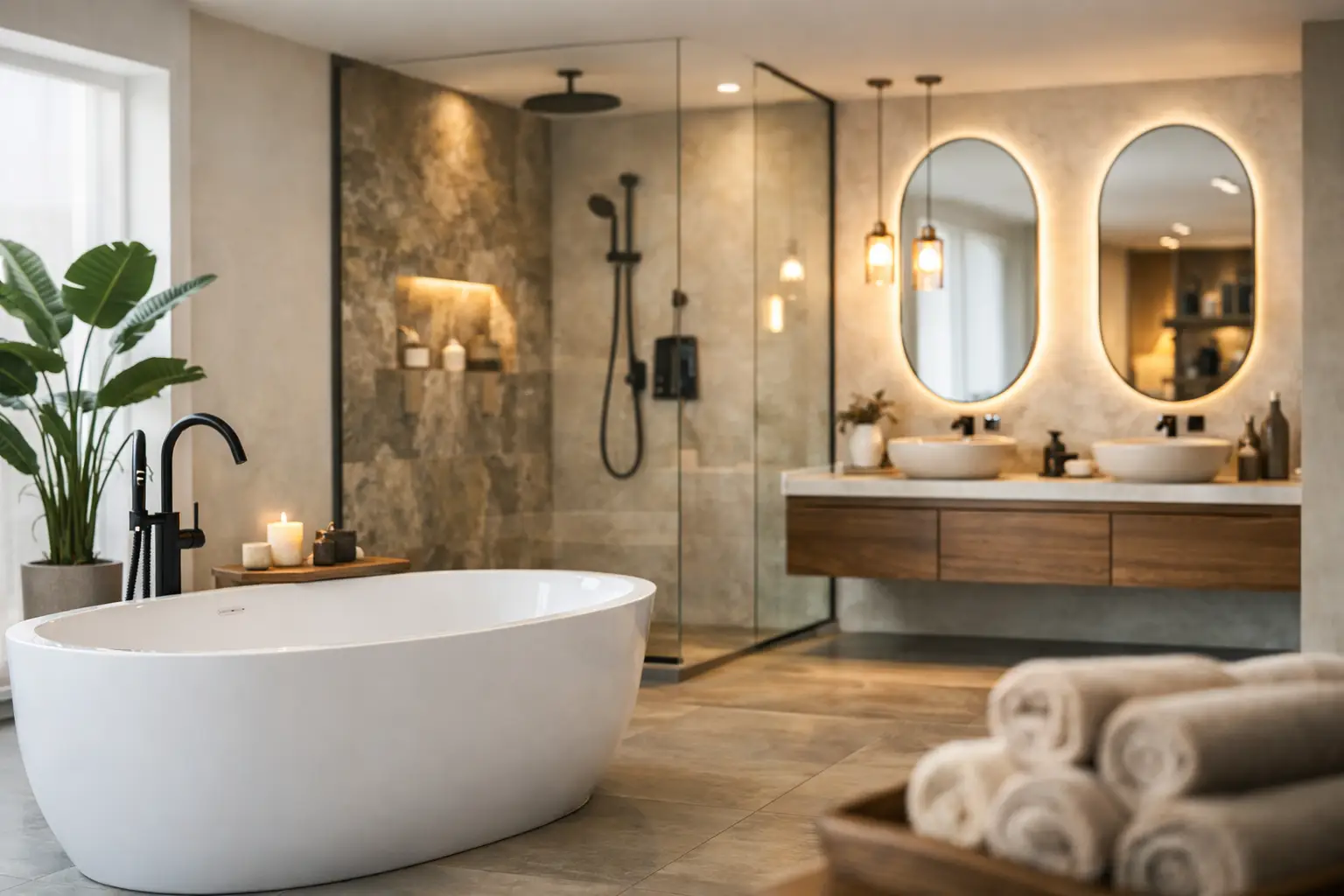
Expect to see more soft beige, sand, taupe, clay, and warm off-white tones replacing icy grays. Wood-look vanities and natural stone visuals are also gaining ground, especially when paired with porcelain tile that delivers the appearance of organic material without the same maintenance demands. This is a smart direction for busy households and investment properties because the look is more inviting, but the materials can still be selected for durability.
The trade-off is that warm palettes need careful coordination. If the floor, wall tile, vanity, and countertop all sit in different undertones, the room can look disconnected fast. This is where professional planning matters. Good remodeling is not just choosing attractive finishes. It is choosing finishes that work together under real lighting conditions.
Tile is doing more work than ever
Tile remains one of the biggest drivers of bathroom design, but in 2026 it is doing more than adding visual impact. It is setting the tone of the room, improving moisture resistance, and helping homeowners reduce maintenance.
Large-format tile continues to grow because it creates a cleaner look with fewer grout lines. That matters visually, but it also matters for upkeep. Less grout often means easier cleaning and fewer places for moisture and buildup to settle. In showers, this trend is especially strong because it supports a more continuous, high-end finish.
Textured tile is also gaining attention, particularly on feature walls and flooring. The key is using texture strategically. A textured shower wall can add depth and character. A heavily textured floor may improve slip resistance, but if it is too rough, cleaning becomes harder. It depends on the space, the users, and how much maintenance the homeowner is willing to handle.
Marble-look porcelain remains a strong choice because it delivers a luxury appearance with better everyday practicality than many natural stones. For clients who want premium style without constant sealing or delicate care, this is one of the smartest materials on the market.
Surface prep is becoming part of the conversation
One of the biggest mistakes in bathroom remodeling is focusing only on visible finishes. In reality, tile and flooring performance starts underneath. As bathrooms get more design-driven, the quality of demolition, substrate repair, leveling, and moisture preparation becomes even more important.
A beautiful tile install over an uneven or poorly prepared surface is a short-term win and a long-term problem. In 2026, more property owners are recognizing that lasting results come from a full-process approach. That means correct removal, clean prep, proper installation methods, and attention to transition points, corners, and wet areas.
Walk-in showers are still leading, but with smarter details
Walk-in showers have been popular for years, and they are not going anywhere. What is changing in 2026 is the way they are being built. The new version is less about oversized, empty space and more about efficient comfort.
Frameless glass remains in demand, but many homeowners are pairing it with simpler tile layouts and stronger functional details. Built-in niches, bench seating, better drainage planning, and low-threshold entries are driving the category. These features improve everyday use and make the space feel more custom.
There is also growing interest in curbless or near-curbless designs, especially for aging-in-place planning and higher-end renovations. They look clean and modern, but they require precise slope work and waterproofing. This is not an area to cut corners. When executed correctly, the result is sharp, accessible, and highly marketable. When handled poorly, the risk of water management issues goes up fast.
Vanities are becoming more functional, not just bigger
Bigger is no longer automatically better. One of the most practical bathroom remodeling trends 2026 is the move toward vanities that maximize usable storage and preserve floor space.
Floating vanities continue to perform well because they make the room feel larger and give the bathroom a cleaner visual line. They are especially effective in small and mid-size bathrooms where every inch counts. At the same time, furniture-style vanities with warm finishes are bringing back character and depth in larger primary baths.
Storage matters more than ever. Drawers are beating basic cabinet doors because they improve accessibility and organization. Homeowners want places for daily-use items without cluttering the countertop. For rental properties and flip projects, practical storage can also make the finished bathroom feel more valuable to buyers and tenants.
Countertop choices are following the same logic. Durable, low-maintenance surfaces continue to outperform trendier options that look good but demand more care. In a bathroom, water exposure and product spills are constant. Performance matters.
Lighting is becoming a design feature and a utility upgrade
Bathrooms in 2026 are getting better lighting plans. Not brighter for the sake of brightness, but layered lighting that serves the way people actually use the room.
Backlit mirrors, vertical vanity lighting, dimmable fixtures, and warmer color temperatures are replacing single overhead fixtures that flatten the entire space. This improves grooming visibility, creates better ambiance, and gives the room a more finished, custom feel.
Smart features are also entering the space in a practical way. Homeowners are showing interest in motion-sensor lighting, defogging mirrors, and integrated controls, but the best upgrades are still the ones that solve real problems. A smart feature that saves time or improves comfort has value. One that adds cost without daily benefit is easier to skip.
Matte finishes and mixed materials are replacing one-note design
Bathrooms are looking more layered in 2026. Instead of matching every metal, surface, and finish exactly, homeowners are mixing materials in a controlled way. Matte black, brushed nickel, warm metallics, wood tones, and stone visuals are being combined to create more depth.
This does not mean anything goes. The best bathrooms still feel intentional. Usually, one finish leads and another supports. When too many materials compete, the room can feel busy and dated before the project is even complete.
Matte finishes continue to perform well because they hide fingerprints and water spots better than some polished surfaces. That said, the best finish still depends on the household. In high-use bathrooms, durability and ease of care should lead the decision, not trend appeal alone.
What homeowners should prioritize before starting a remodel
Trends matter, but not all trends fit every property. A primary bath in a long-term family home should be planned differently than a guest bath in a rental or a bathroom in an investment flip. Budget, daily use, resale goals, and building conditions all affect the right direction.
Before selecting finishes, it helps to get clear on three things: what needs to be removed, what needs to be corrected underneath, and what level of finish matches the value of the property. That prevents overbuilding in one room while ignoring structural or installation basics that affect the entire result.
In Central Florida, moisture resistance, material stability, and proper installation are especially important. Bathrooms work hard in this climate. The right tile, the right prep, and the right crew can make the difference between a remodel that looks great for a season and one that performs for years.
A strong 2026 bathroom is not defined by one color or one fixture style. It is defined by smart material choices, clean execution, and a layout that makes everyday life easier. If your remodel starts with that mindset, the finished space will not just follow the market. It will keep delivering value long after the trend cycle moves on.