
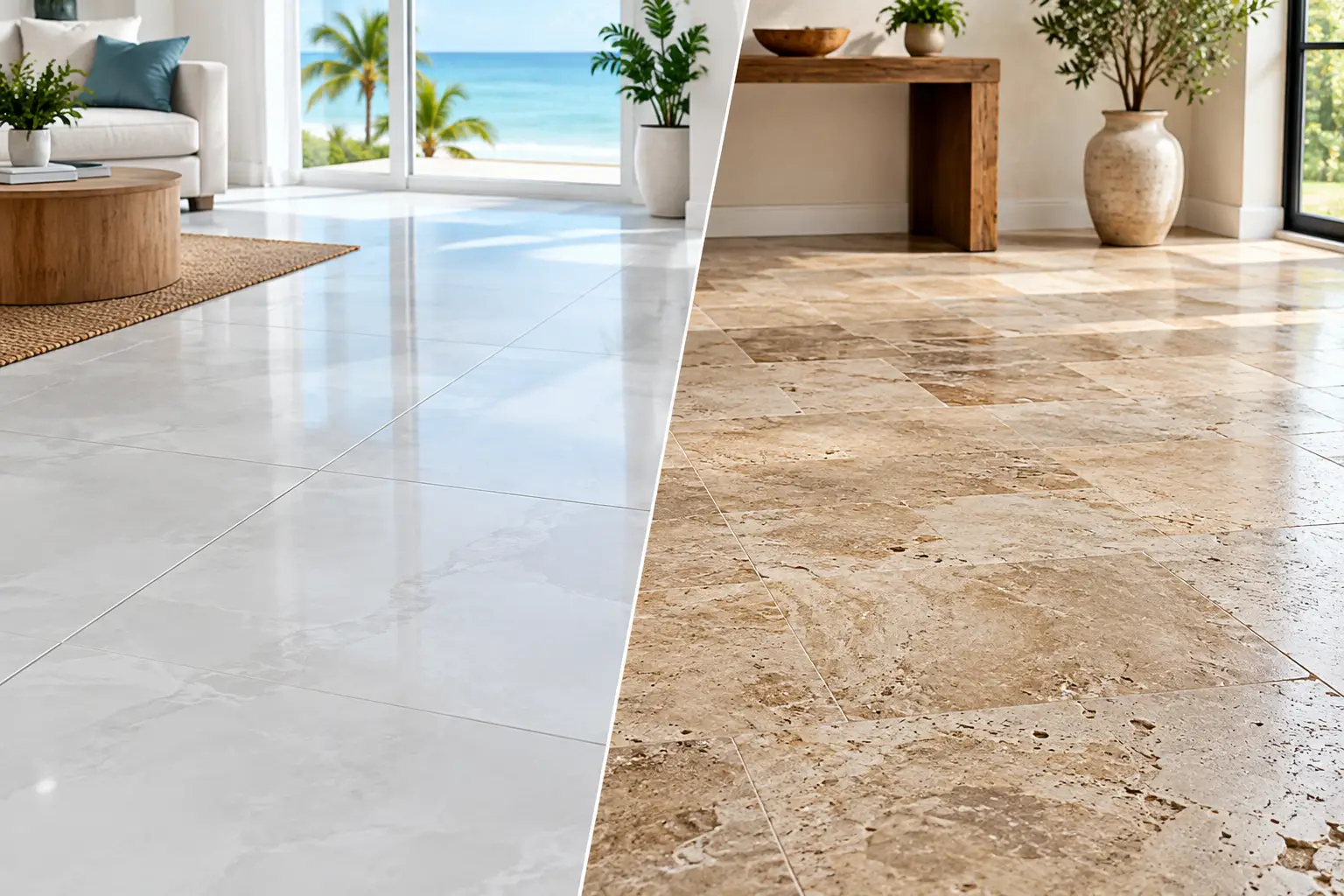
Ceramic Versus Natural Stone for Florida Floors
A flooring decision can change the entire feel, maintenance load, and resale appeal of a property. When comparing ceramic versus natural stone, the best choice is not simply about which material looks more expensive. It comes down to how the floor will be used, how much maintenance the owner accepts, and whether the installation is prepared to perform for years in Florida conditions.
Ceramic tile delivers a clean, durable, budget-conscious surface with extensive design flexibility. Natural stone brings one-of-a-kind character, premium appeal, and lasting value when it is selected and maintained correctly. Both can be excellent investments. The difference is matching the material to the space, the traffic, and the project goals.
Ceramic Versus Natural Stone: The Real Difference
Ceramic tile is a manufactured product made from clay and other natural materials that are shaped, glazed, and fired at high temperatures. It can be produced in a wide range of colors, sizes, patterns, textures, and finishes. Some ceramic tiles are designed to imitate marble, travertine, wood, concrete, or other high-end surfaces at a more manageable price point.
Natural stone is quarried from the earth and cut into tiles, slabs, pavers, or other finished pieces. Marble, travertine, limestone, granite, slate, and quartzite all fall into this category. No two pieces are exactly alike, which is a major part of stone’s visual appeal. It also means clients should expect natural movement in color, veining, pits, and texture.
The practical distinction is simple: ceramic is engineered for consistency and lower maintenance, while natural stone is valued for authenticity and a premium custom appearance. Neither is automatically better. The right answer depends on the property and the owner’s priorities.
Appearance and Design Impact
Natural stone makes a strong visual statement. A marble floor can give a bathroom or entryway a refined, upscale finish. Travertine can bring warmth to a living area, patio transition, or Mediterranean-style home. Slate offers deeper color variation and texture for spaces that need a more organic look.
That character comes with variation. Samples are useful, but they never show the full range of tones and markings in an entire stone order. A professional installer plans the layout before setting the material so color variation feels intentional rather than random.
Ceramic provides more design control. Homeowners and property managers can choose a crisp white tile, a large-format concrete look, a wood-look plank, or a marble-look surface with predictable coloring from box to box. This is especially useful in commercial settings, rental properties, and larger renovations where consistency matters.
For a high-end custom home, natural stone may be the feature that makes the project stand apart. For a kitchen, bathroom, office, or rental upgrade that needs a polished result without the unpredictability of stone, ceramic is often the smarter business decision.
Cost: Look Beyond the Tile Price
Ceramic usually has a lower material cost than natural stone, but the full project cost includes demolition, floor removal, subfloor or slab preparation, materials, labor, grout, trim, sealing, and disposal. A low tile price does not solve a damaged substrate or uneven floor.
Natural stone typically costs more because of the material itself, freight, cutting requirements, waste allowance, and installation labor. Stone pieces can require more careful handling, specialty blades, detailed layout work, and additional protection during construction. Large-format stone and marble slabs increase the precision required even further.
Ceramic can also become a premium installation when clients choose large-format tile, custom patterns, intricate borders, or specialty finishes. The point is not that one option is cheap and the other is expensive. It is that each requires a realistic scope of work from the start.
A detailed quote should identify the preparation needed before installation. In Central Florida, that often means evaluating concrete slabs for cracks, moisture concerns, old adhesive, uneven areas, or hollow spots that can affect the finished floor. Proper preparation protects the investment regardless of which material is selected.
Durability in Busy Homes and Commercial Spaces
Ceramic tile performs well in high-traffic interiors. It resists everyday scratches, does not fade easily, and handles spills better than many flooring materials. A quality glazed ceramic tile can be an excellent choice for kitchens, bathrooms, hallways, laundry rooms, and commercial interiors.
Natural stone is durable, but durability varies by species. Granite and quartzite are generally harder than marble, limestone, or travertine. Marble is beautiful, yet it can scratch or etch when exposed to acidic products such as lemon juice, vinegar, or some cleaners. Travertine is durable but naturally porous and may contain surface voids that need filling and maintenance over time.
This is where the intended use matters. A formal powder room with limited traffic can be a great place for polished marble. A busy family kitchen, active rental property, or commercial corridor may benefit from ceramic’s easier day-to-day performance. For outdoor or wet areas, the tile or stone must also have the correct finish and slip resistance for the application.
Maintenance Is a Major Decision Factor
Ceramic is the easier material to maintain. Regular sweeping and mopping with appropriate cleaning products are typically enough to keep it looking sharp. The grout still needs attention, especially in kitchens and bathrooms, but the tile surface itself is generally straightforward.
Natural stone requires more commitment. Most stone floors need sealing on a schedule that depends on the specific material, finish, use, and products applied. Harsh cleaners can damage the surface or strip protective treatments. Spills should be cleaned promptly, and owners should use stone-safe cleaning products rather than assuming a standard household cleaner is suitable.
For property managers and investors, that maintenance difference should be weighed seriously. Natural stone can support a premium property position, but it needs informed care. Ceramic makes sense when a property needs a durable, attractive floor with fewer ongoing demands.
Installation Quality Determines the Result
Even the best material can fail when it is installed over an unprepared surface. Loose tile, cracked grout, lippage, hollow spots, moisture issues, and uneven transitions are often installation or substrate problems, not simply material problems.
Ceramic tile needs a clean, level, stable surface and the correct setting materials. Natural stone requires even more precision because some stone can be thinner, more fragile, more translucent, or more sensitive to movement. Larger pieces demand careful flatness standards to reduce uneven edges and create a clean finished plane.
Demolition is part of that quality equation. Old flooring, thinset, damaged underlayment, and weak substrate areas must be addressed before new material goes down. A professional team should evaluate the existing floor, remove what is no longer sound, prepare the surface correctly, and install the finish with the right spacing, grout, transitions, and protection.
Which Material Fits Your Project?
Choose ceramic when you want a reliable, low-maintenance finish, consistent color, broad design options, and strong value for kitchens, bathrooms, rental properties, offices, and busy family spaces. It is also a strong choice when a project needs an upgraded look on a controlled budget.
Choose natural stone when the property calls for authentic material, unique visual variation, and premium architectural impact. It is ideal for clients who understand the care requirements and want a finish that cannot be fully duplicated by a manufactured tile.
There is also a practical middle ground. Many owners use natural stone in a focal area such as an entry, primary bathroom, fireplace surround, or feature wall, then select ceramic for larger spaces that need easier maintenance. This approach can deliver a high-end visual result while keeping the overall project more manageable.
The right floor starts with an honest assessment of the space, the existing substrate, and the expected use. Rox Floor helps homeowners, investors, and commercial clients handle removal, preparation, and installation as one coordinated project. Whether ceramic or natural stone is the better fit, careful planning and expert execution will give the finished floor the performance and appearance the property deserves.