
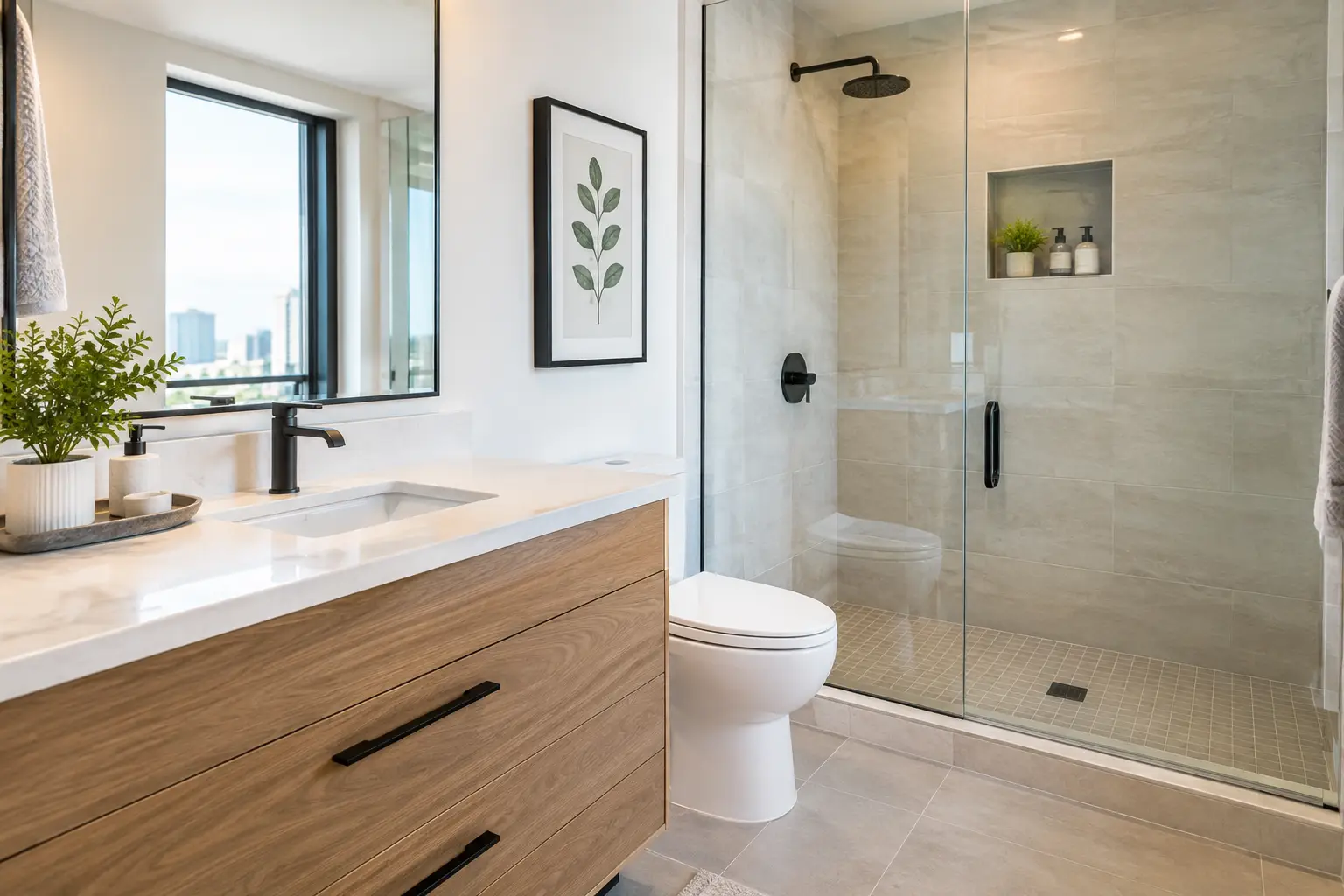
Condo Bathroom Transformation That Adds Value
A condo bathroom transformation is rarely just a cosmetic upgrade. Behind the old tile, dated vanity, and worn flooring are decisions that affect waterproofing, plumbing access, building rules, resale appeal, and the daily comfort of everyone using the space. The right renovation does more than make a bathroom look current – it creates a cleaner, more durable room built to perform.
For Orlando-area condo owners, investors, and property managers, the strongest results come from planning the removal, preparation, installation, and finishing work as one coordinated project. That prevents costly gaps between trades and helps keep the job moving on schedule.
What a Condo Bathroom Transformation Must Solve
A detached home bathroom can offer more flexibility. A condo bathroom has limits that need to be respected from the first estimate. Plumbing locations may be shared with neighboring units, work hours can be restricted by the association, and demolition debris often must move through elevators, hallways, or designated service areas.
That does not mean the project needs to feel limited. It means the scope needs to be precise. A professional team should identify what can change safely, what must stay in place, and where an upgrade will deliver the biggest visual and financial return.
The best condo renovations solve several problems at once: damaged or dated finishes are removed cleanly, the subfloor and wall surfaces are prepared correctly, moisture protection is addressed before tile goes in, and every visible finish works together. Skipping the preparation stage may lower the upfront price, but it often creates the most expensive problems later.
Start With the Bathroom’s Real Condition
Before choosing tile colors or fixtures, assess the surfaces underneath. Loose tile, cracked grout, soft flooring, staining around the toilet, or a shower wall that feels hollow can point to moisture damage or failed installation. These conditions should be corrected before new materials cover them.
Professional demolition matters here. Old flooring, wall tile, thinset, vanities, and fixtures must be removed without unnecessary damage to surrounding surfaces. In a condo, dust control and clean debris removal are equally important. Neighbors, common areas, and building management should not carry the burden of a renovation project.
After removal, the substrate needs attention. Floors may require leveling, patching, or surface preparation before porcelain, ceramic, vinyl, or marble can be installed. Walls may need repair before a new tile surround, mirror, or vanity is mounted. High-quality finishes only perform as well as the surface beneath them.
Water Protection Is Not an Optional Upgrade
Bathrooms operate under constant moisture exposure. The shower area demands proper waterproofing behind and beneath the finished tile, while floors need sound preparation around toilets, tubs, and vanity plumbing. Attractive tile cannot compensate for a failed waterproofing system.
This is one area where cutting corners is a poor trade-off. A basic finish package can still look excellent, but hidden systems should be built for long-term performance. Water intrusion can affect adjacent walls, lower units, and association relationships. A properly prepared bathroom protects the investment before the first shower is used.
Choose Materials for Condo Living, Not Just the Showroom
Material selection should balance appearance, maintenance, budget, and installation requirements. Large-format porcelain tile can create a premium, open look with fewer grout lines, but it requires a flat, carefully prepared surface. Ceramic tile offers broad design flexibility and can be an excellent value for walls and floors when selected for the right application.
Luxury vinyl flooring can be a smart choice for some condo bathrooms, particularly when homeowners want a warmer feel underfoot, quick installation, and a lower material cost. It is not the right answer for every space, especially if the existing floor has moisture issues that have not been resolved. The condition of the subfloor should drive the decision.
Natural marble delivers a distinctive high-end appearance, yet it asks more from the owner. It can require sealing and more careful maintenance than porcelain. For a personal residence, that maintenance may be worthwhile. For a rental property or high-turnover unit, porcelain that captures the look of stone may offer the better long-term return.
A coordinated palette typically produces the strongest visual result. Neutral floor tile, a clean shower surround, a vanity with practical storage, and upgraded lighting can make a compact bathroom feel larger without moving a single wall. If the budget allows for only one premium feature, a well-built shower or a standout vanity often has more impact than scattered upgrades throughout the room.
Build the Scope Around Budget and Value
A successful renovation is not defined by choosing the most expensive material. It is defined by spending in the places that improve durability, function, and market appeal. For an owner planning to stay long term, custom storage, upgraded fixtures, and a more personalized tile design may make sense. For an investor preparing a condo for sale or rent, dependable finishes with broad appeal are usually the stronger move.
The scope should account for demolition, disposal, surface preparation, waterproofing, flooring, wall tile, fixture replacement, vanity installation, trim, and final cleanup. A quote that covers only installation can look attractive at first, then grow when the old material, damaged substrate, or finishing work is addressed later.
Working with one experienced provider for removal and renovation creates clearer accountability. Rox Floor helps clients coordinate the essential stages, from light demolition and floor removal through surface preparation and high-quality tile, vinyl, or marble installation. That integrated approach reduces handoffs and helps keep quality consistent from the first day of work to the final finish.
Plan for Condo Rules Before Work Begins
Condo associations often require approval before a bathroom renovation begins. Requirements can include proof of insurance, approved work hours, elevator reservations, contractor documentation, flooring specifications, and rules for debris removal. Some buildings also have restrictions related to plumbing changes or sound-control materials.
Handle these details early. A strong project plan includes the association timeline, delivery access, parking arrangements, and a clear work sequence. Waiting until materials are ordered or demolition is scheduled can create delays that affect the entire renovation.
Communication also protects the project. Building management should know when noisy work will occur, and the contractor should understand where materials can be staged and how waste must be removed. Prompt scheduling is valuable, but controlled scheduling is what keeps a condo project on track.
The Installation Details Buyers and Owners Notice
People may not see the waterproofing membrane or floor preparation, but they quickly notice poor alignment, uneven cuts, inconsistent grout lines, and loose fixtures. Precision is the difference between a bathroom that feels professionally remodeled and one that feels rushed.
Tile layout should be considered before installation begins. Centered cuts, balanced wall patterns, clean transitions at the doorway, and properly planned niches can make a standard material look premium. Grout color also matters. A close match creates a calmer, more continuous look, while a contrast grout makes the tile pattern more prominent and can require more visible maintenance.
Lighting should not be an afterthought. A well-lit vanity area improves daily use and makes the room feel cleaner and more spacious. Pair practical task lighting with a mirror and finish selections that reflect light effectively, especially in interior condo bathrooms with limited natural light.
Avoid the Fast, Cheap Remodel Trap
The fastest quote is not always the fastest completed project. Rushed demolition can damage surfaces. Inadequate preparation can delay installation. Cheap materials may need replacement long before their time. And incomplete scope planning can leave owners managing multiple contractors while the bathroom remains out of service.
A better approach is direct: define the goal, inspect the existing condition, confirm association requirements, select materials suited to the space, and hire a team that can execute the full scope with care. It may require more planning upfront, but it reduces surprises and supports a finish that holds up.
A well-executed condo bathroom does not need excess square footage to feel premium. Give priority to clean demolition, reliable waterproofing, properly prepared surfaces, and installation details that look intentional. Those are the decisions that turn a dated bathroom into a space owners enjoy using and buyers remember when it is time to sell.