
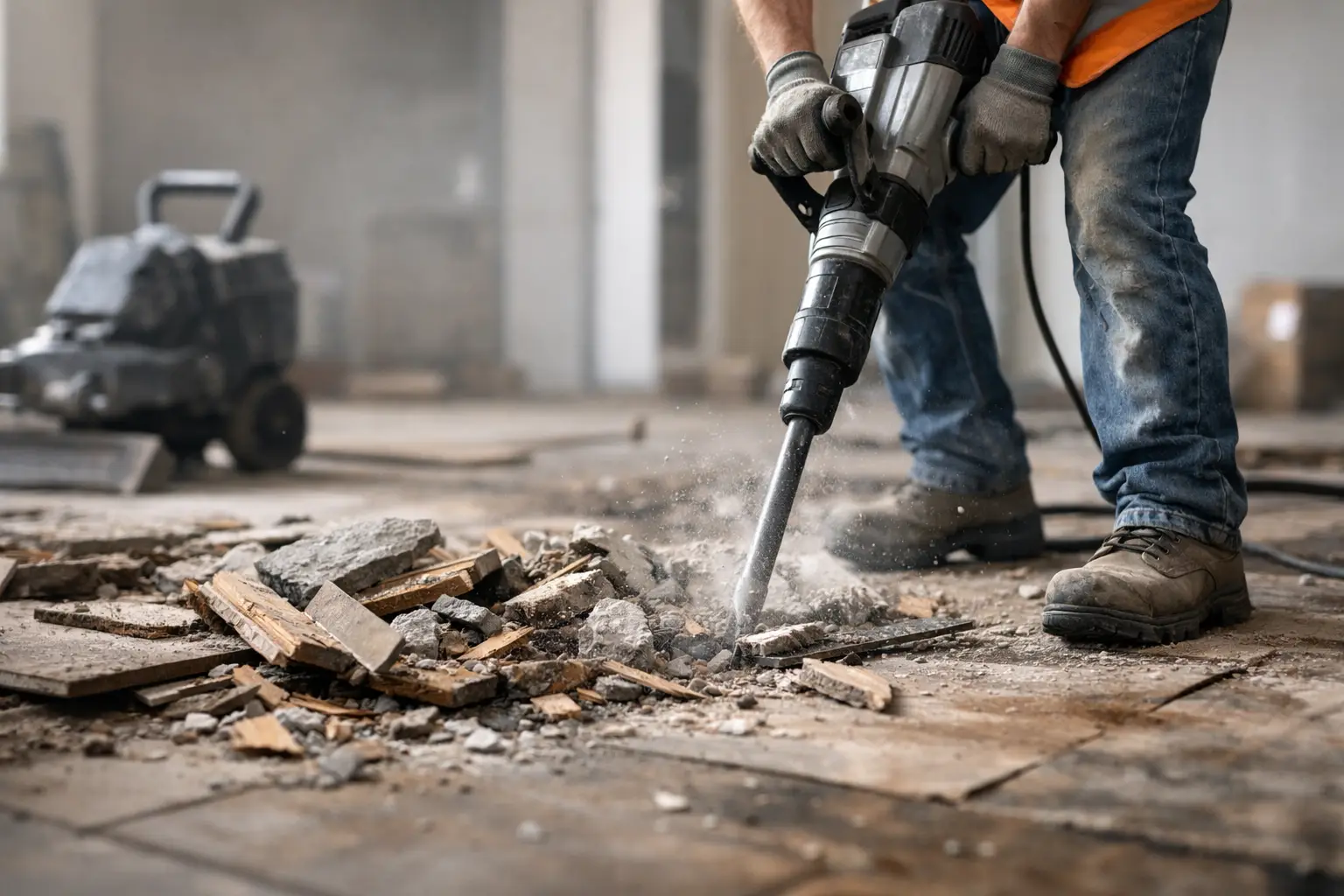
Floor Demolition Done Right
Old flooring can slow down an entire renovation before the real upgrade even starts. That is why floor demolition is not just a tear-out job. It is the first move that affects timeline, surface quality, installation performance, and the final look of the space.
When homeowners, property managers, and contractors plan a kitchen, bathroom, rental turnover, or commercial update, they usually focus on the new finish. Tile, vinyl, and marble get the attention. But if the existing floor is removed poorly, the new material has to fight against cracks, adhesive residue, uneven spots, and hidden damage. That costs time and money fast.
Why floor demolition matters more than most people expect
A clean removal sets the tone for everything that follows. If the demolition crew leaves behind adhesive buildup, damaged subfloor sections, or loose debris, the installation phase becomes slower and less predictable. In many cases, what looks like a simple floor replacement turns into a bigger correction job because the surface was not prepared properly from the start.
Professional floor demolition helps avoid that chain reaction. It creates a stable foundation for the next step, whether the project calls for ceramic tile, luxury vinyl plank, natural stone, or another finish. It also makes scheduling easier because one experienced team can move directly from removal to surface prep instead of handing off a problem to the next trade.
That is a major advantage for anyone trying to keep a residential remodel or investment property on track. Speed matters, but controlled execution matters more.
Not every floor demolition project is the same
Different materials come out in different ways. Tile demolition often involves breaking rigid material, removing thinset, and checking for cracks or movement underneath. Hardwood removal may look cleaner at first, but staples, glue, and damaged underlayment can create their own delays. Vinyl and laminate can lift quickly in some rooms and fight back in others, especially when moisture or old adhesive is part of the picture.
The subfloor also changes the approach. Concrete slabs, plywood, mortar beds, and older layered installations each require different tools and handling. A crew with real field experience knows when to use heavy mechanical removal, when to protect surrounding finishes, and when to slow down to avoid unnecessary damage.
That is where expertise shows. Good demolition is not about making the biggest mess in the shortest time. It is about removing the right material, protecting what stays, and preparing the surface for what comes next.
What a professional process should include
The best results start before the first section of flooring is lifted. A proper assessment identifies the existing material, how it was installed, what condition the substrate is in, and whether moisture, cracks, or previous patchwork could affect the next phase. That evaluation shapes the work plan and helps avoid surprises in the middle of the job.
During demolition, containment and site protection matter. Dust control, debris management, edge protection, and careful handling around cabinets, walls, fixtures, and transitions help keep the project clean and efficient. For occupied homes and active commercial spaces, this is not a small detail. It is part of what makes the service practical.
After removal, the job is not really done until the surface is ready for prep. That may mean scraping adhesive, grinding high spots, patching low areas, removing loose material, or addressing damaged subfloor sections. A strong service provider does not stop at demolition and leave the customer with a half-finished problem.
Where projects often go wrong
A lot of flooring problems begin with rushed removal. One common issue is assuming all old material can be removed the same way. Another is underestimating how much cleanup and prep will be needed after the visible floor is gone. The result is usually a job site that looks finished at a glance but is not truly ready for installation.
There is also the cost trap. A low demolition quote can sound attractive until hidden charges appear for debris handling, adhesive removal, surface grinding, or minor subfloor repairs. That is why clear scope matters. Clients need to know whether they are paying for basic tear-out only or for a complete start-to-finish preparation process.
Timing is another pressure point. If demolition is delayed or incomplete, every trade behind it gets pushed back. That can affect countertop schedules, cabinet work, bathroom fixture installation, and tenant turnover dates. In busy renovation markets, missed timing can be more expensive than the demolition work itself.
Residential and commercial clients need different priorities
For homeowners, the biggest concerns are usually cleanliness, speed, communication, and confidence that the new floor will last. They want to know their kitchen, bathroom, or living area will not turn into an open-ended construction zone. They also want a team that can explain what is happening without making the process feel complicated.
Property managers and investors often care most about turnaround, budget control, and consistency across units or properties. They need floor demolition that keeps projects moving and reduces coordination headaches. If one vendor can remove old flooring, prep the surface, and install the replacement, that creates a clear operational advantage.
Commercial clients tend to focus on scheduling, safety, and minimizing disruption. In those environments, planning and execution have to be tight. There is less room for improvisation, especially when work happens around staff, customers, or ongoing operations.
Why an integrated service model saves time
One of the smartest ways to reduce renovation friction is to hire a team that handles removal, prep, and installation together. That eliminates the usual disconnect between the crew that tears out the old floor and the crew that has to deal with the consequences.
When one provider manages the full process, accountability is clearer. The same team sees the substrate condition, addresses issues early, and installs the new material based on the actual site conditions. That leads to fewer delays, fewer finger-pointing conversations, and better final results.
For projects in Central Florida, where schedules move fast and property updates often need to happen on tight timelines, that kind of coordination is a real advantage. It is one reason companies like Rox Floor stand out. Clients are not just hiring demolition. They are hiring a faster path to a finished space.
Signs you need expert floor demolition
Some floors make the need obvious. Cracked tile, lifting vinyl, moisture damage, hollow spots, and outdated materials are clear signals. But there are also less obvious reasons to bring in specialists. Uneven transitions between rooms, recurring grout cracks, soft subfloor areas, and multiple layers of old flooring often point to deeper issues that need careful removal and inspection.
If the goal is a premium finish, expert demolition becomes even more important. High-quality tile and marble installations depend on stable, flat, properly prepared surfaces. Skipping precision at the beginning usually shows up later in movement, visible imperfections, or premature wear.
That is not a risk worth taking to save a small amount on the front end.
What to look for in a floor demolition company
Experience matters, but not just in years. It matters in the range of projects completed, the ability to handle different flooring types, and the discipline to keep work clean and organized. A trustworthy contractor should be able to explain the process clearly, define the scope, and tell you what happens after the old floor comes out.
Responsiveness is another strong signal. If a company communicates well before the job starts, gives realistic timelines, and provides clear estimates, that usually carries through the project. The same goes for professionalism on site. Good crews protect the space, show up prepared, and work with a standard that reflects the value of the property.
Most important, look for a team that understands demolition as part of the full renovation picture. The goal is not simply to remove material. The goal is to create the right conditions for a durable, attractive new floor.
A better remodel starts under your feet. When floor demolition is handled by an expert team with the right tools, the right process, and a results-driven mindset, every step after that gets easier.