
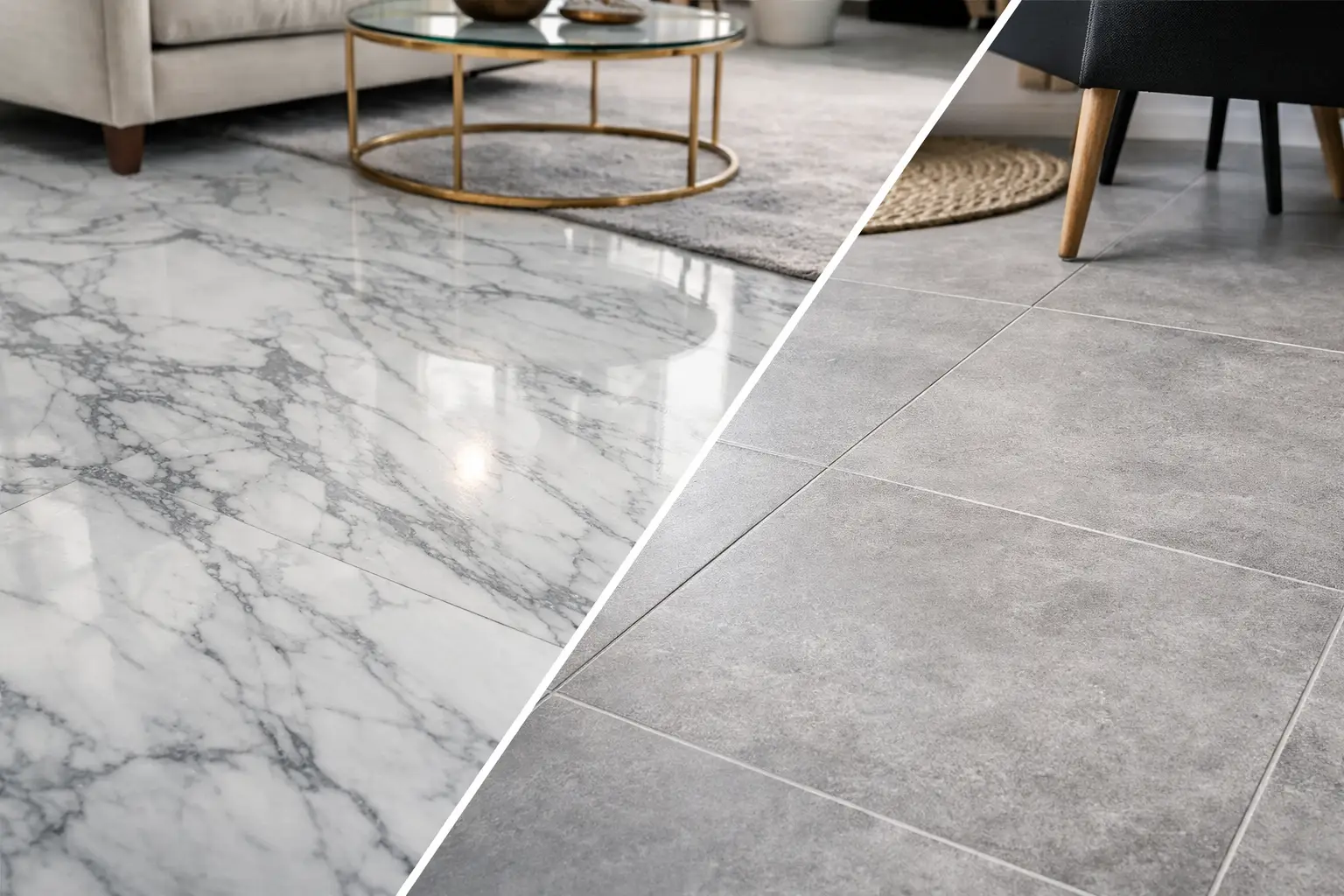
Marble Versus Porcelain Flooring: Which Fits?
A bright kitchen, a polished bathroom, or a high-end entryway can change the entire feel of a property. But when homeowners compare marble versus porcelain flooring, the choice is about far more than appearance. It affects maintenance, moisture performance, installation requirements, long-term costs, and how confidently the floor will stand up to daily life in Central Florida.
Both materials can deliver a premium result when selected correctly and installed on a properly prepared surface. The best option depends on the room, the expected traffic, your maintenance preferences, and the look you want to achieve.
Marble Versus Porcelain Flooring at a Glance
Marble is a natural stone with distinctive veining, color movement, and one-of-a-kind character. No two pieces are exactly alike. It brings a true luxury finish to bathrooms, foyers, fireplaces, and high-visibility spaces where visual impact matters most.
Porcelain is a dense, manufactured tile fired at very high temperatures. It can replicate marble, wood, concrete, and other finishes with impressive realism while offering a more uniform appearance and lower-maintenance surface.
The central trade-off is simple: marble offers natural beauty that cannot be duplicated exactly, while porcelain provides exceptional practicality, consistency, and moisture resistance. Neither is automatically better. A successful flooring decision matches the material to the space.
Why Marble Makes a Strong Design Statement
Real marble has depth that printed tile cannot fully reproduce. Its natural veining and subtle variations create a custom look, whether the goal is classic white Carrara, warmer beige tones, or a dramatic dark stone finish. For a luxury renovation or a property designed to make a memorable first impression, marble can be the right investment.
Marble is especially effective in powder rooms, primary bathrooms, formal entryways, and feature areas where owners are willing to protect the finish. When professionally installed with aligned patterns, clean grout joints, and polished edges, it creates a refined result that can elevate the perceived value of a home.
However, marble is porous. It needs sealing, and it can stain or etch when exposed to acidic products such as vinegar, lemon juice, wine, or certain bathroom cleaners. Etching is not always a stain. It can appear as a dull mark where acid has changed the stone’s surface, even after the spill is cleaned.
That does not mean marble is fragile or impractical. It means it requires the right expectations. Homeowners who appreciate natural patina and are comfortable using stone-safe products often find that marble is worth the extra care.
Where Marble Performs Best
Marble works well in lower-traffic areas and spaces where a premium natural finish is the priority. It can also be used in kitchens, but busy family kitchens require prompt spill cleanup and regular resealing. A honed marble finish, rather than a highly polished one, can make small wear marks less noticeable over time.
For wet areas, slip resistance matters. A polished marble floor may become slick when wet, particularly in showers or pool-adjacent spaces. The correct finish, tile size, slope, and installation approach are essential for safety and performance.
Why Porcelain Is a Practical Choice for Florida Properties
Porcelain flooring is one of the most versatile choices for active households, rental properties, commercial spaces, and moisture-prone areas. Its low absorption rate helps it resist water, stains, and humidity. That is a major advantage in Florida bathrooms, kitchens, laundry rooms, entryways, and homes with pets or frequent guests.
Modern marble-look porcelain can deliver elegant veining and large-format slabs without requiring the same level of maintenance as natural stone. It is also available in matte, polished, textured, and slip-resistant finishes, giving property owners more control over the final look and function.
Porcelain is generally easier to live with. Most daily cleaning requires a soft mop and a manufacturer-approved neutral cleaner. It will not etch from common acidic foods or household products the way marble can. For busy homes and investment properties, that predictability is valuable.
Porcelain also performs well in high-traffic areas. It resists scratches and wear better than many natural stone surfaces, which makes it a strong fit for living rooms, hallways, kitchens, and commercial interiors.
The Limits of Porcelain
Porcelain is durable, but it is not a shortcut around quality installation. Large-format porcelain tiles require a flat, well-prepared subfloor. If the surface is uneven, tiles can develop lippage, uneven edges that catch light and feel raised underfoot. Poor adhesive coverage can also lead to hollow spots, cracked tile, or loose sections later.
Some marble-look porcelain products look highly realistic, but a close inspection may reveal repeated vein patterns from tile to tile. A skilled installer can reduce that effect by planning the layout, blending cartons, and avoiding obvious repetition in the most visible areas.
Cost: Look Beyond the Price Per Square Foot
Material pricing is only one part of the budget. Marble can range significantly based on stone type, thickness, finish, origin, and availability. Rare selections and intricate cuts can increase costs quickly. Marble installation may also require more careful handling, sealing, polishing, and layout planning.
Porcelain offers a broader price range, from cost-effective basic tile to premium large-format marble-look options. While the material may cost less than high-end natural marble, installation can still be labor-intensive. Oversized tiles, detailed patterns, stair work, and tight bathroom layouts all require precision.
Removal and preparation should never be treated as an afterthought. Old flooring, thinset, damaged underlayment, moisture issues, and an uneven slab can affect both the timeline and final result. Investing in professional demolition and surface preparation protects the new floor, regardless of which material you choose.
Installation Quality Decides the Final Result
A beautiful tile can still fail if it is installed over an unstable or improperly prepared surface. Before installation begins, the existing floor should be evaluated for cracks, flatness, moisture conditions, and structural concerns. The correct underlayment, waterproofing, expansion planning, mortar, grout, and sealants should be selected for the specific room and tile.
Marble demands careful sorting because natural pieces vary in color and veining. The installer should dry-lay or plan the arrangement before setting tiles so the finished floor looks intentional. Edges, transitions, and cuts around cabinets or fixtures also need close attention.
Porcelain demands precision in a different way. Large tiles need proper leveling techniques, suitable mortar coverage, and accurate spacing. In showers and bathrooms, waterproofing behind and beneath the tile is just as critical as the visible finish.
For projects that involve removing old floors and installing a new surface, working with one qualified team can reduce handoff delays and prevent responsibility gaps. Rox Floor provides flooring removal, surface preparation, and professional installation support for homeowners and property managers who want the work handled with clear coordination from start to finish.
How to Choose the Right Material for Each Room
Choose marble when the authentic character of natural stone is the main goal and the room will receive reasonable care. It is ideal for owners who want a distinctive, upscale finish and understand that sealing and gentle cleaning are part of the ownership experience.
Choose porcelain when you need a high-quality floor that handles moisture, daily traffic, pets, rental use, and simpler cleaning. It is often the stronger all-around option for kitchens, bathrooms, busy living spaces, and commercial properties.
If you love the marble look but want fewer maintenance demands, premium marble-look porcelain is often the smartest middle ground. You can achieve a clean, high-end visual without worrying as much about etching, staining, or frequent resealing.
A Better Flooring Decision Starts Under the Tile
The right flooring should look exceptional on day one and continue performing years later. Before choosing marble or porcelain, consider how the room is used, what maintenance you realistically want to do, and whether the existing surface is ready for installation. A professional evaluation of the substrate and a carefully planned installation will do more to protect your investment than choosing based on appearance alone.