
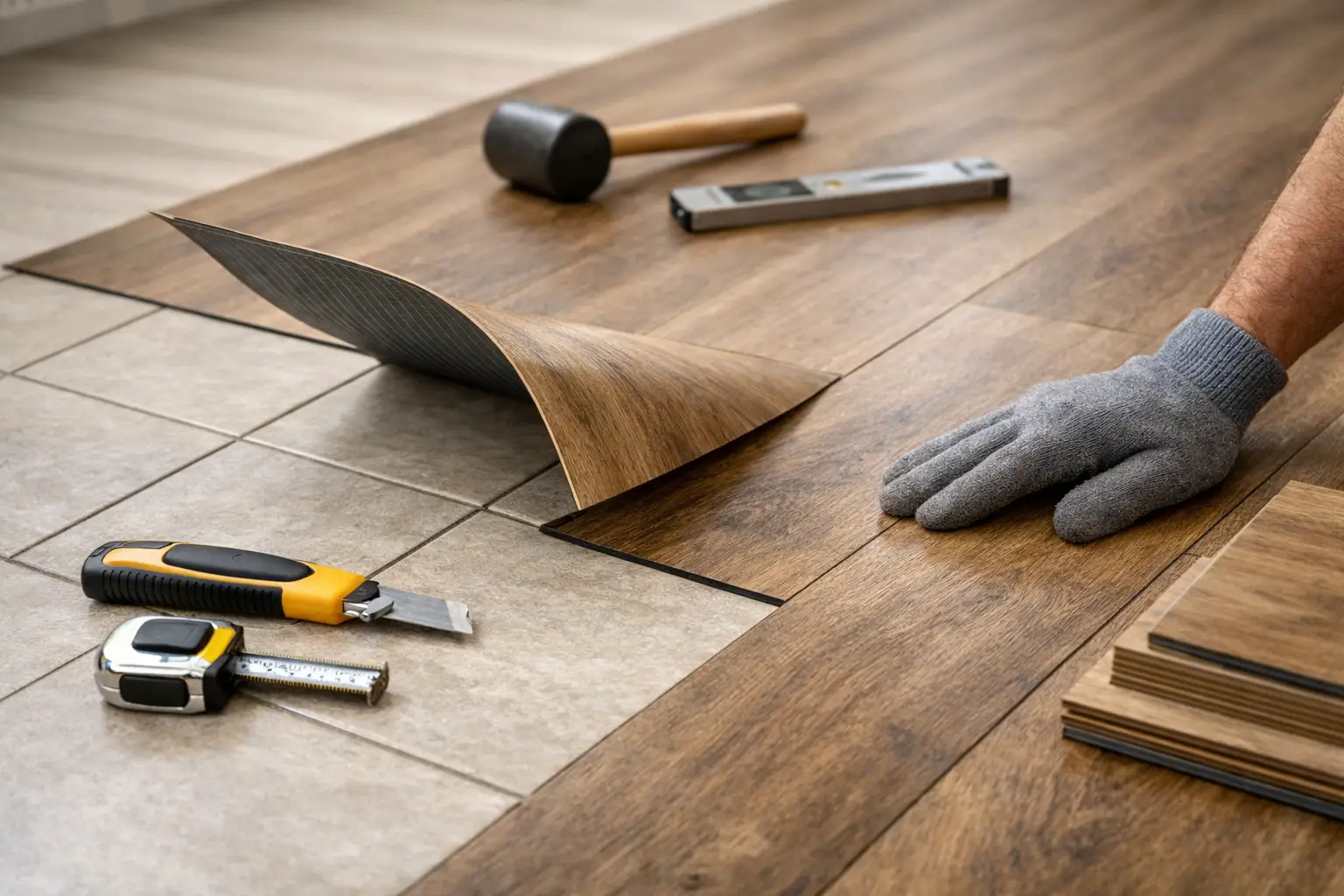
Can Vinyl Go Over Tile? What to Check First
A dated tile floor can make an entire room feel stuck in another decade, even when the layout and cabinets are still in great shape. So, can vinyl go over tile? Often, yes. Luxury vinyl plank, luxury vinyl tile, and sheet vinyl can be installed over existing tile when the surface is stable, clean, flat, and properly prepared. But covering tile is not automatically the fastest or best answer for every property.
The condition of the existing floor determines whether an overlay will deliver a high-quality result or create problems that show through later. Before choosing a new vinyl floor, look beyond the color and style. A professional assessment of the tile, grout lines, height changes, and subfloor condition protects your investment from day one.
Can Vinyl Go Over Tile Successfully?
Vinyl can go over tile successfully when the tile is firmly bonded to the floor and the overall surface is reasonably level. Vinyl is a flexible flooring material. If there are loose tiles, deep grout joints, cracked areas, or uneven spots underneath, those imperfections can eventually telegraph through the new flooring.
Luxury vinyl plank and luxury vinyl tile are more forgiving than thin sheet vinyl, especially when they have a rigid core. Still, rigid does not mean immune to an uneven base. High spots can cause planks to separate, rock, or wear prematurely. Low spots and wide grout lines can become visible over time, particularly under sunlight or heavy foot traffic.
For many Orlando-area homeowners, installing vinyl over tile can reduce demolition time, control dust, and shorten the renovation schedule. That convenience is valuable, but it only works when preparation is handled correctly. A shortcut during prep can turn a cost-saving decision into a flooring repair project.
The Tile Must Be Solid Before Vinyl Goes On Top
The first question is not whether the tile looks good. It is whether it is secure. A tile floor may appear fine at a glance while hiding hollow-sounding sections, movement, or broken bonding underneath. Any tile that shifts, cracks repeatedly, or sounds hollow when tapped needs attention before vinyl installation.
Loose tile should be removed, and the affected area should be repaired and leveled. Simply laying vinyl over a moving floor does not solve the problem. It transfers the problem to the new surface.
Grout lines matter too. Narrow, shallow grout joints may require minimal treatment. Deep or wide joints usually need to be filled with a high-quality patching or embossing compound. This creates a smoother base and helps prevent the joint pattern from showing through the vinyl later.
A qualified installer will also check for uneven tile edges, chipped corners, and old repair patches. A floor can be structurally sound but still need skim coating or floor leveling to meet the vinyl manufacturer’s flatness requirements.
Floor Height Is a Bigger Deal Than Most People Expect
Installing vinyl over existing tile adds height to the floor. Depending on the product and underlayment, the increase may be modest, but it can affect more than homeowners expect.
Doors may need to be trimmed so they swing freely. Transition strips between rooms may need to be adjusted. Appliances, especially dishwashers, can become difficult to remove if the finished floor rises too close to the bottom of the countertop. Toilet flanges, baseboards, and sliding doors also deserve careful attention.
These details are where professional planning makes a visible difference. A new floor should look intentional at every doorway, wall edge, and transition, not like it was simply placed on top of an old one.
Which Vinyl Products Work Best Over Tile?
The right vinyl product depends on the room, the tile condition, and the look you want. Luxury vinyl plank is a popular choice for living areas, bedrooms, kitchens, and rental properties because it offers realistic wood visuals, strong wear resistance, and practical maintenance. Luxury vinyl tile can deliver a stone or ceramic look with a warmer, more comfortable feel underfoot than traditional tile.
Sheet vinyl can also be installed over tile, but it needs an exceptionally smooth substrate. Because it is thinner and more flexible, grout lines, chips, and uneven areas are more likely to become visible unless the tile is fully skim coated first.
Click-lock floating vinyl can be a strong option over well-prepared tile, particularly when homeowners want to avoid adhesive. Glue-down vinyl can also perform extremely well, but the tile surface must be properly prepared for adhesion. Glossy tile may need to be mechanically abraded or treated with the appropriate primer so the adhesive system can bond as intended.
Waterproof vinyl is a practical choice for kitchens, bathrooms, entryways, and laundry rooms. However, “waterproof” does not mean the entire floor assembly is protected from every moisture issue. Existing leaks, slab moisture, damaged grout, or plumbing problems should be resolved before new flooring is installed.
When Tile Removal Is the Better Investment
There are situations where removing the tile is the smarter long-term decision. If the tile is badly cracked, loose, uneven, or installed over an unstable base, an overlay may only hide the problem temporarily. Removal allows the installer to inspect the substrate, correct damage, and build the new floor on a clean, reliable foundation.
Tile removal is also worth considering when floor height will create issues with doors, cabinets, transitions, or accessibility. In bathrooms, adding layers can create awkward height differences at the doorway or around the toilet. In kitchens, a raised floor can complicate appliance clearance.
Older homes and commercial spaces may also have multiple flooring layers from past renovations. Adding another layer can make future repairs harder and increase the chance of uneven transitions. Removing outdated flooring may involve more labor upfront, but it can provide a cleaner installation and better control over the final result.
At Rox Floor, we regularly help property owners decide whether tile removal or a vinyl overlay makes the most sense for the condition of the space, timeline, and budget. The goal is not to recommend more work than necessary. It is to deliver a floor that looks premium and performs reliably.
Proper Surface Preparation Makes the Difference
A successful vinyl-over-tile installation starts with thorough cleaning. Tile must be free of grease, wax, soap residue, dust, loose grout, and other contaminants that can interfere with patching materials or adhesive. Kitchens and bathrooms often need extra attention because invisible residue can be a serious bonding issue.
After cleaning, damaged tiles are repaired or removed, grout lines are filled as needed, and the surface is checked for flatness. Patching and leveling compounds are applied where necessary, then allowed to cure according to product requirements. For glue-down vinyl, the installer follows the adhesive manufacturer’s specifications for primers, trowel size, open time, and rolling.
This process is not glamorous, but it is the foundation of a high-quality floor. The most attractive luxury vinyl product cannot compensate for poor surface preparation. Clean lines, tight seams, stable planks, and smooth transitions all begin below the finished surface.
Questions to Ask Before Covering Your Tile
Before making a decision, consider the age and condition of the tile, the depth of the grout lines, the room’s moisture exposure, and the amount of added height the space can handle. Also consider how long you plan to keep the property. For a fast rental refresh, a properly prepared vinyl overlay can be an efficient, cost-conscious solution. For a major renovation or long-term family home, full removal may offer greater control and durability.
A site evaluation is the best way to avoid guesswork. An experienced flooring team can identify loose areas, assess transitions, measure floor flatness, and recommend the installation method that fits the space. That clarity helps you compare options based on total value, not just the first price you see.
If your tile is secure, level, and correctly prepared, vinyl can provide a fast, stylish upgrade without the mess of full demolition. If the tile is failing or the added height creates complications, removing it first gives your new floor the clean start it deserves.