
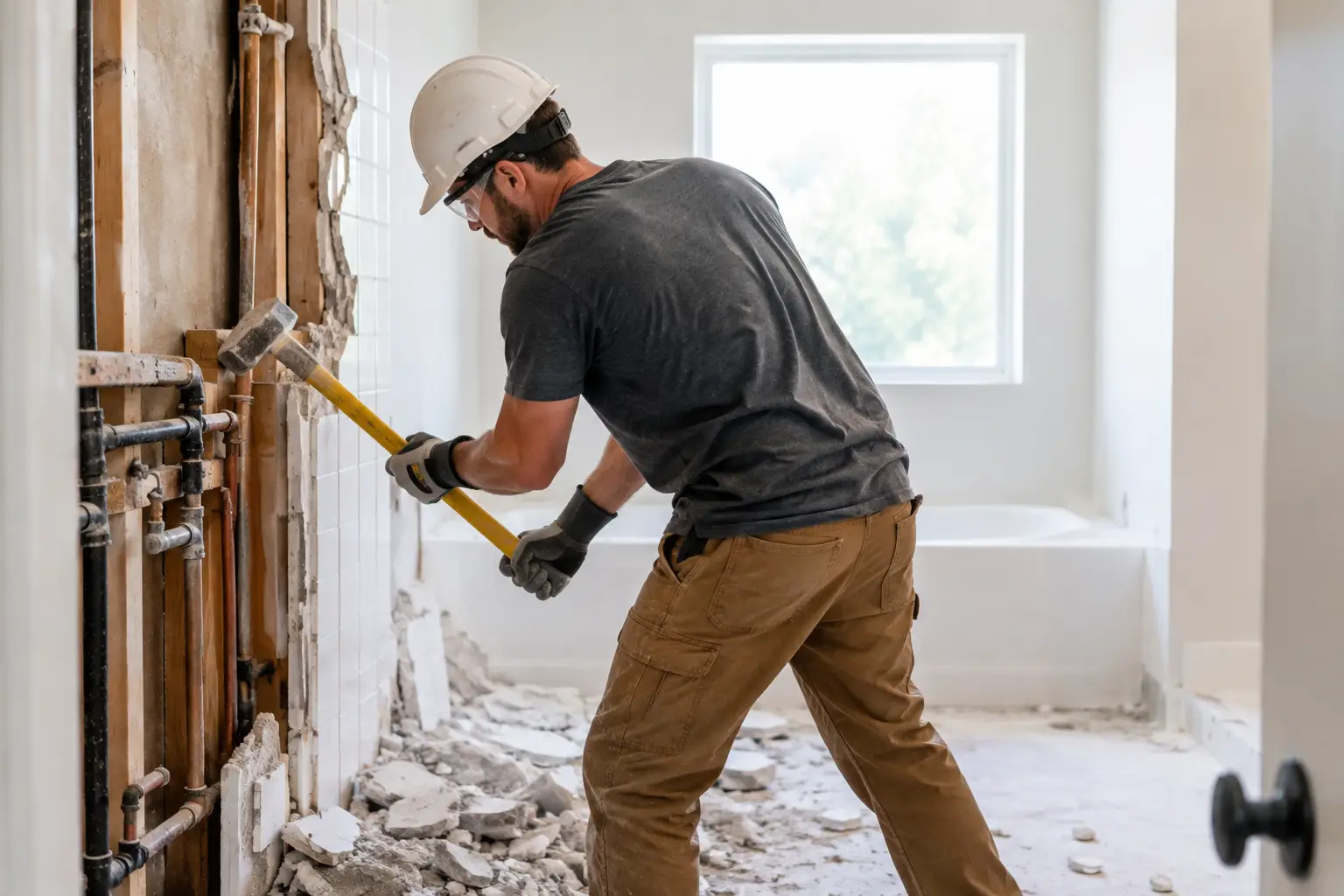
Bathroom Demolition Done Right From Day One
A bathroom can look small, but bathroom demolition is rarely a small job. Behind old tile, vanities, tubs, and flooring, there may be hidden plumbing, electrical connections, moisture damage, weak subfloors, or uneven surfaces that can affect every stage of the remodel. Removing materials quickly is not enough. The work has to be controlled, clean, and planned around what comes next.
For homeowners, property managers, and investors, a professional demolition phase protects the renovation budget before new finishes are installed. It creates the clean foundation needed for premium tile, vinyl, marble, updated fixtures, and a bathroom that performs as well as it looks.
What Bathroom Demolition Actually Includes
Bathroom demolition is the selective removal of existing finishes, fixtures, and damaged materials to prepare the space for renovation. Depending on the project scope, this can include removing floor tile, wall tile, a vanity, toilet, tub, shower surround, mirrors, cabinets, drywall, baseboards, and old underlayment.
The right scope depends on the condition of the bathroom and the design plan. A cosmetic update may only require flooring removal and vanity replacement. A bathroom with water damage, failing tile, outdated plumbing locations, or a leaking shower may require a more complete interior demolition.
This is why accurate planning matters before anyone starts swinging a hammer. Removing the wrong wall, cutting into a pipe, or damaging a surface that was meant to remain can create expensive delays. An experienced crew identifies what stays, what goes, how debris will move out of the property, and what the substrate needs before installation begins.
Why Professional Bathroom Demolition Pays Off
A bathroom remodel is only as reliable as the surface beneath the finish. New tile installed over loose flooring, cracked underlayment, moisture-damaged plywood, or leftover adhesive is at risk of failure. Grout can crack, tiles can shift, and uneven floors can make a high-quality installation look unfinished.
Professional demolition is built around protecting the next trade and the final result. The goal is not to leave a room stripped to the studs unless the project requires it. The goal is to remove materials efficiently while preserving structural elements, managing dust, and exposing any issues that need correction before they become hidden problems.
For occupied homes and active commercial properties, cleanliness also matters. Tile removal creates sharp debris and fine dust. Proper containment, floor protection along access paths, organized debris handling, and daily cleanup make a noticeable difference for residents, tenants, customers, and crews working nearby.
Speed is valuable, but careless speed costs more. A qualified team can move efficiently because it knows where risks usually appear and how to respond without losing momentum.
Common Issues Found After Removal
Demolition often reveals the real condition of a bathroom. Soft subfloors near a toilet or shower can point to an old leak. Dark staining behind tile may indicate moisture exposure. Loose tile can reveal poor adhesion, while several layers of old flooring can create height problems at the doorway or around the toilet flange.
Finding these issues early is a win. It gives the owner a chance to make a clear repair decision before new materials cover the area. Ignoring them to save time usually creates a more expensive repair later, when finished surfaces must be removed again.
Planning a Bathroom Demolition Without Surprises
A strong project starts with a walkthrough and a defined scope. Before demolition begins, decide whether the bathroom is receiving a full remodel, a shower upgrade, new flooring, or a targeted repair. That decision affects which fixtures are disconnected, how far demolition extends, and what surface preparation will be required.
Access is another practical factor. In a condominium, high-rise, rental property, or commercial building, crews may need to coordinate elevator use, work hours, parking, debris routes, and building requirements. In Central Florida, many bathroom renovations also involve concrete slab conditions that need careful evaluation before tile or other flooring is installed.
A clear plan should account for four areas:
- The materials being removed and the items that must remain protected
- Plumbing and electrical connections that require safe disconnection or coordination
- Dust containment, debris removal, and protection for adjoining rooms
- Surface repairs and preparation needed before new flooring or wall finishes are installed
The more detailed the scope, the more accurate the quote and schedule can be. It also helps avoid the vague mid-project changes that frustrate owners and slow down renovation work.
The Bathroom Demolition Process
The first phase is protection. Nearby floors, hallways, doorways, and any permanent finishes are covered or isolated as needed. Dust control is set up before tile, drywall, or flooring removal begins. This is especially important when the bathroom is connected to a bedroom, hallway, or occupied living space.
Next comes fixture and finish removal. Toilets, vanities, mirrors, trim, flooring, wall tile, and shower components are removed according to the project plan. A skilled demolition crew works methodically rather than treating the room as one large tear-out. That approach helps protect plumbing lines, electrical wiring, framing, and walls that are not part of the renovation.
Once materials are removed, the crew evaluates the exposed floor and walls. Old thinset, adhesive, mortar beds, underlayment, and loose substrate can all affect installation. Surface preparation may include removing residue, leveling the floor, repairing damaged sections, or preparing concrete for the selected finish.
Finally, debris is removed and the work area is left ready for the next phase. This handoff matters. When demolition and installation are handled through one coordinated provider, there is less finger-pointing between trades and more accountability for the final finish.
Full Tear-Out or Selective Demolition?
Not every bathroom needs a complete tear-out. Selective demolition can be the smarter option when the room layout works, plumbing remains in place, and the existing walls or fixtures are in good condition. For example, a homeowner may choose to remove old floor tile, replace the vanity, and install new vinyl or ceramic tile without rebuilding the shower.
A full tear-out is often the better investment when there is visible moisture damage, a failing shower system, multiple outdated layers, major layout changes, or a desire to relocate plumbing. It costs more upfront, but it gives the renovation team access to correct hidden issues and rebuild the bathroom with a stronger long-term foundation.
The right choice depends on the condition of the space, the property’s goals, and the planned materials. Rental owners may prioritize durable finishes and fast turnover. A homeowner renovating a primary bathroom may focus on design, comfort, and a high-end tile installation. Commercial property managers may need a schedule that limits downtime. The demolition plan should support those priorities.
Choosing the Right Team for the Job
Bathroom demolition is closely tied to floor removal, substrate preparation, and finish installation. Hiring separate crews for every stage can create scheduling gaps and confusion about who is responsible when the floor is not ready for tile or the surface needs additional repair.
A team with both demolition and installation experience sees the project differently. It understands how tile, vinyl, and marble need to be supported, how clean and level a surface must be, and where removal methods can affect the finished look. That perspective helps reduce avoidable rework.
Ask direct questions before choosing a contractor: What materials are included in the removal scope? How will dust and debris be controlled? Who handles surface preparation? What happens if moisture damage or an uneven substrate is uncovered? A professional provider should give practical answers, not vague promises.
Rox Floor provides integrated demolition, floor removal, surface preparation, and installation services for renovation projects across Central Florida. That coordinated approach keeps the work moving from tear-out to final finish with one experienced team focused on quality, timing, and clean execution.
A successful bathroom renovation starts before the new tile arrives. Choose a bathroom demolition plan that protects your property, exposes problems early, and leaves a solid surface ready for the upgrade you want.