
When Do Floors Need Replacing? 9 Clear Signs
A floor can look acceptable from across the room and still be failing underneath. Loose tile, soft spots, recurring stains, and moisture damage do not improve with time. For homeowners and property managers asking, “when do floors need replacing?” the right answer comes down to safety, condition, repair cost, and what is happening below the finished surface.
Replacing flooring is not always the first move. A professional inspection may reveal that a targeted repair, deep cleaning, or grout restoration will solve the problem. But when damage is widespread or the subfloor is compromised, delaying replacement can turn a manageable renovation into a larger demolition and repair project.
When Do Floors Need Replacing Instead of Repairing?
A few scratches on luxury vinyl, a single cracked tile, or minor grout discoloration usually does not justify removing an entire floor. The decision changes when the issue affects multiple areas, keeps returning after repairs, creates a trip hazard, or points to water intrusion beneath the surface.
Replacement is often the smarter investment when repairs would be highly visible, temporary, or nearly as expensive as installing a new floor. This is especially true in kitchens, bathrooms, entryways, rentals, and commercial spaces, where daily traffic and moisture expose weak flooring quickly.
1. There Is Water Damage or Signs of Mold
Water is one of the clearest reasons to replace a floor. Wood flooring that cups, warps, or separates after a leak may not return to its original condition. Laminate that swells at the seams has usually absorbed moisture into its core, and that damage cannot be sanded out or reliably reversed.
Watch for dark staining, a musty odor, loose planks, soft areas, or flooring that feels cooler or damp in one location. In Florida properties, humidity and plumbing leaks can also affect the subfloor without producing an obvious surface flood. The finished material may need removal so the area can be properly dried, inspected, and prepared before new flooring goes in.
2. The Floor Feels Soft, Spongy, or Unstable
A floor should feel solid underfoot. If it flexes, dips, squeaks excessively, or feels soft near a toilet, sink, exterior door, or appliance, the issue may extend beyond the visible flooring.
Soft spots can indicate deteriorated plywood, moisture-damaged underlayment, pest damage, or a failed installation. Covering the problem with a new material is not a quality solution. Professional removal and surface preparation allow the underlying structure to be corrected first, which protects the performance of the new tile, vinyl, or marble installation.
3. Cracks, Chips, and Loose Tile Keep Spreading
One chipped tile can often be replaced if matching material is available. Multiple cracked tiles, hollow sounds when tapped, loose edges, or grout lines that repeatedly break are different. Those signs can point to movement in the subfloor, poor bonding, improper expansion space, or moisture below the tile.
Replacing isolated tiles without fixing the cause may lead to the same failure in nearby areas. When the pattern is spreading, full removal and proper substrate preparation are typically more dependable than ongoing patchwork repairs.
4. The Wear Layer Is Gone
Every flooring material has a point where cleaning no longer restores its appearance. On vinyl and laminate, a worn-through protective layer can leave the floor dull, stained, and vulnerable to deeper damage. On hardwood, deep scratches, exposed wood fibers, and repeated refinishing can signal that the floor has reached the end of its practical service life.
High-traffic areas make this easy to spot. Hallways may look faded compared with rooms that receive less use. Entryways may have permanent abrasion from grit and moisture. If a floor still looks worn immediately after a thorough cleaning, replacement may deliver a better long-term result than another cosmetic treatment.
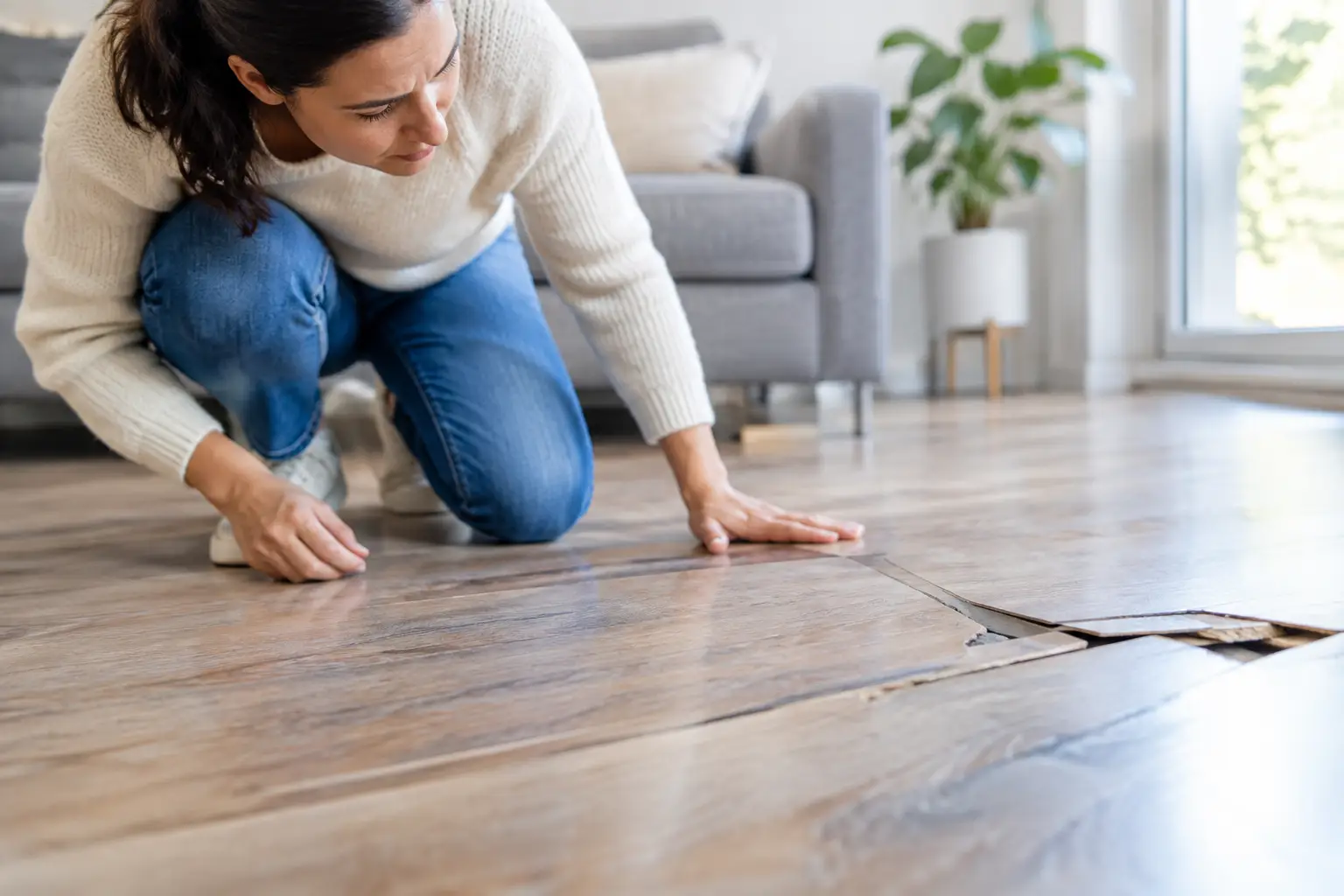
5. Planks Are Buckling, Lifting, or Separating
Planks that lift at the edges, separate at seams, or form a raised ridge should not be ignored. Buckling can result from excess moisture, lack of expansion space, improper adhesive, or an uneven subfloor. It can also create a tripping hazard and allow more moisture and debris to enter the gaps.
Some floating-floor issues can be corrected at a doorway or perimeter if caught early. If large sections are lifting or the locking system is damaged, replacement is usually the more reliable option. The key is identifying whether the moisture source or subfloor condition must be addressed before installation begins.
6. Stains and Odors Have Penetrated the Flooring
Surface spills are one thing. Pet urine, smoke, standing water, grease, and long-term odors are another. Once contaminants penetrate porous material, padding, adhesive, or subflooring, normal cleaning may not remove them completely.
This situation is common in rental turnovers, older homes, and properties with previous leaks. Removing the floor gives the renovation team access to the material below, where odor sealing, damaged-subfloor replacement, or moisture treatment may be necessary. A fresh floor installed over trapped odor or contamination rarely delivers the clean result owners expect.
7. The Floor Is Uneven or Creates a Safety Concern
Uneven flooring is more than an appearance issue. Raised transitions, broken edges, loose material, and visible dips can lead to trips, falls, and tenant complaints. In commercial settings, these conditions can also create avoidable liability.
Some unevenness comes from a settling building, while other cases result from old flooring layers, poor previous installation, or subfloor damage. Before selecting a replacement material, the floor needs to be evaluated for flatness and stability. Ceramic tile and marble demand especially careful preparation because rigid materials can crack when installed over an unstable or uneven base.
8. Repairs Are Becoming a Routine Expense
A floor that needs frequent regrouting, reattachment, patching, or spot replacement is telling you something. Small repairs make sense when the rest of the floor is in excellent condition. Once repair calls become routine, the cost, disruption, and mismatched appearance can outweigh the price of replacement.
For investors and property managers, this is a practical calculation. A durable new floor can reduce maintenance requests, improve turnover speed, and present the property better to prospective tenants or buyers. The best choice is not always the lowest upfront cost. It is the option that holds up under the way the space is actually used.
9. The Floor No Longer Fits the Property’s Needs
A floor may be structurally sound but still be the wrong choice for the space. Carpet in a busy rental, damaged laminate in a bathroom, or dated tile in a renovated kitchen can limit cleanliness, durability, and perceived value.
Replacement is a strategic upgrade when you need better water resistance, easier maintenance, stronger wear performance, or a more polished finish. Vinyl can be an efficient option for many active households and rental properties. Ceramic tile offers lasting performance in wet areas. Marble delivers a premium look when the substrate and installation process are handled correctly.
What Should Happen Before New Flooring Is Installed?
The quality of a new floor depends heavily on the work beneath it. Fast installation over old adhesive, damaged underlayment, moisture issues, or an uneven slab can shorten the life of even premium materials.
A proper project starts with controlled removal of the existing flooring, followed by inspection of the subfloor or concrete slab. The surface may need adhesive removal, leveling, crack treatment, moisture testing, or localized repair. This stage is where professional demolition and surface preparation add real value. It creates the stable, clean base that new flooring requires.
Material selection should also match the room. Bathrooms, kitchens, laundry areas, retail spaces, and high-traffic entryways each place different demands on a floor. A good installation team will consider moisture exposure, maintenance expectations, traffic level, transition details, and the condition of adjacent rooms before recommending an approach.
A Better Way to Plan the Replacement
If you suspect your flooring is failing, avoid buying materials before the existing floor has been assessed. The condition below the surface can affect the scope, timeline, and final budget. A clear quote should account for removal, disposal, preparation, installation, finishing, and any repairs that are visible once the old floor comes out.
Rox Floor helps Central Florida homeowners, property managers, and commercial clients handle the full process, from floor removal and light demolition to surface preparation and high-quality installation. Working with one experienced team reduces handoffs, keeps scheduling tighter, and helps ensure the finished floor is built on the right foundation.
Do not wait for a loose tile, soft spot, or small moisture issue to become a major repair. A prompt professional evaluation can show whether your floor has more useful life left or whether replacing it now will protect your property and deliver a cleaner, stronger result.