
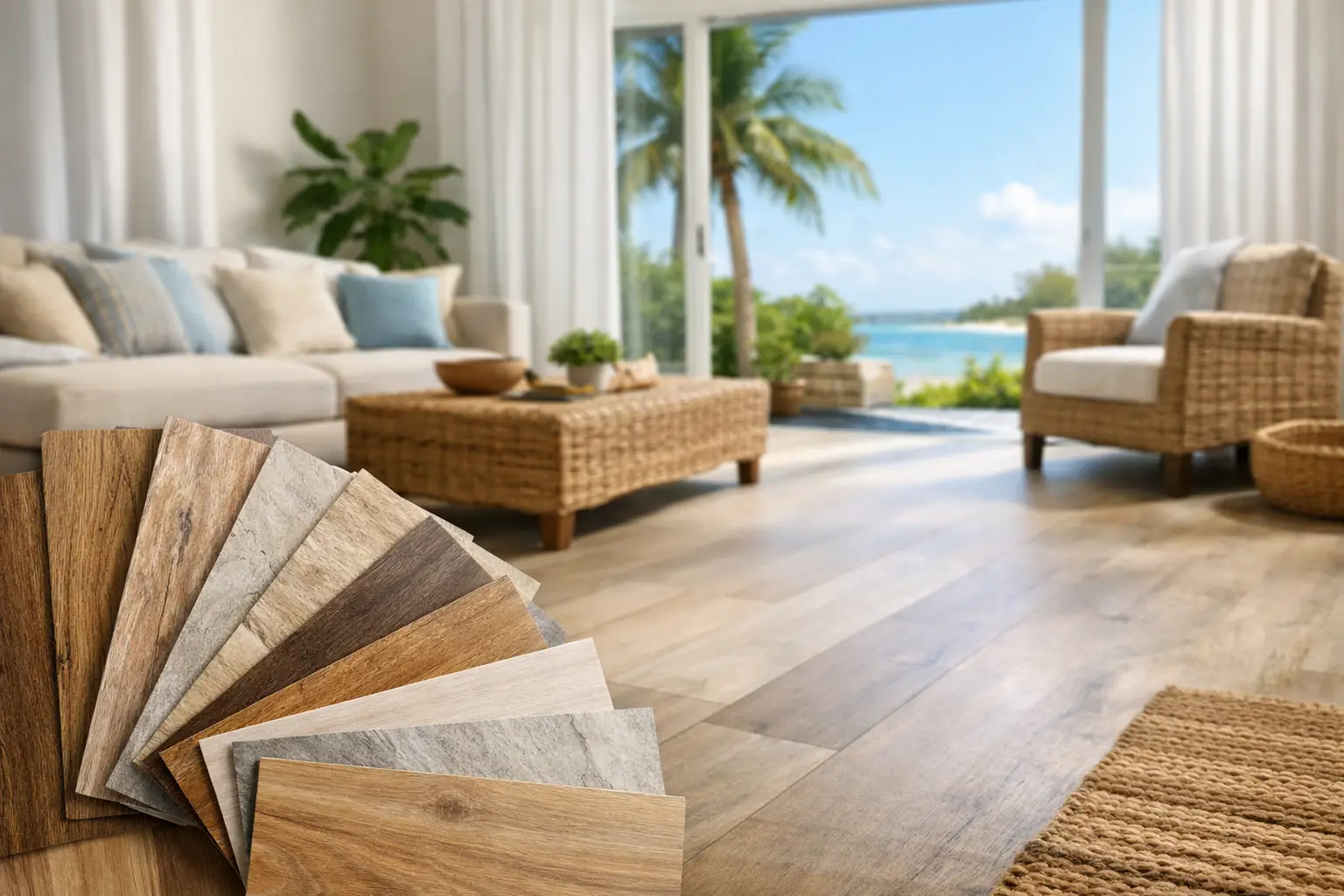
Best Flooring for Florida Homes
Step into a Florida home after a wet summer storm and the flooring question gets real fast. Humidity hangs in the air, sand follows people in from the driveway, and one leak or AC issue can turn the wrong material into an expensive problem. That is why choosing the best flooring for Florida homes is not just about style. It is about moisture resistance, long-term performance, and how well the floor holds up under real daily use.
Florida homes ask more from a floor than many other markets do. Heat, humidity, heavy foot traffic, pool areas, pets, and frequent cleaning all affect what performs well over time. A floor that looks great in a showroom can fail quickly if it is not matched to the environment and installed over a properly prepared surface. The right choice balances appearance, maintenance, budget, and durability.
What makes the best flooring for Florida homes different?
In Florida, moisture is always part of the conversation. Even if your home has solid air conditioning, humidity levels stay higher than in many other states. That matters because some flooring materials expand, warp, trap moisture, or break down faster when conditions are not controlled.
The best flooring for Florida homes usually shares a few traits. It resists water, handles temperature swings, cleans easily, and stands up to grit and daily wear. It also needs the right subfloor preparation. That part is often overlooked, but it is where many flooring problems start. Uneven surfaces, old adhesive, hidden moisture, or poor demolition work can shorten the life of even a premium product.
Tile remains a top-tier Florida choice
If you want a proven performer, tile is still one of the safest and strongest investments. Porcelain tile, in particular, works exceptionally well in Florida because it resists moisture, handles heavy traffic, and cleans without much effort. It also gives homeowners a wide design range, from wood-look planks to large-format modern finishes.
Tile performs especially well in kitchens, bathrooms, entryways, and open-concept living spaces. It does not absorb moisture like hardwood, and it holds up well in homes with pets, children, or frequent guests. In a hot climate, tile also feels cooler underfoot, which many Florida homeowners appreciate.
There are trade-offs. Tile is harder than other surfaces, so it can feel less forgiving if you stand for long periods. It can also feel cold in winter, though that is less of a concern in Florida than in northern states. Most important, tile installation needs precision. Lippage, cracked grout, hollow spots, and poor bonding usually point back to rushed prep or low-quality workmanship.
Luxury vinyl is one of the most practical options
Luxury vinyl plank and luxury vinyl tile have become major players for a reason. For many homeowners, this is the best mix of appearance, value, comfort, and water resistance. High-quality vinyl can handle busy households, pets, light commercial use, and everyday spills without the maintenance demands of natural materials.
For Florida homes, luxury vinyl works well because it is more forgiving than tile underfoot and generally faster to install. It can also mimic wood closely enough to satisfy homeowners who want warmth and texture without the moisture risks of real hardwood. In rental properties, flips, and investment homes, vinyl often makes financial sense because it delivers a clean, updated look at a competitive price point.
Still, not all vinyl is equal. Product quality matters, but so does the condition of the slab or subfloor underneath. If the floor is uneven or moisture issues are ignored, the finished result can telegraph imperfections, shift, or fail early. Professional surface prep is what separates a vinyl floor that lasts from one that becomes a callback.
Natural stone brings premium appeal, with more upkeep
Marble and other natural stone options can look exceptional in Florida homes, especially in high-end remodels. They create a premium finish, add visual value, and fit well in bathrooms, kitchens, and upscale living areas. For homeowners focused on resale appeal or a more refined interior, stone can absolutely be the right move.
But stone is not the low-maintenance winner. It usually requires sealing, more attentive care, and a realistic understanding of wear. Marble, for example, can etch or scratch more easily than porcelain tile. If the goal is pure durability with minimal upkeep, many homeowners are better served by a stone-look porcelain instead of natural stone itself.
This is where priorities matter. If appearance comes first and the homeowner is willing to maintain it, natural stone can deliver excellent results. If performance and simplicity come first, there are often more practical choices.
Hardwood is beautiful, but risky in Florida
Many people love the look of hardwood, and for good reason. It adds warmth, character, and long-term visual appeal that few materials can fully match. But in Florida, solid hardwood comes with more risk than many homeowners realize.
Humidity can cause wood to expand and contract, and moisture problems can lead to cupping, warping, or finish issues. That does not mean wood is impossible in Florida, but it does mean it is not usually the first recommendation for homes exposed to frequent humidity swings, wet entries, or active family traffic.
Engineered wood is a better alternative if you want the wood look with more stability. Even then, it works best in climate-controlled interiors and lower-moisture areas. Bedrooms and formal living spaces are more suitable than bathrooms, kitchens, or laundry rooms. If you want a floor that asks less from the environment, tile or luxury vinyl is often the smarter call.
Laminate can work, but only in the right setting
Laminate has improved over the years, and some modern products offer decent durability and style. It can be a budget-conscious option for dry interior rooms where moisture is not a major concern. But in Florida, that limitation matters.
If water gets into the joints or the core material is exposed to repeated humidity, laminate tends to be less forgiving than tile or waterproof vinyl. For that reason, it is usually not the first choice for kitchens, bathrooms, or ground-floor spaces with a history of moisture concerns. Homeowners looking for a similar visual effect with better resilience often get more value from luxury vinyl.
Best flooring by room
Different rooms put different demands on the floor, so a whole-house decision does not always make sense. Bathrooms, kitchens, and laundry rooms benefit most from porcelain tile or waterproof vinyl. These areas need moisture resistance first and style second.
Living rooms and main open areas can go either way. Tile delivers durability and a clean, upscale look. Vinyl offers more softness underfoot and can reduce installation time and cost. Bedrooms are where comfort becomes more important, so vinyl or engineered wood often appeals more than tile, though many Florida homeowners still prefer tile throughout for consistency and ease of maintenance.
For investment properties and rental units, durability usually wins. That is why tile and vinyl are the most common recommendations. They hold up better, clean faster between tenants, and make fewer long-term demands.
Installation quality matters as much as material choice
A great flooring product installed over a poorly prepared surface is still a bad job. This is where experienced contractors create real value. Proper demolition, adhesive removal, crack repair, leveling, and moisture evaluation are not side details. They are what protect the final result.
In Florida, concrete slabs can hold hidden moisture issues that affect flooring performance later. Old floors may leave behind residue or uneven transitions that need correction before any new material goes down. Choosing a contractor who handles removal, prep, and installation in one process can save time and reduce mistakes between trades.
That is one reason many homeowners and property managers prefer a full-service team. When one company takes responsibility for removal, preparation, and installation, there is more accountability and better control over quality.
How to choose the right floor for your home
The best decision usually comes down to how you live. If you want maximum durability and water resistance, porcelain tile is hard to beat. If you want a balance of comfort, style, and practical performance, luxury vinyl is one of the strongest options on the market. If you want high-end visual impact and are comfortable with maintenance, natural stone can be worth it.
Budget matters, but so does lifecycle cost. A cheaper material that fails early is not a bargain. A floor that performs well for years, cleans easily, and avoids moisture-related issues usually delivers the better return.
For many homeowners in Central Florida, the smartest path is not chasing trends. It is choosing a floor that fits the climate, the property, and the way the space is actually used. Companies like Rox Floor see this every day on real projects, where the best results come from matching the right material with expert prep and installation.
The floor you choose will affect how your home looks, feels, and performs every single day. Pick the one that can handle Florida without making your life harder.