
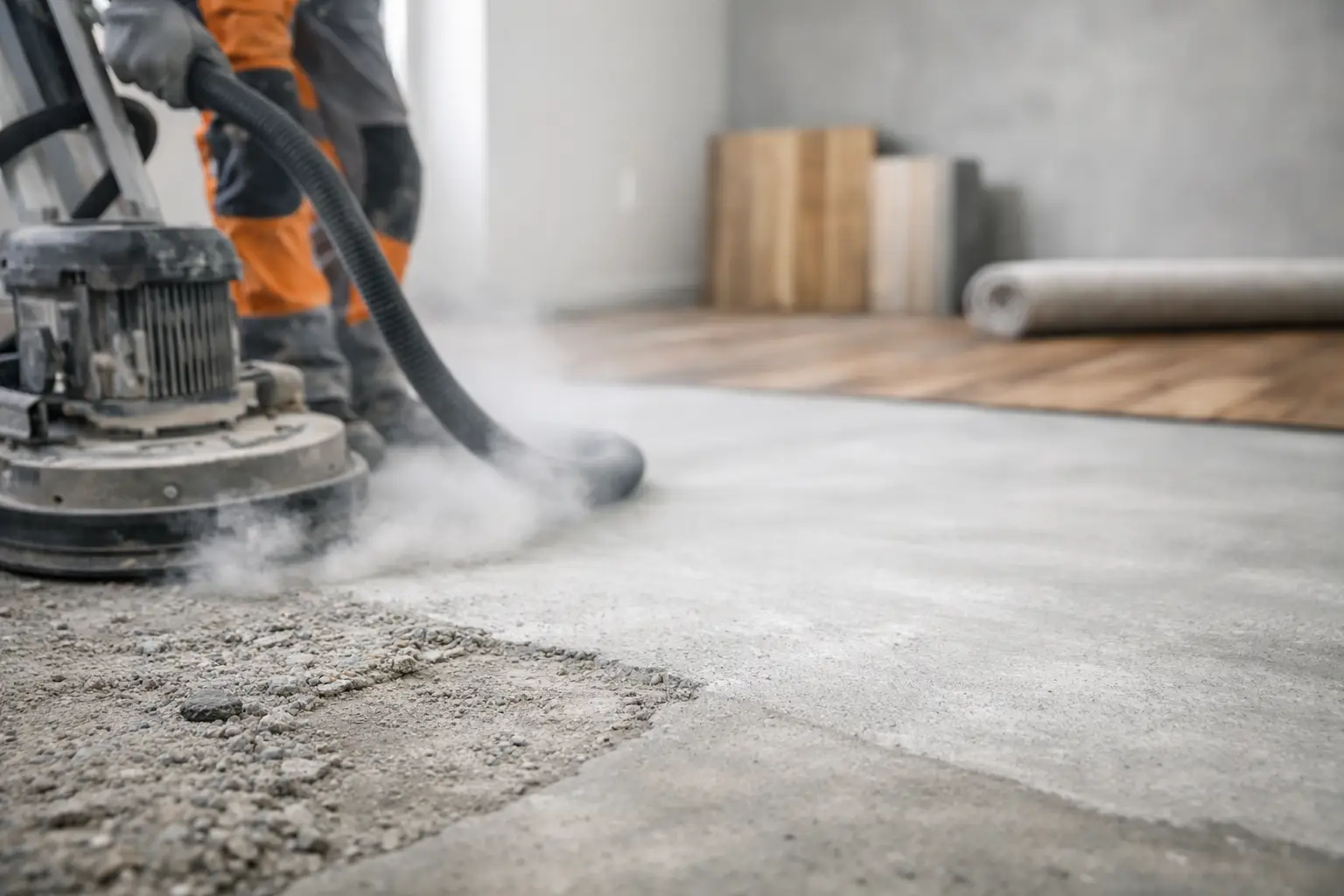
Concrete Grinding Before Flooring Matters
A new floor can fail before it ever gets a fair chance if the slab underneath is uneven, contaminated, or still holding old adhesive. That is why concrete grinding before flooring is not an extra step for picky contractors. It is a practical part of surface prep that protects the installation, improves bond strength, and helps the finished floor look the way it should.
Homeowners, property managers, and commercial clients often focus on the visible finish – tile pattern, vinyl color, grout lines, plank direction. The hidden part is what decides whether that investment performs well six months from now. If the concrete is rough in the wrong places, polished from previous coatings, cracked, or coated in residue, even a premium flooring product can end up lifting, sounding hollow, or wearing unevenly.
Why concrete grinding before flooring makes a real difference
Concrete slabs rarely come ready for flooring installation straight from demolition or floor removal. In many projects, the surface is left with glue, thinset, paint, patch material, minor ridges, or low-level imperfections that interfere with the next stage. Grinding removes those barriers and creates a more uniform substrate.
That matters because most flooring systems depend on proper adhesion or a stable, flat base. Tile needs a sound surface for mortar performance. Glue-down vinyl depends on clean, consistent contact. Even floating floors benefit from a flatter slab, because excessive variation below can create movement, edge stress, and premature wear.
Grinding also helps reveal the true condition of the concrete. Once residue and buildup are removed, installers can see cracks, moisture-related damage, spalls, and soft spots that were previously hidden. It is better to find those issues before flooring goes down, not after the client starts noticing trouble.
What grinding actually does to the slab
Concrete grinding before flooring uses specialized machines fitted with diamond tooling to abrade the slab surface. The goal is not always to make the floor shiny or decorative. In prep work, the aim is usually to remove contaminants, flatten high spots, and produce the surface profile needed for the flooring system being installed.
A properly ground slab is cleaner, more open, and more predictable. Adhesives and underlayments can bond the way manufacturers intend. Transitions between rooms are easier to manage. The finished floor sits better and performs more consistently.
This is also where experience matters. Over-grinding can create unnecessary cost and dust exposure if the scope was simply adhesive removal and leveling. Under-grinding leaves behind the very conditions that cause installation problems. The right approach depends on the existing slab, the type of flooring selected, and the final appearance expected by the client.
Common situations where grinding is necessary
One of the most common scenarios is floor replacement after old tile, carpet, wood, or vinyl removal. Once the previous material is gone, there is often mastic, thinset, leveling compound, paint overspray, or damaged concrete underneath. That surface may look acceptable from a distance, but it is not installation-ready.
Another frequent issue is slab unevenness. Small height differences do not always seem serious until long planks, large-format tile, or thin vinyl are installed. Then the defects telegraph through the surface or create weak points. Grinding can reduce high spots before additional leveling work is applied.
Moisture-related coatings and failed patches are another factor. If a slab has old sealers or incompatible materials on top, the new adhesive system may not bond correctly. Grinding removes those layers and gives the installation a stronger foundation.
When grinding may not be the only step
Grinding is important, but it is not a cure-all. Some floors need more than abrasion to become truly ready for installation. If the slab has deep cracks, major depressions, moisture problems, or structural movement, those issues must be addressed directly.
For example, a floor may need crack repair after grinding exposes the damage. It may also require a self-leveling underlayment if low areas remain after the high spots are reduced. In some cases, moisture mitigation is the bigger concern than flatness. A good contractor does not force every problem into one solution. The best results come from matching the prep method to the actual condition of the slab.
That is one reason clients benefit from hiring a team that handles both removal and installation. The prep work is planned around the finished flooring system, not treated as a disconnected demolition task.
Concrete grinding before flooring for different floor types
Tile, vinyl, and stone do not ask for the exact same substrate conditions. The prep strategy changes with the product.
For tile, grinding is often used to remove adhesive residue, flatten ridges, and improve the bond surface for mortar. This becomes even more important with large-format tile, where lippage and substrate irregularity can quickly turn into visible problems.
For glue-down vinyl or LVP, surface prep is even less forgiving. Thin resilient materials tend to show imperfections underneath. Small ridges, patch lines, or adhesive remnants can telegraph through the finished floor. Grinding helps create the clean, smooth surface these products need.
For natural stone or marble, precision matters. Uneven substrate conditions can affect both appearance and long-term performance. A slab that is properly ground and corrected gives the installer better control over layout, adhesion, and finish quality.
For polished concrete overlays or specialty coatings, surface profile is critical. The coating manufacturer may require a specific level of mechanical preparation. In that case, grinding is not optional. It is part of compliance and durability.
What property owners should expect during the process
Grinding is a specialized service, not a quick pass with a handheld tool. Professional crews use commercial-grade grinders and dust-control systems designed for productivity, consistency, and cleaner work conditions. On occupied properties, that matters a lot.
There will still be noise, equipment movement, and some disruption, especially if the project includes demolition or full floor replacement. But a well-organized crew plans the sequence carefully. The surface is assessed, existing materials are removed, grinding is completed, and the slab is checked before installation begins.
The timeline depends on square footage, slab condition, and the flooring being installed next. A small residential room with light adhesive residue is very different from a commercial area with multiple old coatings and heavy wear. Fast scheduling is valuable, but rushed prep is expensive later. The right contractor moves quickly without skipping what protects the final result.
Signs your slab may need grinding
If the old floor was glued down, there is a strong chance grinding will be part of the prep. The same applies if you can see adhesive lines, paint, patchy residue, chipped concrete, or raised sections after removal.
You may also need grinding if your installer mentions high spots, poor adhesion risk, or surface contamination. Floors that feel uneven underfoot, especially after old finishes come out, are another red flag. In renovation work, what is under the floor is often less clean than expected.
The cost question clients always ask
Yes, grinding adds cost to the project. But skipping it can create much bigger costs through flooring failure, repairs, callbacks, and shortened product life. The cheaper bid is not always the lower-cost decision.
The real value of concrete grinding before flooring is that it protects every dollar spent after that point. It helps adhesives perform correctly. It helps installers work to a better standard. It reduces the risk of visible defects that undermine the whole remodel.
For investors and property managers, this is especially important. Turnover schedules are tight, and failed flooring creates operational headaches. For homeowners, it is about getting a finished floor that looks clean, feels solid, and lasts.
Choosing a contractor who gets the whole system
Floor prep should not be treated like an afterthought or outsourced piece by piece without coordination. The best outcome comes from a contractor who understands demolition, surface preparation, and installation as one connected system.
That means evaluating the slab honestly, using the right equipment, controlling dust, and knowing when grinding is enough and when another corrective step is needed. It also means understanding the demands of the flooring product being installed, whether that is tile, vinyl, marble, or another finish.
For clients in Central Florida, especially where fast-paced renovation work is common, that kind of full-service approach saves time and reduces avoidable mistakes. Rox Floor works in exactly that space – helping clients move from removal to prep to installation with professional coordination and a clear focus on quality.
A beautiful floor starts long before the first tile is set or the first plank is clicked into place. If the slab is not ready, the finish never reaches its full potential. Getting the prep right is what turns a flooring project from acceptable to high quality.