
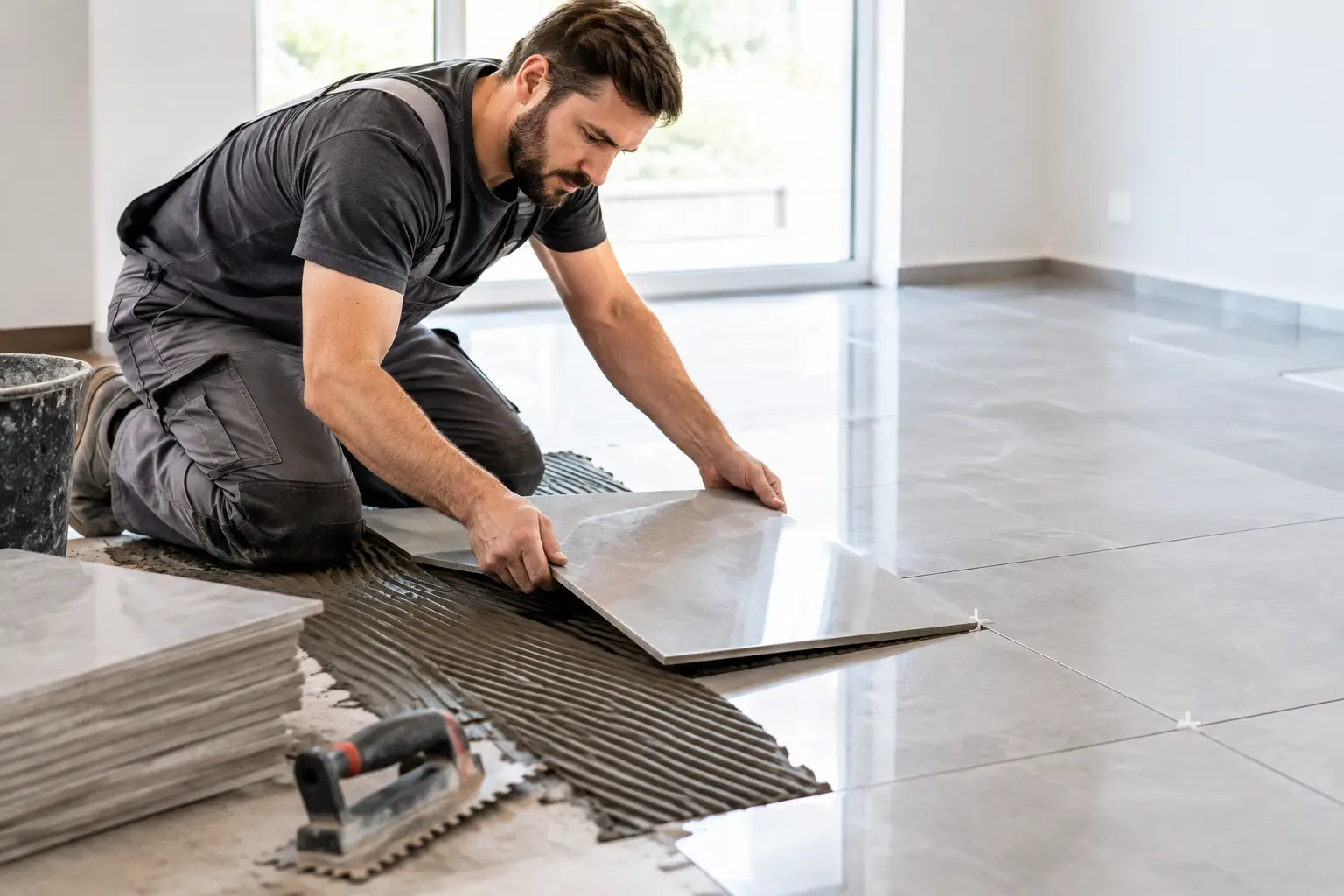
How Long Does Tile Installation Take in a Home?
A kitchen floor can look straightforward until the old material comes up and the subfloor tells a different story. So, how long does tile installation take? For most residential projects, the installation work takes two to five days. A small, well-prepared bathroom may be completed faster, while a large format tile floor, shower, or project requiring demolition and repairs can take a week or more.
The real answer depends on more than square footage. Tile installation is a sequence of connected steps: removal, surface preparation, layout, setting, grouting, curing, and final finishing. Skipping time where it matters may create loose tile, cracked grout, uneven lines, or moisture problems later. A professional schedule protects both the appearance of the space and the long-term performance of the floor.
How Long Does Tile Installation Take by Project Type?
A standard tile floor in a clear, empty room with a sound, level substrate can often be set in one day and grouted the next. That does not always mean it is ready for heavy use immediately. Thinset and grout need time to cure before furniture, appliances, or regular foot traffic return.
For a typical 100 to 250 square foot kitchen, laundry room, or entryway, plan on two to four working days when no major repairs are needed. A small bathroom floor may take one to three days, especially if the tile layout is simple and the room has already been cleared.
Bathrooms with wall tile, shower pans, niches, waterproofing, and detailed cuts require more time. A shower installation commonly takes five to 10 working days because each layer must be installed correctly and allowed to set before the next phase begins. Kitchen backsplashes are usually faster, often one to three days, but outlet cuts, patterned tile, and natural stone can add time.
Commercial spaces and occupied properties need their own schedule. Access windows, furniture moving, dust control, phased work areas, and overnight curing periods can extend the calendar. The advantage of an experienced team is a plan that keeps disruption controlled while maintaining high-quality installation standards.
The Steps That Control the Tile Installation Timeline
Removal and cleanup
If old flooring must be removed, the timeline starts there. Ceramic tile, mortar beds, glued vinyl, hardwood, and damaged underlayment each require different removal methods. A small room may be cleared in a day. Larger spaces, thick mortar, or tile installed over concrete may require additional labor and specialized equipment.
Removal is not just about getting material out. The area must be cleaned of adhesive, mortar, nails, debris, and dust before the new installation can begin. Proper containment and cleanup matter, particularly in occupied homes, rental properties, and commercial interiors.
Subfloor and surface preparation
This is often the biggest variable. Tile needs a clean, stable, and level surface. If the concrete slab has cracks, high spots, moisture concerns, or old thinset residue, it may need grinding, patching, leveling compound, or crack-isolation treatment. Wood subfloors may need reinforcement, new underlayment, or repairs before tile can be safely installed.
Preparation can take a few hours or several days. Self-leveling materials and repair products need cure time, which should be built into the schedule. It can feel like a delay, but it is one of the most valuable investments in the project. Beautiful tile cannot compensate for a weak or uneven base.
Layout and tile setting
Once the surface is ready, installers establish reference lines and confirm the layout. This prevents narrow slivers of tile at walls, keeps patterns balanced, and aligns transitions with doorways, cabinets, and fixtures. In a visible space such as a kitchen or bathroom, layout decisions make a major difference in the finished result.
Straight-set ceramic or porcelain tile moves faster than herringbone, diagonal patterns, mosaics, or mixed-size layouts. Large format tiles also require additional attention because the surface must be flatter and each piece must be carefully handled and aligned. More cuts around toilets, islands, door jambs, drains, and cabinets mean more installation time.
Grouting, caulking, and final details
After the tile is set, it needs adequate time before grout is applied. Many projects are grouted the following day, but product specifications and site conditions control the exact timing. Once grout is complete, expansion joints and changes of plane receive flexible caulk rather than rigid grout. This helps manage normal movement and reduces cracking risk.
Final details may include reinstalling baseboards, trim, toilets, appliances, transition strips, or fixtures. These are the details that make the project feel complete, and they should not be rushed.
Factors That Can Extend the Schedule
The fastest tile jobs are not always the best tile jobs. Several conditions can add time for the right reasons.
Tile size and material matter. Porcelain is durable and popular, but dense tile can be slower to cut. Marble and other natural stone require careful handling, color blending, sealing considerations, and more precise installation. Mosaic sheets can cover a small area quickly but often take longer around corners, edges, and detailed features.
Humidity and temperature also matter in Central Florida. Adhesives, thinset, grout, leveling materials, and waterproofing systems perform according to specific application and curing requirements. A professional crew plans around site conditions rather than making promises that ignore the materials being used.
Unexpected damage can also change the schedule. Water damage beneath a bathroom floor, cracked concrete under old tile, termite-affected wood, or an out-of-level slab should be corrected before new flooring goes in. Finding these issues early is good news, even if it adds a day or two. Installing over hidden problems is a costly shortcut.
When Can You Walk on New Tile?
Light foot traffic is commonly possible about 24 hours after tile is set, but the correct answer depends on the mortar, grout, tile type, and job conditions. Heavy furniture, rolling appliances, and ladders should wait longer. Many installations benefit from 48 to 72 hours before normal use, while full curing can take significantly longer.
For showers and wet areas, do not use the space until the waterproofing, thinset, grout, and sealants have cured as specified. Water exposure too early can compromise the installation. Your installer should provide clear instructions based on the products used, not a generic guess.
How to Keep Your Tile Project on Schedule
The best way to avoid preventable delays is to make decisions before the crew arrives. Confirm the tile, grout color, trim pieces, transitions, and fixture plans in advance. Order extra tile from the same lot when possible, particularly for patterned materials, natural stone, or discontinued styles.
Clear the work area and arrange access to the space. If appliances, toilets, cabinets, or furniture need to be moved, identify that during the estimate rather than on installation day. For occupied homes, plan for noise, dust control, and limited access to kitchens or bathrooms while the work is underway.
Most importantly, choose a contractor that can manage removal, preparation, installation, and finishing as one coordinated scope. Rox Floor provides that integrated approach for Central Florida property owners who want a clean process, responsive scheduling, and durable results without coordinating multiple crews.
A reliable timeline is not the shortest number on paper. It is a realistic plan that gives every layer of the installation the time it needs, so your new tile looks sharp on day one and performs for years.