
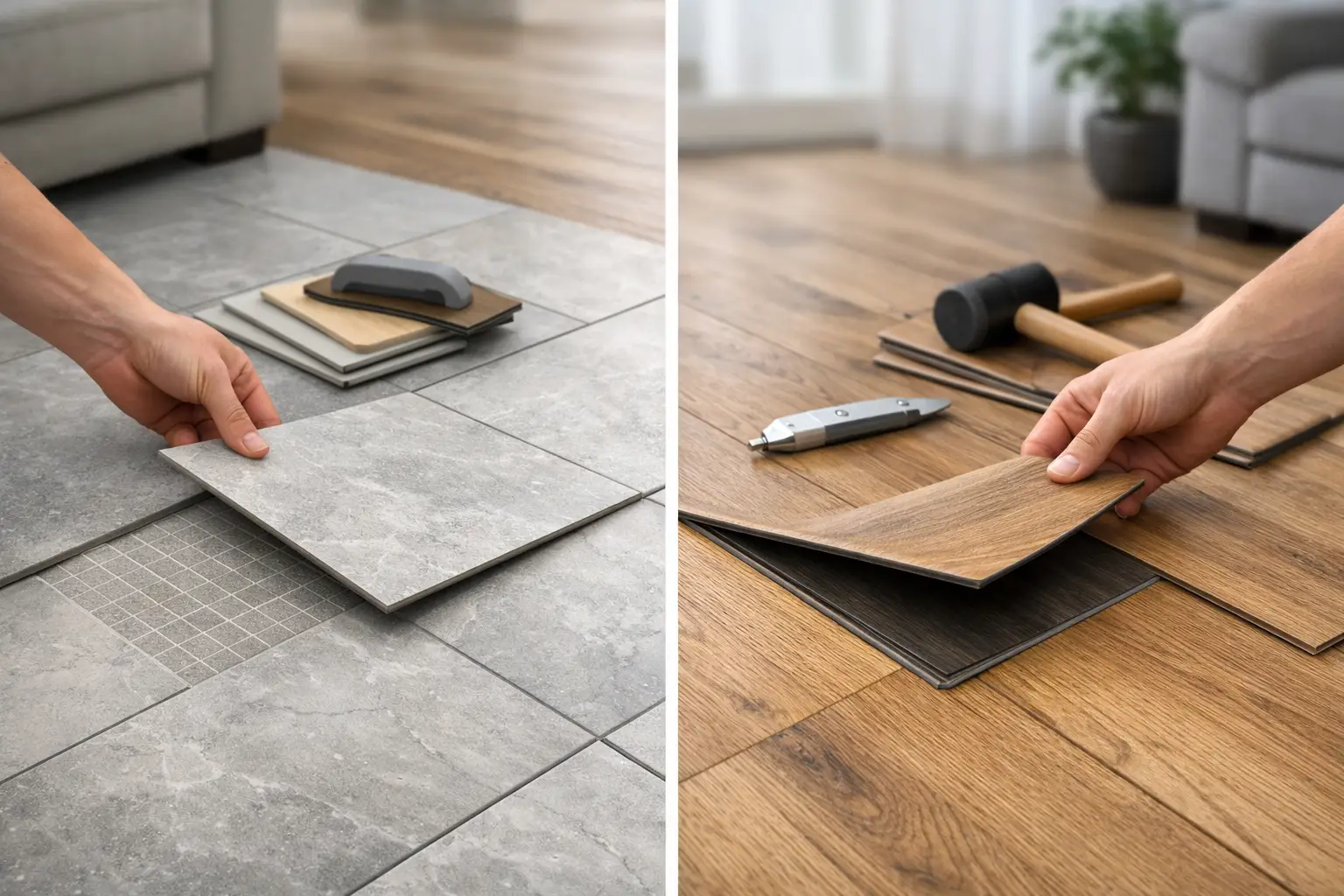
Tile or Vinyl Flooring: Which Fits Best?
A floor can make a kitchen feel premium or make a remodel feel like a compromise. That is why the choice between tile or vinyl flooring deserves a clear, practical look before demolition starts, materials are ordered, and installation day is on the calendar.
For homeowners, property managers, and investors, this decision usually comes down to four things – budget, speed, durability, and appearance. Both materials can work well. The right answer depends on how the space is used, what condition the subfloor is in, and how long you want the result to last without constant repairs or replacement.
Tile or Vinyl Flooring: The Real Difference
Tile and vinyl solve the same problem in very different ways. Tile is a hard-surface finish known for strength, water resistance, and a more permanent upscale feel. Vinyl is a resilient flooring product designed for faster installation, lower upfront cost, and more comfort underfoot.
That difference matters most when you are renovating bathrooms, kitchens, rental properties, or commercial interiors. A material that looks great in a showroom may not be the best fit once you factor in foot traffic, moisture, cleaning habits, and the condition of the existing floor underneath.
Tile usually wins on long-term hardness and visual value. Vinyl usually wins on speed, affordability, and ease of replacement. Neither is automatically better. The better choice is the one that matches the room and the project goals.
When Tile Is the Better Investment
Tile is often the stronger option when durability and long-term appearance matter more than installation speed. In kitchens, bathrooms, entryways, and high-traffic commercial areas, tile performs well because it resists moisture and stands up to wear. When installed correctly over a properly prepared surface, it can last for decades.
Another reason many owners choose tile is design flexibility. Large-format porcelain, stone-look finishes, polished marble, and classic ceramic patterns can completely change the feel of a space. If the goal is to elevate a home before resale or create a premium finish in a bathroom remodel, tile usually delivers the stronger visual impact.
There are trade-offs. Tile is harder and colder underfoot. It can also crack if the subfloor is not level or stable. That means surface preparation is not optional. If an existing floor is damaged, uneven, or poorly bonded, removal and prep have to be done right before new tile goes in. Skipping that step is where many floor failures begin.
Tile also takes more time. Demolition, underlayment work, layout planning, mortar, grout, curing, and finish details all add labor. For clients who want the highest-end result and are willing to invest in it, that extra time is usually worth it.
When Vinyl Makes More Sense
Vinyl has become a go-to solution for remodels that need speed, value, and a clean modern look. Luxury vinyl plank and luxury vinyl tile have improved dramatically in recent years. Many products now offer realistic wood and stone visuals, solid wear layers, and dependable water resistance.
For rental units, quick-turn renovations, occupied homes, and commercial spaces where downtime matters, vinyl has a clear advantage. Installation is often faster, demolition can be simpler depending on the existing floor, and the overall project cost is usually lower than tile. That is a major benefit when you are updating multiple units or trying to control budget without making the space look cheap.
Vinyl is also more forgiving underfoot. It feels warmer, softer, and quieter than tile, which many homeowners appreciate in living areas, bedrooms, and kitchens. If comfort matters as much as durability, vinyl deserves serious consideration.
The main limitation is longevity under harsh conditions. Vinyl is durable, but it is not indestructible. Sharp impacts, heavy dragging, and poor-quality installation can lead to lifting, denting, or seam issues. It also does not usually carry the same premium perception as a well-installed tile floor, especially in high-end homes.
Cost Is Not Just About Materials
A lot of people compare tile and vinyl by price per square foot and stop there. That is not enough. The true cost of flooring includes removal of the existing material, subfloor prep, moisture issues, transitions, trim work, and labor.
Tile may cost more upfront because installation is more labor-intensive. If the old floor has to be removed, adhesive has to be ground down, or the substrate needs repair, the final number rises quickly. But tile can also deliver better long-term value in the right space because it holds up so well.
Vinyl often comes in lower on initial investment. That makes it attractive for budget-sensitive remodels or properties being prepared for lease or sale. Still, cheap vinyl installed over a poor surface is not a bargain. It is a shortcut that can turn into rework. A professional result depends on proper prep no matter which material you choose.
Moisture, Cleaning, and Daily Wear
Bathrooms, kitchens, laundry rooms, and commercial interiors put flooring under pressure every day. Water, spills, foot traffic, and cleaning products all affect performance.
Tile handles water extremely well, especially porcelain. That makes it a strong option for wet areas. Grout lines do need maintenance over time, and some tile surfaces can be slippery when wet, so product selection matters.
Vinyl also performs well in moisture-prone spaces, especially waterproof products. It is easy to clean and generally low maintenance, which is one reason it is so popular in busy households and investment properties. But standing water, edge exposure, or bad installation can still create problems. Waterproof does not mean mistake-proof.
For families with pets, children, or heavy foot traffic, both materials can work. Tile resists scratches better. Vinyl tends to be quieter and more forgiving when something gets dropped. If your project needs a balance of practicality and speed, vinyl often earns the edge. If your priority is maximum surface toughness, tile stays in the lead.
Installation Quality Decides the Outcome
The material matters, but the installation matters just as much. A premium tile product can fail if the substrate is uneven. A quality vinyl floor can look poor if transitions are rushed or moisture conditions are ignored.
This is where full-service flooring work creates real value. Removal, demolition, surface prep, and installation should be treated as one connected process, not separate jobs stitched together by different crews. When one team handles the project from tear-out to finish, it is easier to control quality, schedule, and accountability.
That is especially important in remodels where the old floor hides damage underneath. Loose tile, cracked underlayment, moisture issues, or uneven concrete can all affect the final result. In many projects, the smartest move is not choosing tile or vinyl first. It is starting with a proper assessment of what is under the existing floor.
How to Choose Tile or Vinyl Flooring for Your Space
If you want the most upscale, long-lasting hard surface for a bathroom, shower area, or premium kitchen remodel, tile is often the better choice. If you need faster installation, lower cost, and strong day-to-day performance for a rental, home update, or light commercial property, vinyl may be the smarter move.
Think about the timeline. Think about the subfloor. Think about whether the room needs a luxury finish or a durable, efficient upgrade. The right answer is usually the one that fits the property, not the one that sounds best in general.
In Central Florida, where moisture, busy households, and renovation timelines all shape the decision, clients often benefit most from expert guidance before materials are purchased. Rox Floor sees this every day – the projects that last are the ones that start with honest recommendations, skilled prep work, and installation done right the first time.
A good floor should do more than look new on day one. It should fit the way the property works, hold up under real use, and make the entire renovation feel worth it.