
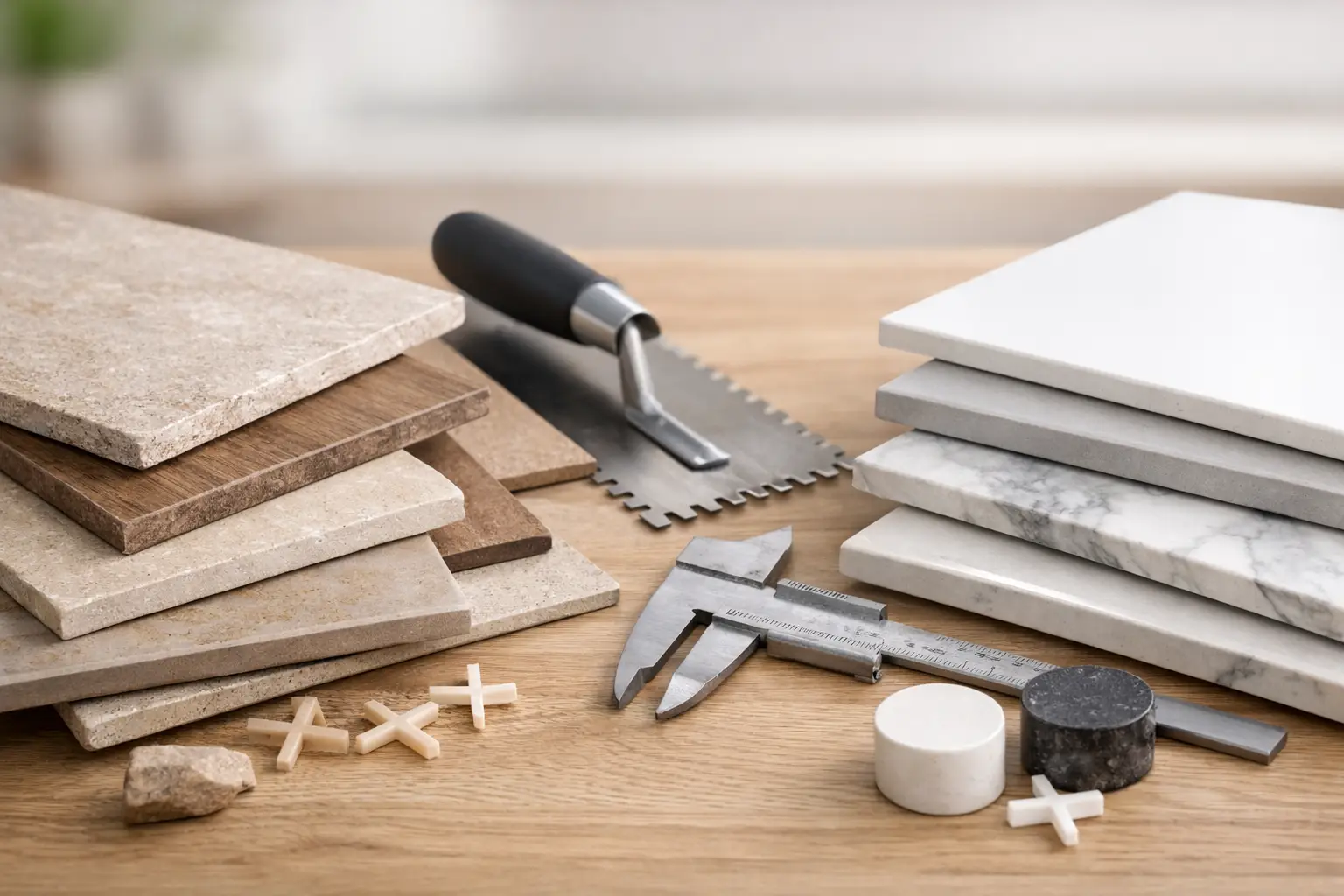
Ceramic Tile or Porcelain: Which Fits Best?
A floor can look great on day one and still be the wrong choice for how a space gets used. That is why the ceramic tile or porcelain question matters more than most homeowners expect. In kitchens, bathrooms, rentals, and commercial interiors, the right material affects durability, maintenance, installation cost, and how long the finished result keeps its value.
At first glance, ceramic and porcelain can look nearly identical. Both are tile products, both come in a wide range of sizes and finishes, and both can create a clean, high-end result. The difference shows up in performance. If you are planning a renovation, replacing damaged flooring, or updating a property for resale, choosing based on looks alone can cost more later.
Ceramic tile or porcelain: what changes in real life?
The biggest practical difference is density. Porcelain is generally denser, less porous, and harder than standard ceramic tile. That usually makes it a stronger option for high-traffic areas, moisture-prone rooms, and spaces where long-term wear matters.
Ceramic tile is still a solid choice, but it tends to be easier to cut and often more budget-friendly. For many wall applications and lower-traffic rooms, ceramic performs well and can deliver an excellent finish without pushing the budget higher than necessary.
This is where good planning matters. A guest bathroom and a busy family kitchen do not ask the same thing from a floor. A rental property and a forever home may not need the same material either. The best result comes from matching the tile to the room, the traffic, and the condition of the subfloor underneath.
When ceramic makes more sense
Ceramic tile works well when the goal is a clean, attractive installation at a lower material cost. It is often a smart fit for walls, backsplashes, shower surrounds, and floors in spaces that do not take constant abuse. If the room has moderate traffic and the project budget needs to stay controlled, ceramic is often the practical answer.
Another reason some property owners lean toward ceramic is installation efficiency. Because it is generally easier to cut, it can help on layouts with many corners, trim details, or fixture penetrations. That does not mean it is a shortcut product. It means the material can be a better fit when the design is more decorative than heavy-duty.
For house flips, secondary bathrooms, and light-use residential spaces, ceramic often delivers the right balance of appearance and cost. The key is making sure expectations match the material. If you want a floor that stands up to years of hard wear with minimal concern, porcelain may be the safer investment.
When porcelain is worth the extra cost
Porcelain is usually the better choice when performance comes first. It is especially strong in bathrooms, kitchens, laundry rooms, entryways, and commercial areas where foot traffic, spills, and daily wear are part of normal use. Because it absorbs less water, it is often preferred in wet areas and anywhere moisture resistance matters.
That added durability can justify the higher upfront price. In many projects, spending more on porcelain reduces the risk of early wear, chipping, or replacement. For busy households, investors preparing a rental, or owners upgrading a property with long-term value in mind, porcelain often pays off over time.
It is also a strong option when the goal is a more premium finish. Many porcelain products convincingly replicate natural stone, wood, or concrete while offering easier maintenance than the real material. That combination of design flexibility and durability is a major reason it remains one of the most requested tile choices in modern remodels.
Cost is not just the tile price
Many people compare ceramic and porcelain by looking only at the price per square foot. That is understandable, but incomplete. The real project cost includes demolition, floor removal, surface prep, leveling, underlayment needs, layout complexity, thinset, grout, trim, and labor.
Porcelain often costs more to install because it is harder and heavier. Cutting it can take more time, and the substrate needs to be ready for a precise, lasting installation. If the existing floor is uneven or damaged, that prep work matters just as much as the tile itself.
On the other hand, choosing a cheaper tile over a properly prepared surface is rarely a smart savings. A high-quality installation starts below the tile. If the base is not flat, stable, and clean, even premium material can fail. That is why experienced contractors look at the full system, not just the finish layer.
Surface preparation decides how the job ends
This is where many tile projects go right or go wrong. Removing old flooring, dealing with adhesive residue, checking for cracks, correcting uneven areas, and preparing the subfloor are not side tasks. They are the foundation of the finished result.
A well-installed ceramic floor on a properly prepared surface will outperform a rushed porcelain job installed over problems. Tile does not hide subfloor issues. It exposes them. Lippage, loose tiles, grout cracking, and hollow spots often begin before the first tile is set.
For that reason, homeowners should think beyond product selection. If your project includes floor removal, demolition, and installation, working with one experienced team can save time and reduce mistakes between phases. It keeps accountability clear and helps the whole job move faster.
Best rooms for each option
In bathrooms, both materials can work well, but porcelain usually has the edge for floors because of its lower water absorption. Ceramic remains a strong option for shower walls and decorative applications where durability demands are lower.
In kitchens, porcelain is often the safer long-term pick. Kitchens see traffic, spills, chair movement, and dropped items. Ceramic can still work, especially in smaller or lighter-use spaces, but porcelain is generally better suited to the daily wear.
For backsplashes and accent walls, ceramic is often all you need. It gives you design range, color variety, and cost control without paying extra for floor-grade performance you may not actually need.
In commercial settings or rental properties, the decision usually comes down to traffic and replacement risk. If durability, low maintenance, and longevity are priorities, porcelain is hard to beat.
Design matters, but performance matters more
Both ceramic and porcelain come in polished, matte, textured, and large-format styles. Both can create a modern or classic look. That part is easy to get excited about. The mistake is assuming that two tiles with a similar appearance will behave the same after installation.
A great-looking floor still needs to handle real life. Pets, kids, tenants, rolling carts, moisture, and cleaning routines all affect how satisfied you will be a year from now. That is why the strongest tile choice is not always the most expensive or the trendiest. It is the one that fits the space without creating maintenance headaches later.
This is also where professional guidance saves money. A contractor who understands removal, prep, and installation can help you avoid overbuying in one room and underbuilding in another. That kind of recommendation is based on use, not guesswork.
How to make the right decision
If your priority is lower upfront cost, a strong visual result, and a practical finish for lighter-use spaces, ceramic may be the right fit. If your priority is long-term durability, moisture resistance, and better performance in hard-working areas, porcelain usually wins.
The smartest choice is not universal. It depends on the room, the budget, the condition of the existing floor, and how long you expect the material to last. That is why many successful remodels start with an on-site evaluation rather than a product decision made in a showroom aisle.
For homeowners and property managers in Central Florida, that full-project approach matters even more when speed, cleanliness, and coordination are priorities. A team that can handle removal, prep, and expert installation helps keep the project efficient from start to finish.
If you are deciding between ceramic tile or porcelain, think past the display sample. The best floor is the one that still performs after the furniture is back in place, the room is in daily use, and the project is no longer new.