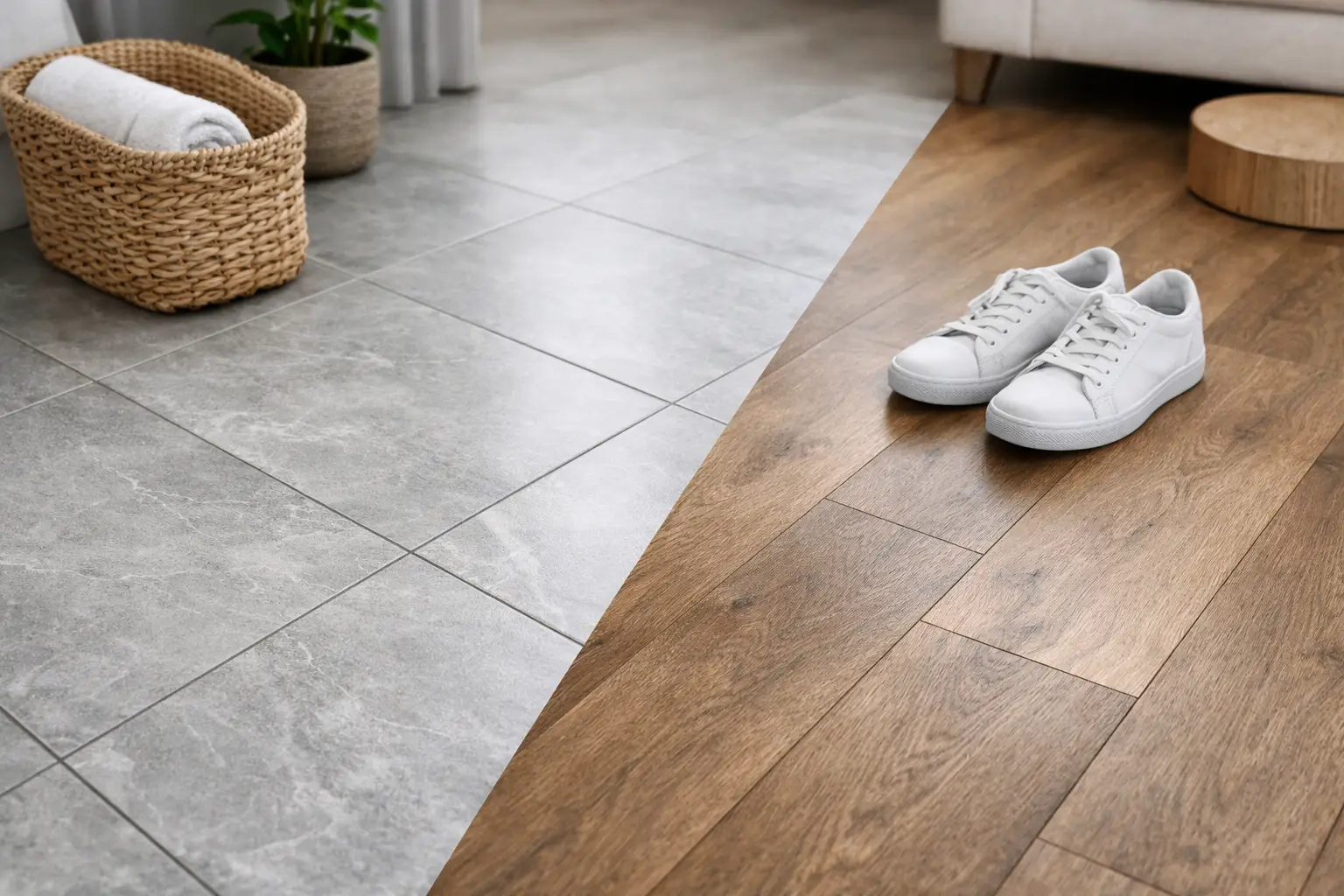
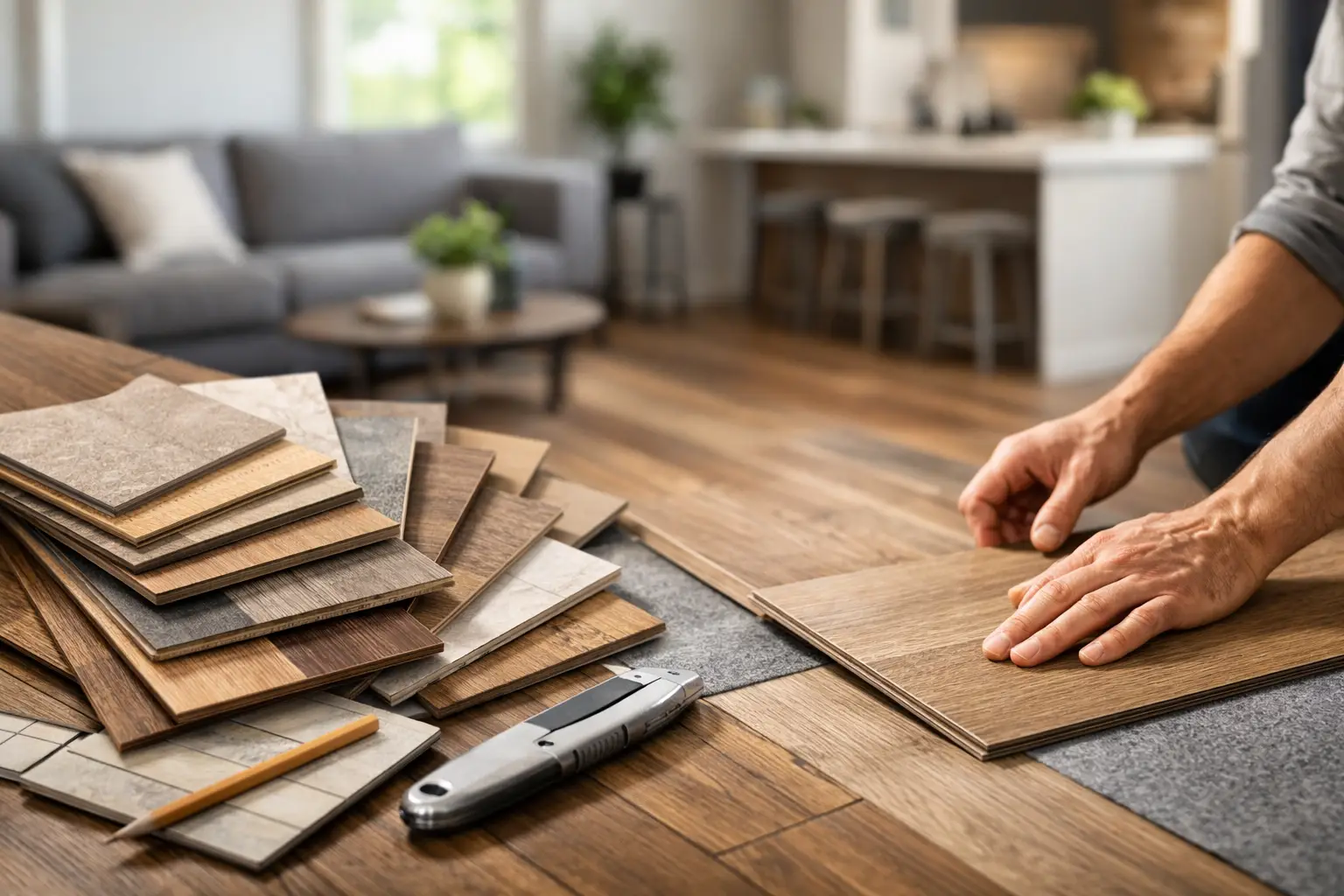
A floor can look great in a showroom and still be the wrong call for your home, rental, or renovation budget. When clients ask about ceramic tile vs vinyl, they are usually not asking for theory – they want to know which one will hold up, look better, install faster, and make more sense for the space they are upgrading.
That is the right question. The better answer is not that one material is always superior. It depends on how the space is used, what condition the subfloor is in, how quickly you need the job completed, and how long you expect the floor to perform before replacing it again.
Ceramic tile vs vinyl: the real difference
Ceramic tile and vinyl are both popular for kitchens, bathrooms, laundry rooms, rental properties, and full-home remodels, but they solve different problems.
Ceramic tile is a hard surface made for long-term durability. It gives a clean, premium finish and performs especially well in wet areas when installed correctly. It is a strong fit for homeowners and property owners who want a solid, high-end look and are willing to invest more in labor and preparation.
Vinyl is built around practicality. It is usually faster to install, more forgiving underfoot, and often more budget-friendly upfront. Modern vinyl products can also look surprisingly close to wood or stone, which is why they are a go-to choice for many fast-turn renovation projects.
If your priority is premium feel and longevity, tile often stands out. If your priority is speed, comfort, and lower installation cost, vinyl usually has the edge.
Cost: upfront price vs long-term value
For many projects, cost is where the decision starts. Vinyl generally costs less to install than ceramic tile. The material itself is often more affordable, and labor is usually faster because the installation process is less intensive. That matters if you are remodeling multiple units, working under a deadline, or trying to control renovation costs without sacrificing appearance.
Ceramic tile usually comes with a higher labor cost for a reason. Tile installation demands careful layout, precise cuts, mortar, grout, leveling, cure time, and a properly prepared substrate. If the surface below is uneven or damaged, more prep work may be needed before installation can even begin.
That said, lower upfront cost does not automatically mean better value. In the right space, a professionally installed tile floor can last for decades. Vinyl can also perform very well, but its lifespan depends heavily on product quality, traffic levels, moisture exposure, and how well the subfloor was prepared.
For high-value homes, bathrooms, and kitchens where finish quality matters, tile can justify the higher investment. For rentals, light commercial spaces, or remodels where speed and efficiency are critical, vinyl often delivers stronger short-term value.
Water resistance and moisture performance
This is where many buyers assume both materials are equal. They are not.
Ceramic tile is excellent in wet areas when installed correctly. The tile itself resists water very well, which is why it remains a trusted choice for showers, bathroom floors, backsplashes, and laundry spaces. But grout lines and installation quality matter. A poor tile installation can still lead to moisture problems below the surface.
Vinyl also performs well around moisture, especially waterproof luxury vinyl products. This makes it a strong option for kitchens, bathrooms, and even some commercial spaces. The difference is that vinyl is not just about surface water resistance – it also depends on tight seams, product type, and proper installation. If water gets trapped underneath due to leaks or subfloor issues, you can still end up with damage.
In Florida, where humidity and moisture exposure are part of daily life, subfloor prep matters just as much as material choice. A floor only performs as well as the surface underneath it.
Durability under daily use
If you want a floor that can take years of wear, ceramic tile is hard to beat. It resists scratches well, handles heavy foot traffic, and does not dent easily from furniture or dropped objects. In busy households or commercial settings, that kind of durability is a major advantage.
The trade-off is that tile is hard. If something heavy hits it the wrong way, a tile can crack. Repairs are possible, but they are not always invisible, especially if matching tile is no longer available.
Vinyl is more flexible. It is less likely to crack, but it can scratch, gouge, or dent more easily than tile, particularly in lower-grade products. In homes with pets, kids, rolling furniture, or frequent traffic, product quality becomes a big factor. Premium vinyl performs much better than entry-level material.
If durability means resistance to scratches and long-term wear, tile often leads. If durability means flexibility and better impact tolerance under normal daily life, vinyl can be the smarter choice.
Comfort and noise matter more than people expect
A floor is not just about appearance. It changes how a room feels every day.
Ceramic tile feels solid, cool, and clean. In warm climates, many property owners like that cooler surface temperature. It can make kitchens and living areas feel fresher, especially during hotter months. But tile is also harder underfoot. In homes where people stand for long periods in the kitchen or where comfort is a priority, that hardness can become a drawback.
Vinyl is generally softer and quieter. It has more give when you walk on it, and that can make a real difference in family homes, upstairs areas, and larger living spaces. It is often the more comfortable option for daily use, especially for people who do not want the rigid feel of tile.
This is one of the most practical ceramic tile vs vinyl decisions. If the room needs comfort and noise control, vinyl usually wins. If the room needs a crisp, durable finish that stays cool and polished, tile has a strong advantage.
Style and resale appeal
Ceramic tile still carries strong visual credibility. It has a classic, established look that many buyers associate with quality, especially in bathrooms and kitchens. Large-format tile, neutral colors, and clean grout lines can make a space feel more upscale and more permanent.
Vinyl has improved dramatically in appearance. Today’s luxury vinyl can imitate wood and stone with impressive realism, and it comes in a wide range of colors and textures. For many homeowners, that creates more design flexibility at a lower price point.
Resale value depends on the property and the quality of the work. Poorly installed tile will not impress anyone. Cheap vinyl will not either. In higher-end homes, tile often supports a more premium presentation. In practical renovations focused on clean updates and broad market appeal, vinyl can be a very smart move.
Installation speed and project disruption
For occupied homes, rentals between tenants, and renovation schedules with tight deadlines, installation speed matters.
Vinyl is usually the faster option. In many cases, it can be installed with less disruption and less downtime than tile. That is a major benefit when you need quick turnaround or want to minimize the time a kitchen, bathroom, or unit is out of service.
Tile takes longer, and not just because of the installation itself. Surface prep, leveling, drying time, grout work, and detail finishing all add time. But when done right, the finished result has a level of permanence that many clients want.
This is where working with one team for removal, prep, and installation creates real value. If the old floor comes out cleanly and the substrate is properly prepared from the start, both tile and vinyl perform better and the project stays on schedule.
Which one is right for your space?
Bathrooms are often a strong fit for ceramic tile, especially when you want a long-lasting, water-ready finish with a premium look. Kitchens can go either way. Tile offers durability and a classic finish, while vinyl brings comfort and faster installation. Laundry rooms, rental properties, and quick-turn remodels often lean toward vinyl because it balances appearance, performance, and cost.
For commercial or investment properties, the answer usually comes down to use case. If you want maximum durability and a higher-end finish, tile may be the better asset. If you need speed, lower install cost, and reliable day-to-day performance, vinyl is often the more efficient choice.
At Rox Floor, this is exactly how we guide clients – not with one-size-fits-all advice, but with material recommendations based on the condition of the space, your timeline, and the result you want when the job is done.
The best floor is not the one with the best marketing. It is the one that fits the room, the budget, and the level of performance you expect years after installation day.