
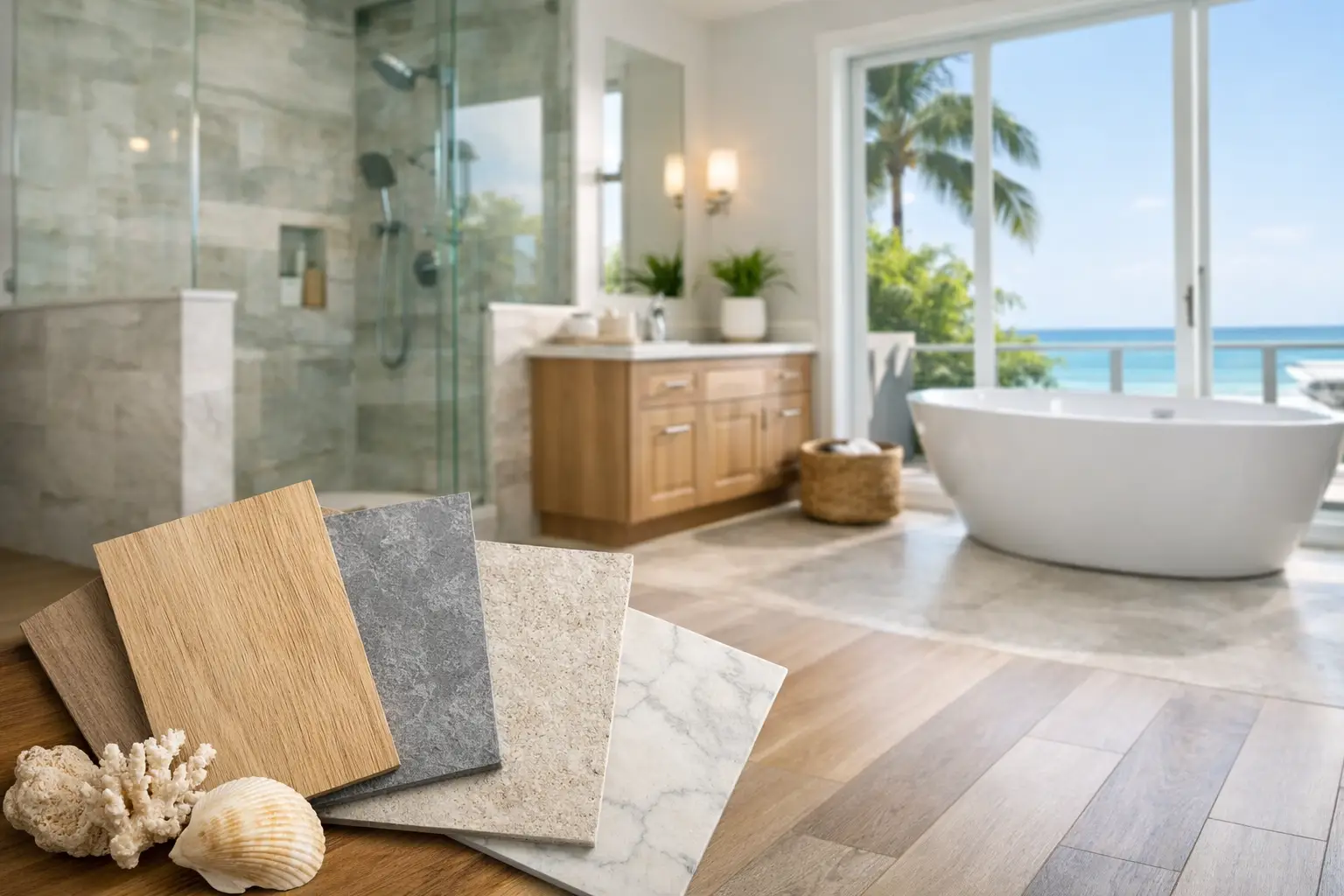
Best Bathroom Flooring Materials for Florida Homes
A bathroom floor has to handle more than everyday foot traffic. It deals with humidity, wet feet, shower spray, cleaning products, and the occasional plumbing issue. Choosing the best bathroom flooring materials means balancing water resistance, slip safety, appearance, long-term durability, and the condition of the subfloor underneath.
For homeowners, property managers, and investors in Central Florida, that decision carries even more weight. Persistent humidity can expose weak installation work quickly. A floor that looks great on day one but allows moisture into the substrate can lead to loose tile, stained grout, soft flooring, or costly repairs later. The right material matters, but professional removal, surface preparation, waterproofing, and installation matter just as much.
Best Bathroom Flooring Materials: The Strongest Options
Porcelain Tile: The Premium All-Around Choice
Porcelain tile is one of the strongest choices for a bathroom because it is dense, highly water-resistant, durable, and available in almost any visual style. It can create the look of natural stone, wood, concrete, or clean modern finishes without requiring the maintenance that some natural materials demand.
For busy family bathrooms, rental properties, and high-use commercial spaces, porcelain performs exceptionally well. It resists scratches, holds up to regular cleaning, and does not swell when exposed to humidity. Large-format porcelain can also reduce the number of grout lines, creating a cleaner visual result and less grout to maintain.
The trade-off is that porcelain is not a casual installation. The existing floor must be removed correctly, the subfloor must be flat and stable, and the tile layout needs careful planning. Poor prep can cause uneven edges, cracked tiles, hollow spots, or grout failure. In a wet area, experienced installation is the difference between a premium result and a recurring repair issue.
For shower-adjacent areas, choose a porcelain tile with an appropriate slip-resistant finish. Polished tile can look dramatic, but it may become slick when wet. Matte, textured, or smaller mosaic porcelain tile is often a smarter choice for shower floors and bathrooms used by children or older adults.
Luxury Vinyl Plank and Tile: Comfortable and Cost-Conscious
Luxury vinyl plank, often called LVP, and luxury vinyl tile, or LVT, are popular bathroom flooring options for homeowners who want a clean, modern update without the cost and installation time of tile. Quality vinyl products are water-resistant or waterproof, softer underfoot than ceramic or porcelain, and available in convincing wood and stone visuals.
Vinyl can be a practical option for powder rooms, guest baths, rental renovations, and projects with a controlled budget. It is also warmer to walk on than tile, which makes a noticeable difference in the morning. Installation can be faster than a traditional tile project when the subfloor is in good condition and the selected product is appropriate for a bathroom environment.
However, not every vinyl floor is built for the same level of moisture exposure. Water-resistant does not always mean it can tolerate standing water or a failed toilet seal indefinitely. Seams, perimeter gaps, and transitions must be handled correctly. If water reaches the subfloor, hidden damage may still develop below the vinyl.
Vinyl also needs a very smooth, properly prepared surface. Minor subfloor imperfections can telegraph through the material over time, especially with thinner products. For the best result, do not treat surface prep as an optional step. A level, clean, dry substrate protects the appearance and lifespan of the new floor.
Natural Marble: High-End Style With Higher Maintenance
Marble brings an unmistakable luxury look to a bathroom. Its natural veining makes every installation unique, and it can elevate a primary bathroom, upscale home renovation, or statement powder room. When installed with precision, marble flooring creates a finish that feels custom and high value.
But marble is not the low-maintenance answer. It is more porous than porcelain and can be etched by acidic products, including some common bathroom cleaners. It requires sealing and thoughtful ongoing care. A highly polished marble surface may also be slippery when wet, so finish selection is critical.
Marble works best for owners who understand the maintenance commitment and want the character of real natural stone. Honed finishes generally offer a softer appearance and better traction than highly polished surfaces. Good installation also requires an especially stable subfloor, carefully planned tile layout, accurate cuts, and grout selection that supports the intended design.
Ceramic Tile: Reliable Value for Everyday Bathrooms
Ceramic tile remains a reliable choice for many bathroom remodels. It is water-resistant, easy to clean, widely available, and generally more affordable than porcelain or marble. With the right product and professional installation, ceramic tile can provide years of dependable performance.
Ceramic is especially effective on bathroom walls, backsplashes, and low-to-moderate traffic floors. It comes in countless colors, sizes, and patterns, making it easy to match a traditional, coastal, modern, or transitional design.
The main consideration is durability. Ceramic is typically less dense than porcelain, so it can be more vulnerable to chips or cracks in high-impact areas. That does not make it a poor choice. It simply means product selection should match how the bathroom will be used. A secondary bath may be an excellent setting for ceramic, while a heavily used primary bathroom may justify the upgrade to porcelain.
Sheet Vinyl: A Practical Option for Fast Updates
Sheet vinyl is often overlooked, but it can be a sensible solution for certain projects. Because it is installed in broad sheets with minimal seams, it offers strong water protection for bathroom floors. It is also budget-friendly and can be installed quickly in the right conditions.
This material is especially useful for laundry-adjacent bathrooms, practical rental upgrades, or projects where easy cleaning and low upfront cost are priorities. Modern sheet vinyl designs have improved significantly, though it generally does not deliver the same premium look or resale appeal as high-quality tile or luxury vinyl.
Its performance depends heavily on the condition of the floor below. Rough patches, old adhesive, dips, and damaged underlayment can show through the finished surface. Proper removal and surface preparation keep a cost-effective choice from looking like a shortcut.
What to Consider Before Selecting Bathroom Flooring
The best material depends on the bathroom itself, not only the sample in the showroom. Start with moisture exposure. A powder room without a shower has very different demands than a busy primary bathroom used by multiple people every day. Shower rooms, kids’ bathrooms, and properties with frequent tenant turnover benefit from highly durable, water-resistant surfaces such as porcelain.
Slip resistance should be part of the decision from the beginning. A floor can be beautiful and still be the wrong choice if it becomes hazardous when wet. Texture, tile size, grout lines, and finish all affect traction. Smaller tiles with more grout lines often provide better grip in wet zones, while large tiles can create a sleek, open look in the main bathroom area.
Maintenance expectations matter too. Porcelain and ceramic are easy to live with, especially when grout is properly sealed and maintained. Vinyl needs regular cleaning but avoids grout upkeep. Marble requires the most attention and is best for owners prepared to protect and maintain a natural stone surface.
Finally, inspect what is already under the old floor. Water stains, soft spots, cracked concrete, uneven areas, loose tile, and old adhesive are not cosmetic problems. They are warning signs that the substrate needs repair or preparation before the new material goes down. Covering a problem usually delays it. Correcting it protects the investment.
Installation Quality Protects the Finished Floor
Bathroom flooring is a system, not just a surface. Successful projects often include old floor removal, debris handling, subfloor inspection, leveling, moisture management, waterproofing where needed, material installation, grouting or finishing, and clean transitions at doors and fixtures.
This is why experienced crews are valuable. A professional team can identify whether an existing floor needs demolition, whether the subfloor is suitable for tile, and whether surface leveling is necessary before installation starts. That knowledge helps prevent avoidable change orders and creates a cleaner, more durable finished space.
Rox Floor provides flooring removal, surface preparation, tile, vinyl, and marble installation for bathroom renovation projects throughout Central Florida. The goal is straightforward: remove the old material correctly, prepare the surface properly, and install a floor that performs as well as it looks.
A bathroom renovation should leave you with a floor you do not have to second-guess after the first humid summer, busy holiday weekend, or unexpected splash. Choose the material that fits your space, then give it the skilled preparation and installation it deserves.