
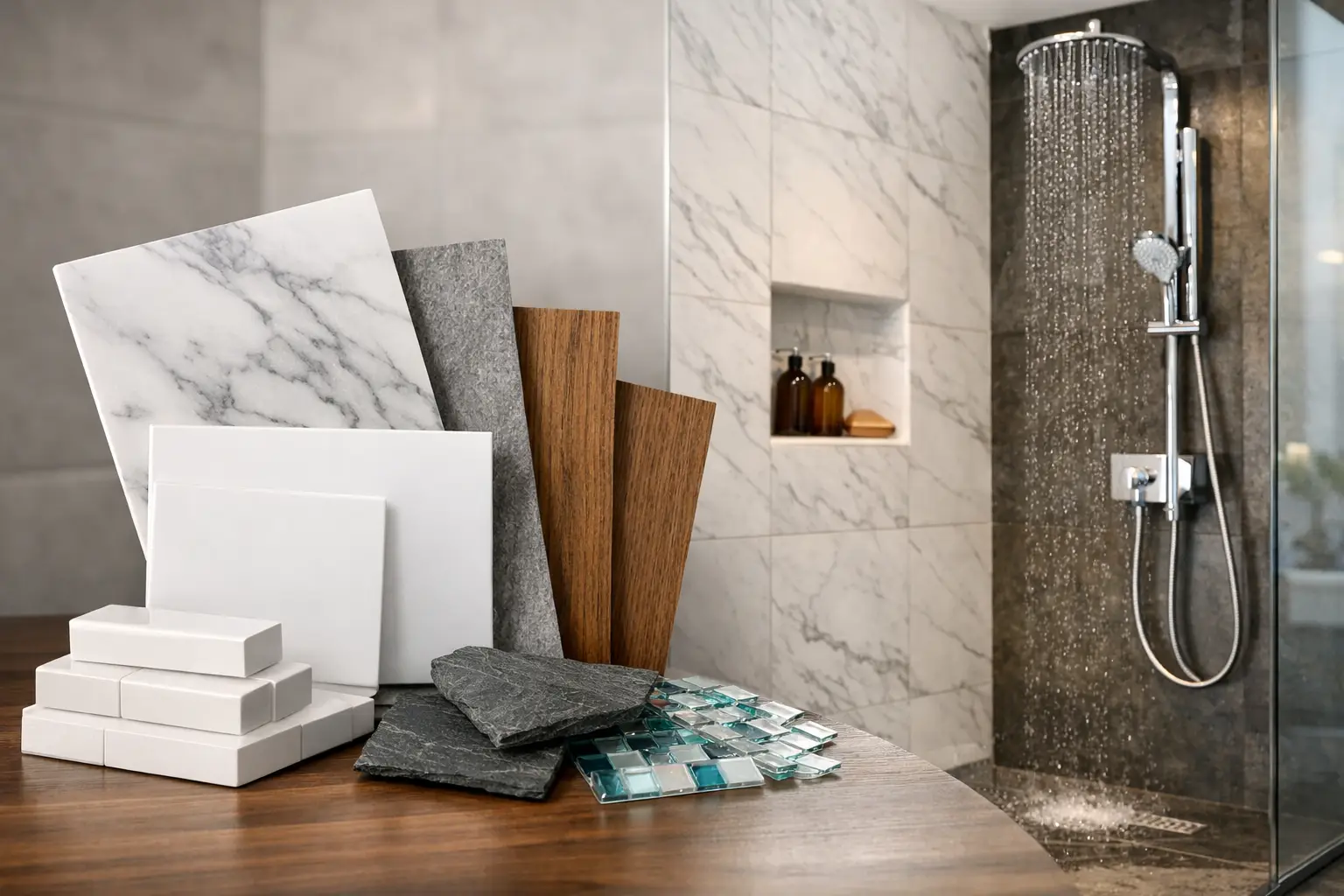
Best Materials for Shower Walls That Last
A shower wall can look premium on day one and become a constant repair problem a year later if the material and installation method are wrong. The best materials for shower walls balance water resistance, maintenance, style, budget, and the condition of the wall behind them. For Central Florida homeowners, moisture control matters even more: a beautiful finish needs a properly prepared, waterproofed system to perform over time.
What Makes a Shower Wall Material a Good Investment?
A good shower wall does more than resist a quick splash. It faces daily heat, humidity, soap residue, body products, cleaning chemicals, and water pressure at seams, corners, and plumbing penetrations. That is why material selection and installation quality must work together.
Before choosing a finish, consider how the bathroom will be used. A primary bathroom may justify large-format porcelain or natural stone. A rental property may benefit from an easy-clean solid surface with minimal grout. For a fast-value renovation, a high-quality shower surround can be practical when installed on a sound, properly prepared wall.
The most durable projects start with demolition and surface preparation. Old tile, failing backer board, soft drywall, and hidden moisture damage must be addressed before any new wall finish is installed. Covering up a bad substrate is not a renovation – it is a delayed repair bill.
Best Materials for Shower Walls Compared
Porcelain Tile: The Premium All-Around Choice
Porcelain tile is one of the strongest choices for shower walls because it is dense, low-absorption, highly durable, and available in virtually any look. It can replicate marble, concrete, limestone, wood, or a clean contemporary surface without requiring the same level of maintenance as natural materials.
Large-format porcelain is especially popular in modern bathroom remodels. Fewer grout lines create a cleaner visual result and reduce routine scrubbing. Porcelain slabs take that benefit even further, producing a dramatic, almost continuous wall surface with very limited joints.
Porcelain does require expert installation. Walls must be flat, waterproofed, and properly prepared so large tiles align correctly and remain securely bonded. Slabs also require specialized handling, precise cutting, and experienced installers. The upfront investment can be higher, but porcelain delivers long-term value, strong performance, and broad design flexibility.
Ceramic Tile: Flexible Style at a Lower Cost
Ceramic tile remains a reliable option for shower walls, particularly for homeowners who want a custom appearance without the cost of porcelain slabs or natural stone. It comes in countless colors, patterns, shapes, and finishes, making it ideal for accent walls, subway tile layouts, decorative niches, and classic bathroom designs.
Compared with porcelain, ceramic tile is generally less dense and may be more prone to chipping in high-impact areas. On vertical shower walls, however, quality ceramic tile performs well when it is installed over a proper waterproofing system. The key is to choose tile rated for wet applications and use grout and sealant appropriate for a shower environment.
Ceramic is often a smart fit for guest bathrooms, rental updates, and design-driven projects where the tile layout is a major part of the finished look. Just remember that smaller tile means more grout joints, and more grout means more cleaning and maintenance.
Natural Stone: High-End Character With Added Care
Marble, travertine, granite, slate, and limestone give a bathroom a distinctive, high-end feel that manufactured materials cannot fully duplicate. Every stone installation has natural variation in veining, movement, and color. For homeowners building a luxury primary bath, that one-of-a-kind appearance can be worth the investment.
The trade-off is maintenance. Many natural stones are porous and need professional sealing. Acidic or harsh cleaners can etch or stain certain surfaces, especially marble and limestone. Stone also requires careful material selection because not every variety is equally suitable for a wet shower environment.
Natural stone should never be treated as a simple cosmetic upgrade. It needs expert layout planning, appropriate setting materials, well-executed waterproofing, and a maintenance plan that matches the homeowner’s expectations. When those details are handled correctly, stone creates an exceptional result. When they are ignored, it can become difficult and expensive to restore.
Solid Surface Panels: Low-Maintenance and Clean-Looking
Solid surface wall panels are a strong option for clients who want a sleek shower with very few seams. These engineered panels are nonporous, easy to clean, and available in colors and patterns that resemble stone or polished concrete. They are particularly appealing for homeowners who want to reduce grout maintenance without moving to full porcelain slab installation.
Because panels cover large areas, installation can often move faster than a detailed tile project. That can be valuable during occupied-home remodels, rental turnovers, or renovations with tight schedules. Solid surface also works well for accessible showers, where a smooth, easy-clean wall is a practical advantage.
Not all panels are equal. Product quality, joint detailing, wall preparation, and correct sealing around fixtures determine whether the installation stays watertight. A professional team should evaluate the existing wall condition before recommending panels as a quick replacement solution.
Acrylic and Fiberglass Surrounds: Practical for the Right Project
Acrylic and fiberglass shower surrounds are often the most budget-friendly path to a clean, functional shower wall. They are lightweight, water-resistant, and available in prefabricated kits or custom-sized panels. Their smooth surfaces are easy to wipe down, and the low number of seams helps simplify maintenance.
Acrylic typically offers better durability and finish quality than basic fiberglass. Fiberglass can be more susceptible to scratching, flexing, fading, and cracking over time, especially in lower-grade units. For a property manager or homeowner prioritizing speed and cost control, a quality acrylic surround can be a sensible choice.
These systems have limits. They do not offer the same design depth, resale appeal, or premium feel as tile, porcelain slabs, or stone. They also depend on solid support behind the panels. If the walls are uneven or moisture-damaged, installation shortcuts will show up later as movement, failed caulk, or leaks.
Do Not Overlook Grout, Seams, and Waterproofing
The wall material gets the attention, but the hidden work determines whether the shower lasts. Tile and stone are not waterproof by themselves. Grout is not waterproof either. A professionally built shower wall requires a complete moisture-management system behind the finished surface.
That system may include cement board or approved foam board, sealed seams, a waterproof membrane, properly treated corners, and careful sealing around valves, shower heads, niches, benches, and transitions. Every penetration is a potential weak point if it is not handled correctly.
For tiled showers, epoxy grout can be an excellent upgrade in many situations. It is more stain-resistant and less absorbent than traditional cement grout, though it costs more and requires skilled installation. High-quality silicone sealant is also essential where walls meet floors, tubs, ceilings, and adjacent surfaces. Those changes of plane need flexibility, not rigid grout that may crack as the home moves.
How to Choose the Right Material for Your Bathroom
The right choice depends on the result you want and the level of maintenance you accept. Porcelain is the strongest all-around recommendation for most homeowners seeking durability and a premium finish. Ceramic offers great visual flexibility at a more accessible price point. Natural stone delivers unmatched character for clients prepared to care for it. Solid surface panels and acrylic surrounds offer practical low-maintenance alternatives for projects where speed, simplicity, or budget leads the decision.
It also helps to think beyond the shower wall itself. A bathroom remodel may involve floor tile removal, subfloor repair, plumbing updates, a new shower pan, ventilation improvements, or vanity and lighting work. Planning the full scope before installation prevents mismatched finishes, surprise costs, and avoidable delays.
A Rox Floor approaches shower renovations from the surface up: removal, preparation, installation, and finishing details are treated as one connected project. That approach protects the investment and gives homeowners a cleaner path from outdated bathroom to finished space.
Choose the wall material you will be happy to clean, maintain, and look at every morning – then make sure the structure behind it is built to support that choice for years.