
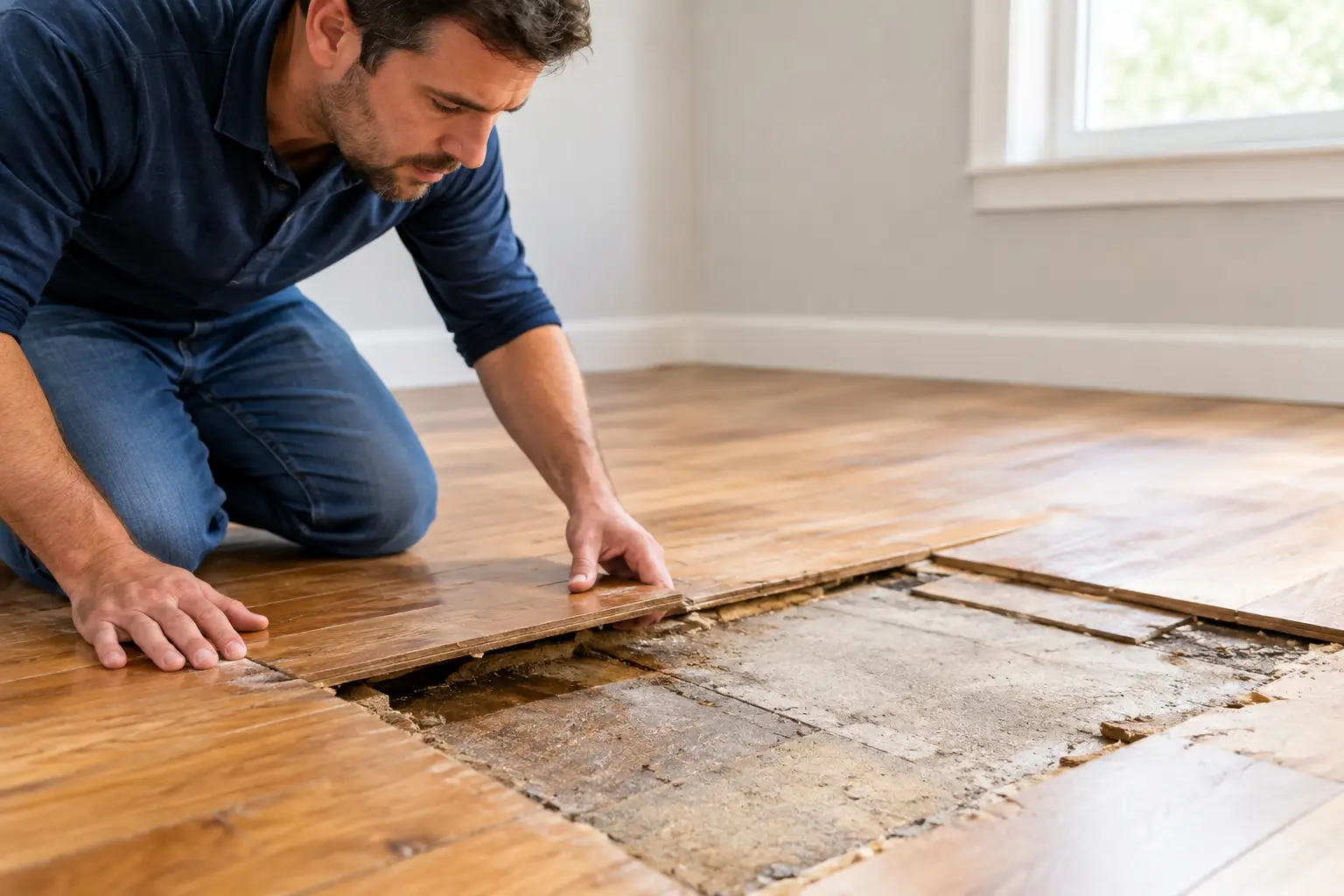
7 Top Signs a Subfloor Needs Repair in Your Home
A new floor can only perform as well as the surface beneath it. If tile is cracking, vinyl feels uneven, or certain areas of the floor flex underfoot, the top signs a subfloor needs repair may already be visible. Covering those problems with new flooring can turn a manageable repair into an expensive redo.
For homeowners, property managers, and investors, the goal is not simply to make a floor look better. It is to correct the source of the damage before installation begins. A professional inspection helps determine whether the issue is minor surface preparation, damaged underlayment, moisture intrusion, or structural subfloor deterioration.
7 Top Signs a Subfloor Needs Repair
1. Floors feel soft, spongy, or bouncy
A floor should feel firm and stable when you walk across it. If an area gives slightly under your weight, feels springy, or seems softer than the surrounding floor, the subfloor may be weakened by water damage, rot, loose fasteners, or long-term wear.
Soft spots deserve fast attention, especially near bathrooms, kitchens, laundry rooms, exterior doors, and plumbing lines. Those areas see more moisture exposure than the rest of the home. The longer moisture remains trapped below finished flooring, the more material may need to be removed and replaced.
A slight flex does not always mean the entire floor system has failed. Sometimes the problem is isolated to one section of subfloor or a loose panel. Either way, installing tile, vinyl, or wood over movement is not a durable solution.
2. Tile cracks or grout lines keep breaking
Cracked tile is often blamed on the tile itself, but the real issue can be movement beneath it. Ceramic and porcelain tile are rigid materials. When a wood subfloor flexes, settles, or has uneven sections, that stress can transfer directly through the mortar bed and into the tile or grout.
One cracked tile after a heavy impact may be a localized issue. Repeated cracks in the same area, loose tiles, or grout that separates along multiple lines point to a surface that is moving when it should not. Before replacing the finish, the installation team should inspect the subfloor, framing, and floor preparation layers.
This is especially important during bathroom and kitchen remodeling. New tile adds weight, and a poor foundation can shorten the life of an otherwise premium installation.
3. Squeaks, creaks, or popping noises are getting worse
A few squeaks in an older home are common, but loud or worsening noises can signal loose subfloor panels or movement between the subfloor and floor joists. As people walk across the area, the materials rub together, creating that familiar creak or pop.
Not every squeak requires a full subfloor replacement. In some cases, a contractor can secure loose panels, correct fastening issues, or address gaps at the framing level. But if the noise appears alongside soft spots, sagging, stains, or flooring separation, the condition is more likely than a simple loose screw.
The key is to diagnose the cause before demolition or new installation begins. Removing the existing floor gives a qualified crew a clear view of what is happening below the surface.
4. Your finished floor is uneven, sagging, or lifting
A level floor is not just an appearance issue. It matters for performance, safety, and the quality of a new installation. Noticeable dips, raised edges, ridges, or a slope that was not there before can indicate swelling, settling, failing underlayment, or subfloor damage.
Vinyl flooring may show unevenness through visible low spots, seams that open, or edges that lift. Laminate and engineered wood can separate or buckle. With tile, uneven conditions can lead to poor bonding, lippage, and cracking over time.
There is a trade-off here. Minor surface variation can sometimes be corrected with patching or leveling compounds after the substrate is properly evaluated. A subfloor that is swollen, rotted, delaminated, or structurally unsound must be repaired first. Leveling over damaged material only hides the problem temporarily.
5. There are water stains, leaks, or a musty smell
Water is one of the most common reasons a subfloor needs repair. A slow leak from a toilet, dishwasher, refrigerator line, shower, or washing machine can damage flooring materials for months before it becomes obvious. By the time a stain appears on a ceiling below or a musty odor develops, moisture may have already reached the subfloor.
Look for darkened wood, swollen edges, black spotting, peeling finishes, or a persistent damp smell near wet areas. These warning signs require more than cosmetic cleanup. The moisture source must be stopped, affected materials must be assessed, and the area must be fully dried before repairs and new flooring move forward.
In Central Florida, humidity can make moisture control even more critical. A proper project considers both active leaks and the moisture conditions of the substrate before flooring adhesive, mortar, or underlayment is applied.
6. The floor feels loose or shifts under furniture
A floor that moves around furniture legs, feels unstable near walls, or has sections that separate at seams may be losing its connection to the subfloor. This can happen when adhesives fail, fasteners loosen, moisture causes expansion, or the subfloor itself breaks down.
Loose flooring is more than an annoyance. It can create trip hazards, allow water beneath the finish, and accelerate damage as the material continues to shift. In rental properties and commercial spaces, this can also become a maintenance and liability concern.
A professional evaluation can separate a finish-floor problem from a foundation problem. Sometimes only the flooring needs to be removed and reinstalled. Other times, the subfloor needs reinforcement, replacement, or extensive surface preparation before the new material goes down.
7. You see visible deterioration after old flooring is removed
Floor removal often reveals the real condition of the subfloor. Once carpet, vinyl, tile, or laminate comes up, warning signs can include crumbling wood, peeling plywood layers, deep stains, mold-like growth, missing sections, loose panels, and severe adhesive contamination.
This is why fast, clean demolition and correct surface preparation should be part of the same plan. Old flooring removal is not simply about getting materials out of the room. It is the point where the installation team can inspect, repair, level, and prepare the base for the next finish.
A clean-looking surface is not automatically installation-ready. Tile requires a stable, properly prepared base. Vinyl requires smoothness because imperfections can show through. Marble demands an especially flat and rigid substrate to help prevent cracking. The right repair depends on the flooring material you choose next.
What Causes Subfloor Damage?
Most subfloor issues start with moisture, movement, or poor prior installation. Plumbing leaks and overflow events are obvious causes, but slow leaks are often more destructive because they go unnoticed. In older properties, aging materials, inadequate fastening, pest damage, and repeated renovations can also compromise the floor system.
It also matters what is underneath your existing floor. Many Florida homes are built on concrete slabs rather than raised wood subfloors. In those properties, homeowners may use the word “subfloor” to describe underlayment, old mortar beds, adhesive residue, moisture-damaged flooring layers, or cracks and low spots in the concrete itself. The repair approach is different, but the principle remains the same: the installation surface must be sound, clean, dry, and properly prepared.
Do Not Install New Flooring Over a Question Mark
It can be tempting to replace only the visible floor, particularly when a property needs to be turned quickly for sale or rental. That shortcut can cost more later. New flooring may look excellent on day one, then develop cracked grout, loose planks, hollow tile, or uneven wear because the base was never corrected.
A qualified flooring and demolition team should assess the condition after removal, identify whether moisture testing is needed, and explain the repair scope before installation. This creates a clear plan: remove damaged material, repair weak areas, prepare or level the surface, then install the new finish to manufacturer-appropriate standards.
Rox Floor helps Central Florida clients manage that full process with professional removal, expert surface preparation, and high-quality flooring installation. Working with one experienced team reduces handoffs and keeps the project focused on a durable result.
When to Schedule an Inspection
Call for an inspection promptly if the floor feels unsafe, a leak has affected the area, tiles are repeatedly cracking, or you can see swelling and deterioration after removing old flooring. Fast action can limit the damaged area and protect the rooms below, adjacent walls, cabinets, and new materials planned for the space.
If you are planning a kitchen remodel, bathroom renovation, flooring replacement, or turnover project, make subfloor condition part of the first conversation, not an afterthought. A solid base is where a high-quality floor begins.