
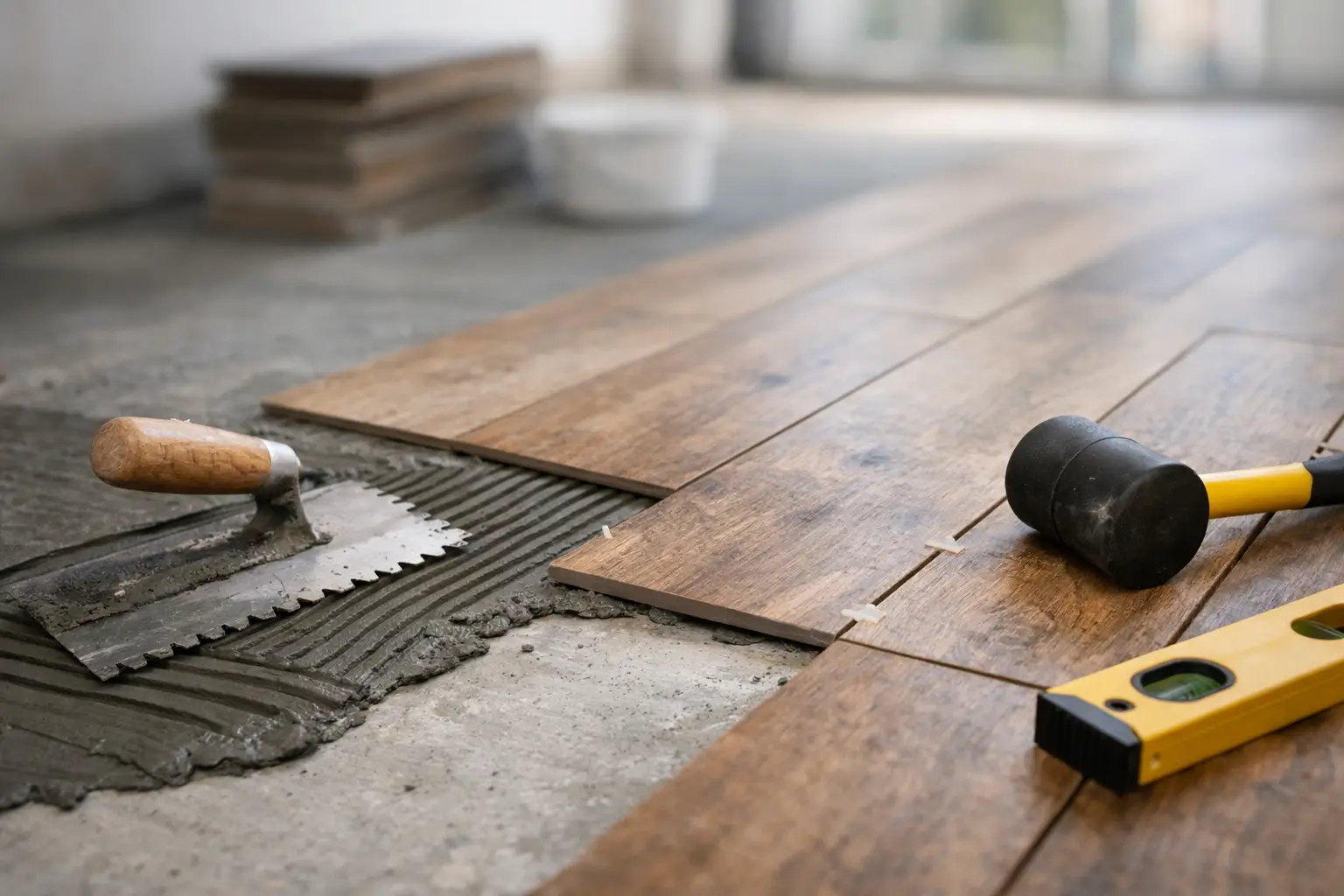
Porcelain Wood Look Tile Installation Done Right
When a floor looks great on day one but starts showing lippage, hollow spots, or uneven joints a few months later, the problem usually is not the tile. It is the installation. Porcelain wood look tile installation demands more precision than many homeowners expect because these planks are longer, denser, and less forgiving than standard square tile.
That is exactly why this material has such a strong reputation when it is installed correctly. You get the warm look of hardwood with the durability of porcelain, better moisture resistance, and easier maintenance in kitchens, bathrooms, commercial spaces, and high-traffic areas. But the finished result depends heavily on subfloor condition, layout planning, and installer skill.
Why porcelain wood look tile installation is different
Wood look porcelain is designed to mimic real hardwood planks, which is part of its appeal. The challenge is that plank tile often comes in longer formats such as 6×24, 8×48, or even larger. Longer tile highlights every dip, ridge, and inconsistency in the floor beneath it.
That changes the installation process in a big way. A floor that might be acceptable for smaller tile may not be flat enough for plank porcelain. If the surface is not properly prepared, even premium tile can end up with visible height differences from one piece to the next.
There is also the issue of tile warpage. Many porcelain planks have a slight natural bow from the manufacturing process. That is normal, but it affects offset patterns. A classic 50 percent brick pattern may look appealing, yet with plank tile it often increases lippage because the highest point of one tile meets the lowest point of another. In many cases, a one-third offset or a random stagger delivers a cleaner and more professional result.
The subfloor decides the outcome
Before any tile is set, the existing floor has to be evaluated honestly. This is where many projects go off track. Homeowners sometimes focus on tile selection first, but lasting performance starts underneath.
Concrete slabs need to be checked for cracks, moisture issues, residue, and flatness. Wood subfloors need to be structurally sound, rigid enough for tile, and free from movement. Old adhesive, damaged underlayment, loose boards, or uneven patched areas can all affect bond strength and finish quality.
Surface preparation is not a side step in the project. It is the project. In real-world remodels, removal of old flooring, grinding high spots, filling low areas, and installing the correct underlayment often takes as much attention as the tile work itself. A professional crew that handles demolition, floor prep, and installation under one scope usually delivers a more consistent result because there is no disconnect between phases.
Layout is where quality becomes visible
A strong layout does more than make the floor look balanced. It helps avoid awkward cuts, keeps plank direction intentional, and reduces visual mistakes across larger rooms.
Most clients want wood look tile to feel natural, like real hardwood. That means the plank direction matters. In a narrow room, running tile lengthwise can help the space feel larger. In open-concept areas, the direction often needs to work with sightlines, cabinetry, and transitions into nearby rooms.
Joint spacing matters too. Many porcelain planks have rectified edges, which allows for tighter grout joints. That can create a cleaner hardwood-inspired look, but only if the tile size is consistent and the floor is flat enough to support it. Tighter joints leave less room to hide installation issues.
An experienced installer also blends planks from multiple boxes. Wood look tile has intentional pattern variation, and proper mixing prevents obvious repeats. That detail seems small until you see a floor where the same print appears side by side across a room.
Setting materials and technique matter
Porcelain is dense, and plank tile requires the right mortar, the right trowel, and the right coverage. This is not an area for shortcuts.
For most porcelain wood look tile installation projects, the goal is full support beneath each tile, especially at corners and edges. Voids under the tile can lead to cracking, weak spots, or a hollow sound under foot traffic. Back buttering may be needed depending on tile size, substrate condition, and manufacturer requirements.
Leveling systems are often used with plank tile, and for good reason. They help control lippage during installation while the mortar cures. They are not a substitute for proper floor prep, but they can improve consistency when used correctly.
Mortar open time is another factor. In Florida conditions, heat and humidity can affect how materials behave. Installers need to work in manageable sections, maintain proper mortar ridges, and avoid letting the thinset skin over before the tile is set. Small technical details make a major difference in long-term performance.
Common mistakes that cost more later
Some installation problems show up immediately. Others take time. Either way, the repair is usually more expensive than doing the work correctly the first time.
The most common issue is installing over an uneven floor without adequate prep. The second is choosing the wrong pattern for the tile. The third is poor mortar coverage. Add rushed cutting around corners, weak transition planning, or sloppy grout lines, and the floor starts losing value fast.
Another mistake is underestimating demolition and removal. If old tile, vinyl, laminate, or adhesive is not removed cleanly, the new installation is already compromised. This is especially true in renovations where multiple floor heights and damaged substrates are involved.
That is why full-service flooring contractors have an advantage. When the same team removes the old flooring, prepares the surface, and installs the new porcelain, accountability stays clear and quality is easier to control.
Where wood look porcelain performs best
One reason homeowners and property investors choose this material is versatility. It works in spaces where hardwood may not be practical, especially where moisture, spills, and heavy use are part of daily life.
Kitchens are a strong fit because porcelain handles traffic and cleaning well. Bathrooms benefit from the wood aesthetic without the moisture concerns that come with natural wood. Laundry rooms, entryways, rental properties, and commercial interiors also make sense because durability matters just as much as appearance.
That said, the best choice still depends on the project. If a client wants a softer and warmer feel underfoot in a bedroom, they may prefer another material. If they want long-term wear resistance with a premium look, wood look porcelain is hard to beat.
What to expect during a professional installation
A well-managed project should feel organized from the start. First comes evaluation of the existing floor and moisture or flatness conditions. Then comes removal, prep, layout planning, tile setting, grouting, finishing details, and cleanup.
Timelines depend on square footage, room complexity, and how much prep is required. A straightforward installation in a clean, flat area moves much faster than a renovation with old flooring removal, slab correction, and multiple transitions. This is why accurate estimating matters. Fast scheduling is valuable, but realistic planning is what protects the finished result.
For property owners in Central Florida, this matters even more in occupied homes, rentals, and commercial spaces where downtime affects daily routines or revenue. A crew with experience in both demolition and flooring can keep the process moving without sacrificing finish quality.
Choosing the right installer for porcelain wood look tile installation
Not every tile installer is equally equipped for plank porcelain. Ask about surface prep, pattern recommendations, lippage control, and what happens if the subfloor is not ready once removal begins. Those answers tell you a lot.
You also want a contractor who understands the full scope, not just the visible part. A polished final look comes from details clients do not always see at first – substrate correction, proper bonding, clean transitions, and disciplined layout work. That is what separates a floor that simply looks new from one that stays solid and attractive for years.
At Rox Floor, that full-process mindset is a major advantage. Removal, preparation, and installation are handled with one goal: high-quality results without wasted time, avoidable delays, or cut corners.
Porcelain wood look tile is a smart upgrade, but only when the installation matches the material. If you want a floor that looks premium and performs like it should, the best decision is not just choosing the right tile. It is choosing a team that knows how to build the floor underneath it properly.